Why Connecticut Driveways Are Built for Frost First
Quick answer: Frost penetrates about 42 inches into Connecticut soil in a typical winter. That number governs footings and posts, but a driveway doesn't need to go nearly that deep. Connecticut driveway frost depth still drives the design, just differently: a compacted base of 4 to 6 inches of Processed Gravel over well draining subgrade keeps the surface from heaving as the ground freezes and thaws each winter.
Skip the base depth or the drainage, and you get the cracked, humped driveway every CT contractor has patched in April. Get it right and the driveway rides out freeze-thaw for decades.
How deep does frost go in Connecticut?
Frost line depth in Connecticut averages 42 inches, meaning the ground below that point stays above freezing even in a hard winter. That's the figure building codes use to set footing depth so foundations, posts and piers sit on stable, unfrozen soil. In the Litchfield Hills and colder inland valleys along the I-91 corridor, frost can push a little deeper in an unusually cold stretch. Closer to Long Island Sound, milder winters mean it often stays shallower.
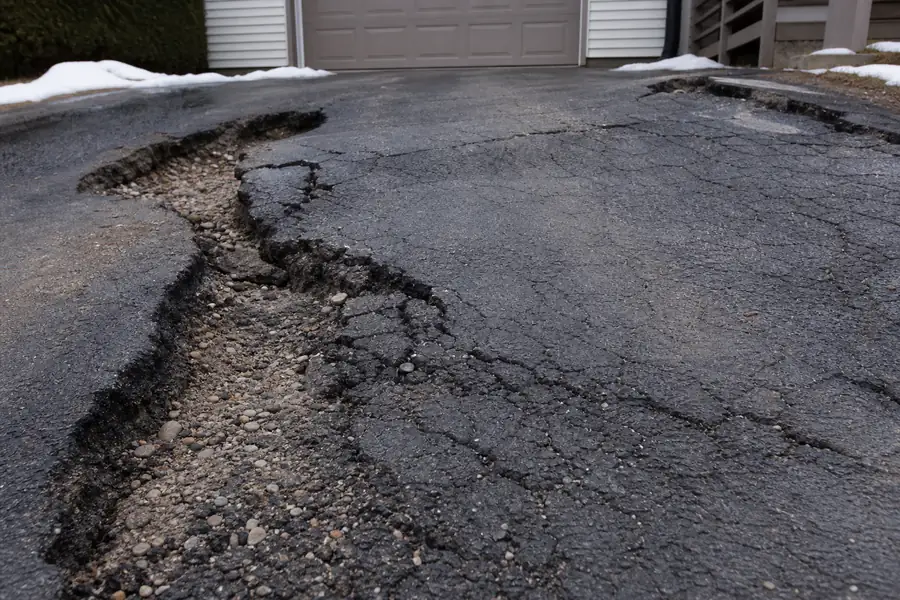
The frost line matters because water in the soil expands about 9 percent when it freezes. Anything sitting above the frost line, footing, slab or driveway base, can get shoved upward as that ice forms. That movement is frost heave, and it's the reason a shallow footing or a thin, poorly drained driveway base cracks and shifts over a few winters.
What connecticut driveway frost depth means for your base
Connecticut driveway frost depth doesn't mean your driveway base needs to reach 42 inches. A driveway is a flexible pavement, not a rigid structure tied to a foundation, so it tolerates a little seasonal movement without failing. What it can't tolerate is standing water freezing directly under the surface, which is what actually causes heave and potholes on residential driveways here.
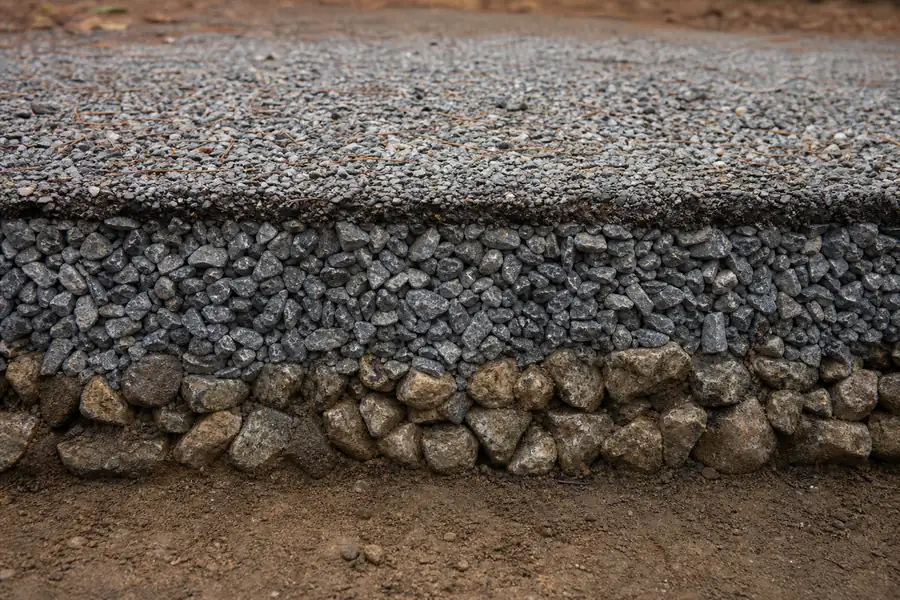
That's why the base under a Connecticut driveway is built around drainage first, depth second. A 4 to 6 inch layer of compacted Processed Gravel, the local name for CTDOT style processed aggregate base, lets water move down and away instead of pooling and freezing under the wearing surface.
Glacial till is the reason this matters more here than in a lot of other states. Most Connecticut soil is dense glacial till sitting on ledge rock, so water tends to move sideways through the ground rather than draining straight down. A driveway base that ignores that will trap moisture right where freeze-thaw does the most damage.
Footings vs. driveways: why the rules differ
A footing has to sit below the frost line because it's rigid and permanent, while a driveway can flex with the seasons as long as the base drains properly. Move a footing an eighth of an inch from frost heave and you can crack a foundation wall. A driveway can shift slightly with the frost cycle and settle back with no visible damage, as long as the base underneath is stable and free draining.
This is also why a driveway apron tying into the street sometimes needs a deeper section near the road. Town roads carry more freeze-thaw stress from plowing, salt and traffic, so a slightly thicker base at the apron holds up better than matching the rest of the driveway's depth.
Spring is when the difference shows up. Posted weight limits go into effect on many Connecticut town roads during spring thaw, typically March and April, because the roadbed itself is at its weakest as it thaws from the top down. It's worth checking delivery scheduling around that window, since a full tri-axle load sometimes has to split into two smaller deliveries during posted periods.
Building a driveway base that beats freeze-thaw
A driveway base that beats freeze-thaw starts with a compacted layer of Processed Gravel over a subgrade that's been graded to shed water, not hold it. In standard Connecticut clay-loam soil, that's typically a 4 to 6 inch compacted layer. On sites with poor drainage or heavy clay pockets, contractors often add a deeper Crusher Run base underneath before capping with Processed Gravel, since Crusher Run compacts hard and handles load well while still letting water pass through voids in the stone.
Where a driveway sits low or water collects from the surrounding grade, a drain layer of Drain Rock under the base gives water somewhere to go besides straight up through the gravel. Skipping that step on a poorly draining lot is the single most common reason a new driveway starts heaving by its second winter.
Compaction matters as much as depth. Loose gravel holds air pockets that fill with water and freeze, while properly compacted base sheds water and resists movement. Most CT contractors compact in lifts, building the base up in layers rather than dumping it all at once and rolling over the top.
How much base material your driveway needs
Base material needs scale with subgrade quality: better draining ground needs less depth, heavier clay needs more. The table below covers typical Connecticut conditions for a standard residential driveway.
| Subgrade condition | Recommended compacted base depth | Material |
|---|---|---|
| Sandy or well draining soil | 4 inches | Processed Gravel |
| Standard clay/loam till (most of CT) | 5 to 6 inches | Crusher Run base, Processed Gravel cap |
| Heavy clay or poor drainage | 8 to 10 inches plus drain layer | Crusher Run, Drain Rock, Processed Gravel cap |
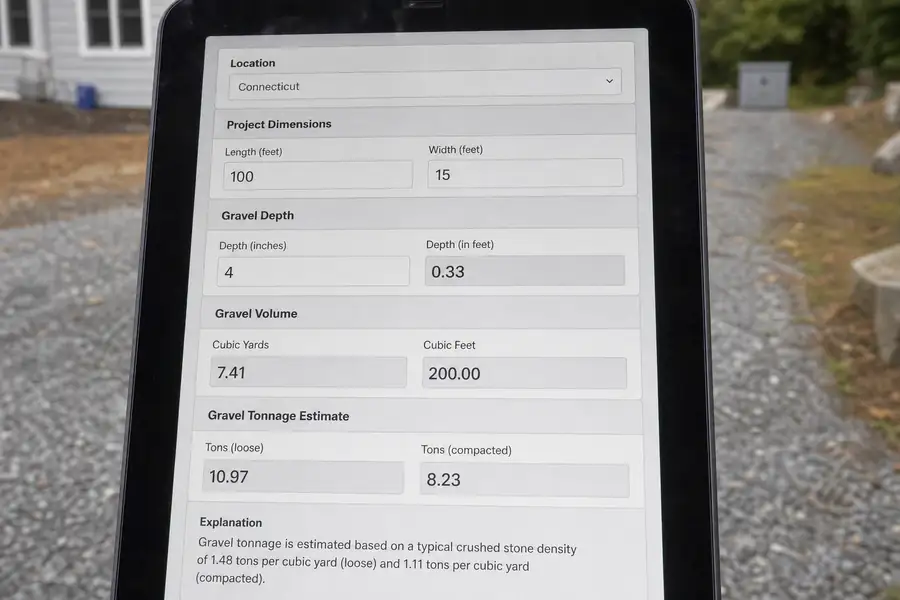
For an exact tonnage based on your driveway's length, width and depth, the road base calculator works out the numbers before you order. Homeowners in colder inland towns, including much of Litchfield County, often land on the higher end of these ranges since frost cycles hit harder and more often away from the coast.
FAQs
How deep should a driveway base be in Connecticut?
Most Connecticut driveways use a 4 to 6 inch compacted base of Processed Gravel, deeper on clay soil or poorly draining sites. This is much shallower than the 42 inch frost line that governs footings, since a driveway is a flexible surface rather than a rigid structure.
Do driveways need to be built below the frost line like foundations?
No. Footings and foundations need to sit below Connecticut's 42 inch frost line because they're rigid and can crack under frost heave. A driveway can flex slightly with seasonal freeze-thaw as long as the base drains well, so it doesn't need to reach frost line depth.
What causes a driveway to heave in the winter?
Driveway heaving happens when water trapped under the surface freezes and expands, pushing the pavement upward. It's almost always a drainage problem rather than a depth problem, which is why a compacted, free draining base of Processed Gravel or Crusher Run matters more than simply adding more material.
Why does Connecticut soil make driveway drainage harder?
Most of Connecticut sits on dense glacial till over bedrock ledge, so water moves sideways through the soil instead of draining straight down. That makes a properly graded, well compacted base and, on poor sites, a Drain Rock layer more important here than in areas with sandier, faster draining ground.
Does spring thaw affect driveway gravel delivery in Connecticut?
Yes. Many Connecticut town roads post seasonal weight limits during spring thaw, typically March and April, when the roadbed is weakest. A full load can sometimes be split into two smaller deliveries during that window, so it's worth checking delivery timing before scheduling a large driveway project.