Road Base Calculator for a Drive Rebuilt on Connecticut Till
Enter your project dimensions
Most people open this road base calculator with the same job in front of them: a driveway that has gone soft, rutted at the apron and soupy at the low end every March, and a plan to strip it and start again properly. The tonnage is the easy part. The harder part is knowing what an estimate made from a tape measure can and cannot see, because on a lot with ledge on one side and a wet pocket on the other, two drives of the same size can want very different amounts of stone.
What the tape cannot see under an old driveway
An estimate sizes the layer you intend to build. It does not size the ground you are building it on, and that is where drives go wrong here.
Three things change the real figure. Old ruts and potholes hold material that never shows in a length times width figure. Soft pockets in the till take stone until they stop taking it, and there is no way to measure one from the surface. And organic material left under the base, an old grass verge or a stump hole, keeps consolidating long after the roller has gone home.
So treat the result as the layer, and walk the drive first with a steel bar. Where it pushes in easily, that spot will want depth the calculator has no idea about. Where it stops at eight inches on ledge, you are shaping rather than building.
Cubic feet, cubic yards, and 1.5 tons a yard
The arithmetic behind the number is short enough to check on paper. Length times width gives square feet. Multiply by the depth in inches divided by 12 for cubic feet, divide by 27 for cubic yards, then multiply by the weight of the material.
This site publishes processed gravel and crusher run at about 3,000 lb per cubic yard, which is 1.50 tons. That is the heaviest of the common driveway materials: clean 3/4 inch stone and drive surfacing gravel run about 2,800 lb and 1.40 tons, so switching material after you have settled the depth moves the ticket by several percent on a drive-sized order.
Coverage falls off quickly with depth, which is why the depth field matters more than an extra foot of width:
| Compacted depth | One ton covers |
|---|---|
| 4 inches | about 54 sq ft |
| 6 inches | about 36 sq ft |
| 8 inches | about 27 sq ft |
| 12 inches | about 18 sq ft |
Feeding the road base calculator a drive that changes width
Rectangle handles a pad or a drive of constant width. For a drive that opens out at the garage, use multiple areas and enter the straight run and the parking apron as two shapes, up to five in total. Circle mode, entered on its full diameter, covers a turning bulb.
Length, width and diameter go in as feet. Depth is in inches and accepts 0.25 to 24, so a 12 inch build over a soft subgrade goes in as a single entry rather than two passes.
Measure a drive down its centerline, not along the outside of a curve, and take an average width if it changes gradually. Select processed gravel in the material list so the ton figure carries the right weight, leave the 10% box ticked for an allowance for compaction and spillage, or untick it if you want none, and read off cubic yards, tons and cubic feet. The estimate can be emailed to you if you want it beside the sketch later.
Depth over till, over clay and over a spot that stays wet
Frost reaches about 42 inches here and the freeze and thaw runs all winter, which is the single reason a thin base fails in this state rather than somewhere milder. Water gets into a shallow layer, freezes, lifts it, and drops it again in a different shape.
- Foot traffic and garden paths: 3 to 4 inches compacted.
- Cars and a light truck on firm till: 4 inches.
- Everyday use with an oil delivery or a mason's truck: 6 inches.
- Soft subgrade, clay, or ground where equipment sits: 8 to 12 inches, over woven geotextile.
Place it in lifts no deeper than four inches and roll each one before the next goes down. Set a crown of two to three percent from the centerline so rain runs to the edges instead of standing in the wheel tracks. Strip the topsoil first: stone laid over loam will pump mud up through itself at any depth.
Why a New England spec sheet says process
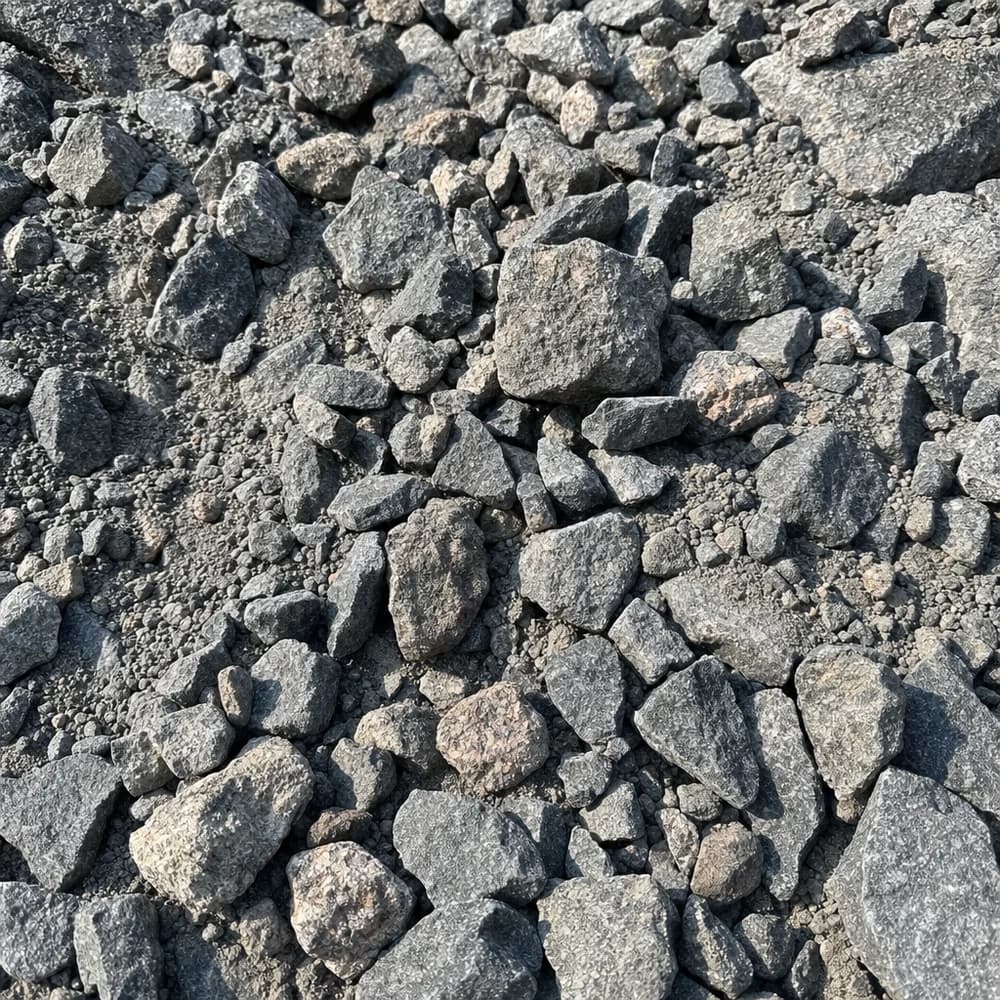
Processed gravel is the base material here, and it is what a local excavator will call it, usually as 3/4 inch process. It is sold on this site as Processed Gravel and it is the same order of material the national pages describe as road base.
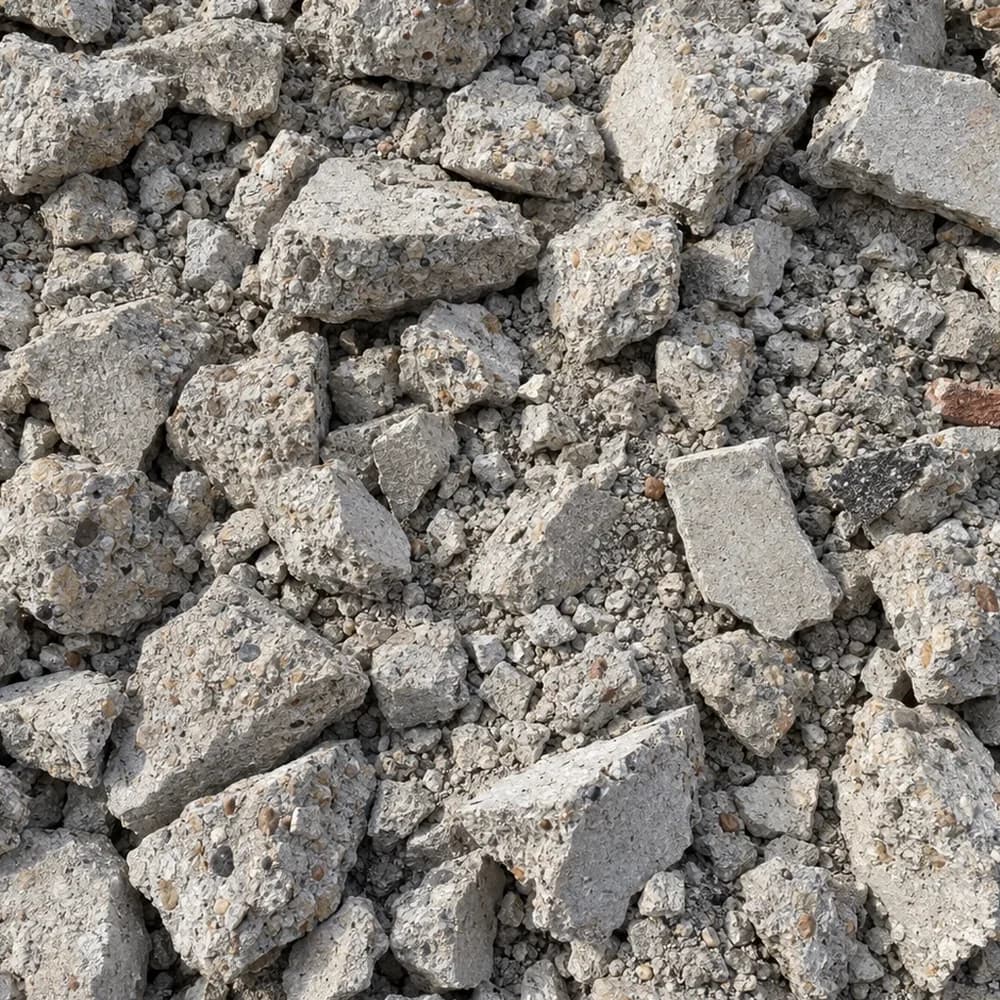
Crusher run does a related job but finishes finer and binds tighter, which makes it the better choice where you need to screed a level surface, under pavers or a shed floor. Process carries a larger top stone and suits lanes, aprons and anything carrying a loaded truck. Both weigh the same per yard, so the choice changes the surface rather than the tonnage. If you are setting flatwork, the paver base calculator handles the excavation depth as well as the layer.
A 140-foot drive and a 16 by 24 equipment pad
Both hypothetical, both worked through.
Drive rebuild at 6 inches
A drive 140 feet long and 11 feet wide, built at 6 inches compacted.
- 140 x 11 = 1,540 sq ft
- 1,540 x 6 / 12 = 770 cu ft
- 770 / 27 = 28.52 cu yd
- 28.52 x 1.50 = 42.8 tons
With the 10% option that becomes 31.37 cubic yards and 47.1 tons.
Pad for a tractor and attachments
A pad 16 by 24 feet at 8 inches, which is the depth a machine parked in one spot through a winter will ask for.
- 16 x 24 = 384 sq ft
- 384 x 8 / 12 = 256 cu ft
- 256 / 27 = 9.48 cu yd
- 9.48 x 1.50 = 14.2 tons
Ordering long rather than ordering twice
Compaction takes the loose layer down, and on a drive of this size the difference between a comfortable order and a short one is about a yard. Running out with the last thirty feet unbuilt means compacting a partial lift and coming back to it, and that seam will be visible in the surface for years.
Order above the measured figure, keep the surplus on a tarp, and use it on the low corner or the apron where traffic turns. When the number looks right, set the quantity and delivery date on the product page. Delivery is arranged at checkout by ZIP code, and the truck needs clear access to a firm place to tip, which on an older lot means checking the gap between the gate posts before the day.
Common questions
The drive bends twice and widens at the barn. How do I turn that into a rectangle?
Run the tape down the centerline for the length, then take the width at four or five points and average it. Where the barn apron is clearly its own shape, enter it separately in multiple areas rather than stretching the average across the whole drive.
The drive is sound in most places but rutted along one side. How much do I need for that?
Measure the rutted strip as its own area and enter the average depth of the ruts, not the depth of a new base. Lay a straight board across them in three places and measure down to get that average, because ruts are always deeper than they look.
What happens if the load runs out before the last stretch is covered?
You compact a partial lift and finish it later, which leaves a soft joint where the two sessions meet. On a drive that joint is usually the first place to rut after a thaw, so it is worth ordering long rather than exactly.
How close is this estimate to the stone that actually goes down?
The volume is exact for the numbers you enter, so the accuracy is all in your measurements and in the subgrade. On sound ground you should land within a few percent. Over soft pockets or an unstripped verge, the ground takes extra that no calculation can predict.
The number is settled. Which product do I order?
Processed Gravel for lanes, aprons and pads. If you are building a base to screed and set flatwork on, Crusher Run is the finer option, and both are ordered by the ton with the date chosen on the product page.
Related calculators
Thirty tons. Zero delivery fees.
Road base priced per ton, hauled free, at lane quantities where hauling usually costs the most.