Gravel Driveway Layers and Depth: How Thick Each Layer Should Be
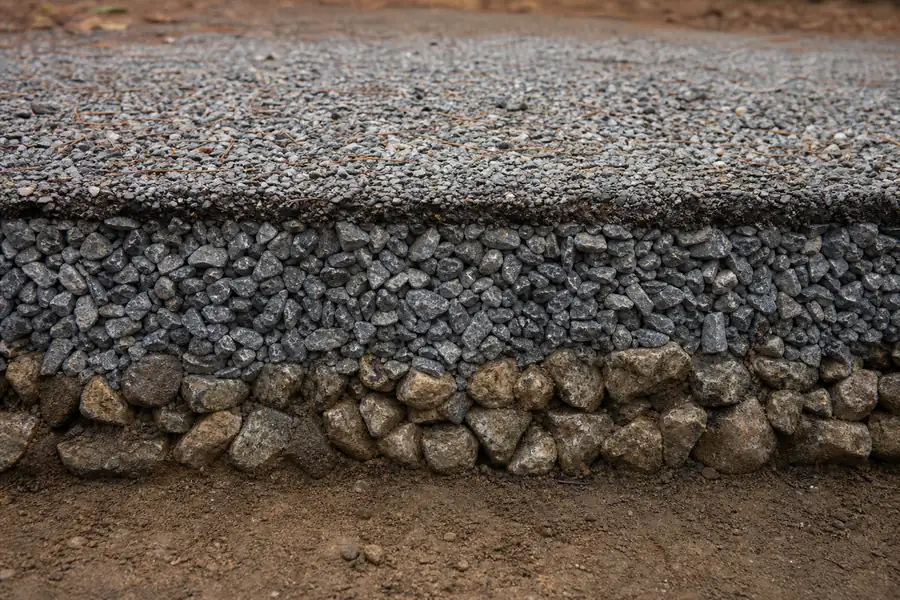
Quick answer: A solid gravel driveway needs three compacted layers: 4 to 6 inches of processed gravel or crusher run for the base, 2 to 3 inches of 3/4 inch trap rock in the middle, and 1 to 2 inches of surface gravel on top. Total compacted depth runs 7 to 13 inches depending on how much weight the driveway carries.
Light residential driveways used by one or two cars sit at the thin end of that range. Driveways carrying trucks, RVs, or daily traffic from multiple vehicles need the full depth, because a thin base flexes under load and lets the layers above it work loose.
Gravel Driveway Layers From the Base Up
A gravel driveway works as a system, not a pile of stone. Each layer does a different job, and skipping one shows up later as ruts, potholes, or gravel that migrates into the lawn.
- Base layer: Processed gravel or crusher run, compacted in 2 inch lifts. This layer spreads vehicle weight across the subgrade and gives the driveway its structure.
- Middle layer: 3/4 inch trap rock, which locks together under compaction and keeps water moving through instead of pooling.
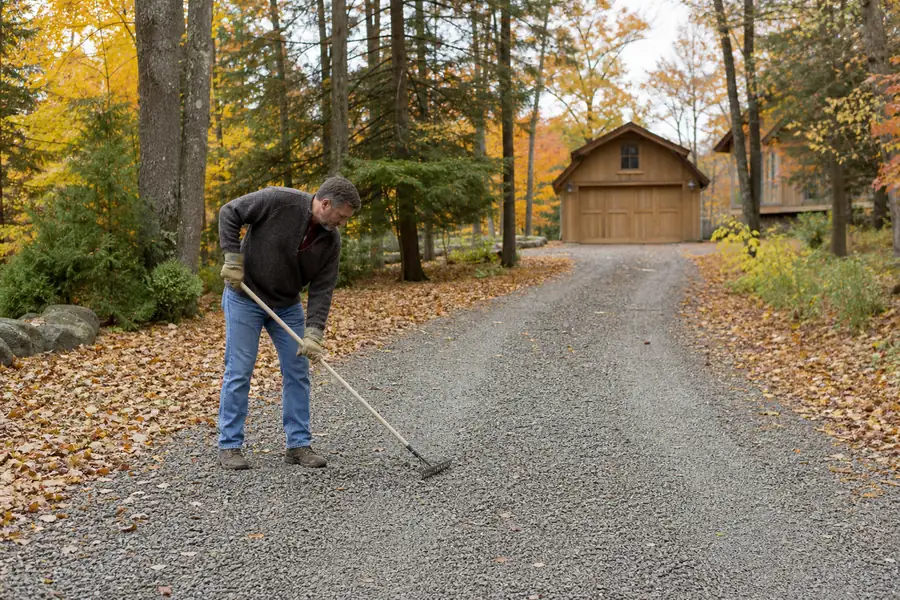
- Surface layer: driveway gravel sized for walking and rolling comfort, raked level and crowned slightly for runoff.
Skip the middle layer on soft or wet ground and the base and surface stone will migrate downward into the subgrade within a season or two.
Gravel Driveway Layers: Depth by Traffic Type
How thick each layer needs to be depends on what drives over it, not just how big the driveway is. Here's the depth breakdown, plus tons needed for a 100 foot long, 10 foot wide driveway (1,000 square feet) at each depth.
| Traffic Type | Base Layer | Middle Layer | Surface Layer | Total Depth | Tons (100 ft x 10 ft) |
|---|---|---|---|---|---|
| Light (1-2 cars) | 4 in | 2 in | 1 in | 7 in | ~35 tons |
| Standard (2-4 cars, daily use) | 6 in | 2 in | 2 in | 10 in | ~50 tons |
| Heavy (trucks, RVs, commercial) | 8 in | 3 in | 2 in | 13 in | ~65 tons |
These figures assume a stable, well-drained subgrade. Soft clay, standing water, or heavy glacial till common across Connecticut push the base toward the thicker end of each range, sometimes with an extra inch or two of crusher run worked in before the middle layer goes down.
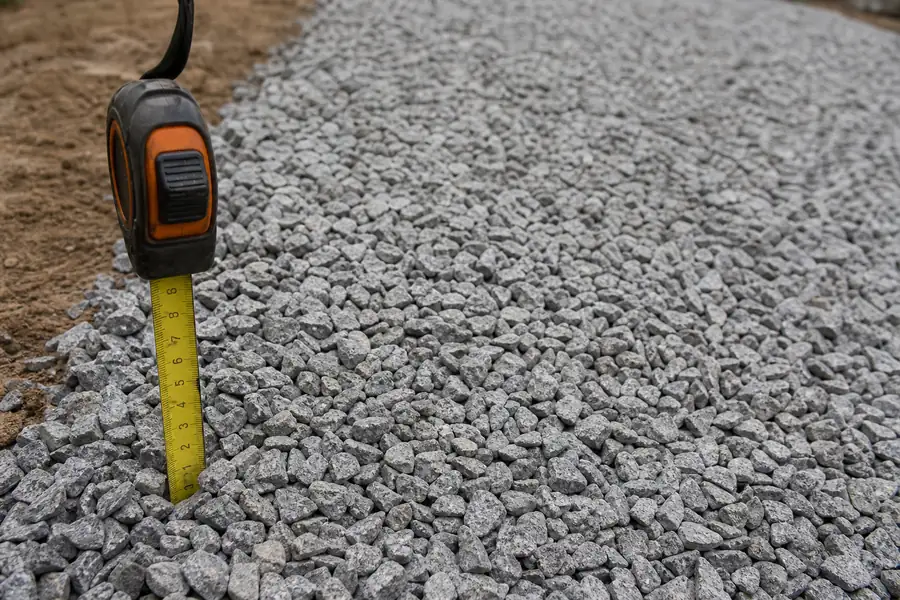
How Many Tons of Gravel for a 100 Foot Driveway
A standard 100 foot by 10 foot driveway (1,000 square feet) at typical depth needs roughly 50 tons of material split across three layers: about 30 tons of base, 10 tons of middle stone, and 10 tons of surface gravel.
That math comes from a simple rule: one ton of stone covers about 100 square feet at 2 inches deep, so tonnage scales directly with area and depth. Run the numbers for your own dimensions with the gravel calculator, or use the crusher run calculator if you're pricing the base layer on its own.
Wider driveways scale up fast. A 12 foot wide apron on that same 100 foot run adds roughly 20% more tonnage to every layer, which matters when you're comparing quotes or scheduling delivery.
Why Connecticut Gravel Driveway Layers Need Extra Depth
Connecticut's glacial till sits over bedrock ledge across most of the state, which means water moves sideways through the soil instead of draining straight down. A gravel driveway without a proper middle layer traps that water right under the surface stone, and freeze-thaw cycles heave it loose by the second winter.
Frost depth in Connecticut runs about 42 inches, which drives footing depth for structures but not driveway base depth directly. Driveway layers are sized for load and drainage first, not for reaching below the frost line, which is why the base and middle layers matter more here than the total depth number alone.
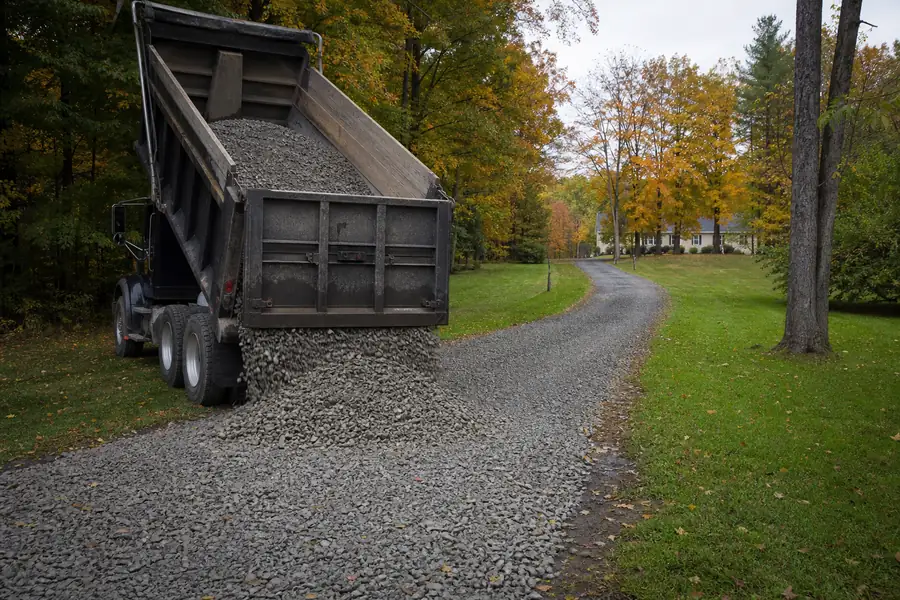
Spring thaw also brings posted weight limits on many local roads through March and April. A full load of CTDOT-spec road base that would normally arrive on one tri-axle truck sometimes gets split into two smaller deliveries during that window, so build a few extra days into the schedule if you're timing a spring project.
FAQs
Do I need all three gravel driveway layers, or can I skip the middle one?
Skipping the middle layer works only on driveways over very well-drained, sandy or gravelly soil with light foot traffic. Most Connecticut properties sit on clay-heavy till, and without the middle stone layer, water gets trapped under the surface gravel and the driveway ruts within a season.
How deep should the base layer be for a residential driveway?
A residential driveway carrying two to four cars daily needs a base layer 6 inches deep, compacted in 2 inch lifts. Lighter use by one or two vehicles can get by with 4 inches, while daily truck or RV traffic calls for 8 inches.
Can I add gravel layers to an existing driveway instead of starting over?
Yes, if the existing base is still firm and well-drained. Add a middle layer of stone directly over the compacted existing base, then top with fresh surface gravel, rather than tearing out material that's still doing its job.
How often does a gravel driveway need new surface gravel?
Most Connecticut driveways need a fresh 1 to 2 inch surface layer every 2 to 3 years, sooner if snowplowing scrapes stone off with the snow. The base and middle layers underneath typically last far longer if they were built to the right depth from the start.