How to Prepare a Gravel Driveway for a Connecticut Winter (Fall Checklist)
Connecticut gravel driveways take a beating between October and April. Frost depth here runs about 42 inches, and every freeze-thaw cycle heaves ruts, low spots, and washouts that get worse under a plow blade. Fall gravel driveway maintenance is what keeps a rough season from turning into a full spring rebuild, and the work needs to happen while the ground is still soft enough to grade and compact.
When gravel driveway maintenance needs to happen in Connecticut
Fall gravel driveway maintenance in Connecticut needs to happen between early October and mid-November, before the ground locks up for the season. Frost depth across the state runs about 42 inches, and once the top layer of soil freezes, regrading or adding stone gets a lot harder and the material won't compact the way it should.
Connecticut's glacial till sits over ledge rock in most towns, which means water moves sideways through the soil instead of draining straight down. A driveway with no crown or a low spot holds that water right where it lands, and it freezes there. That's why fall prep matters more here than it does somewhere with sandier, faster-draining soil.
Regrade and crown the driveway
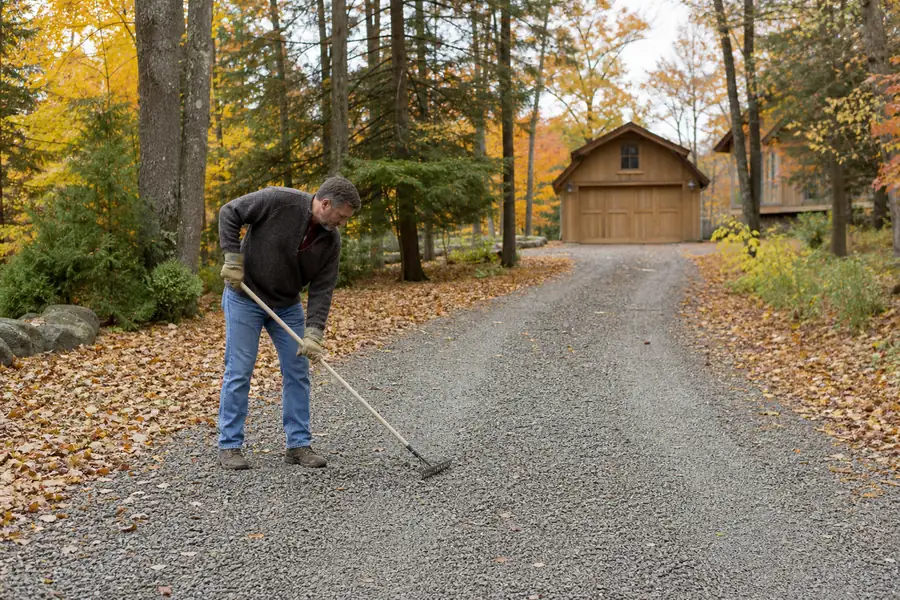
A gravel driveway needs a crown of roughly 2 to 4 percent from center to edge so rain and meltwater shed to the sides instead of pooling down the middle. Rake or grade the surface now, pulling loose stone out of the wheel ruts and building the center back up slightly higher than the edges.
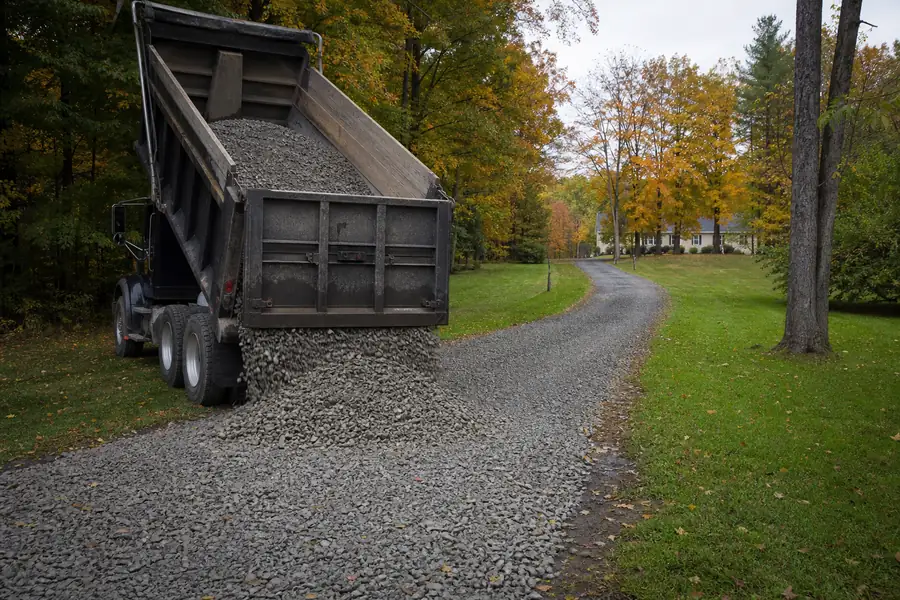
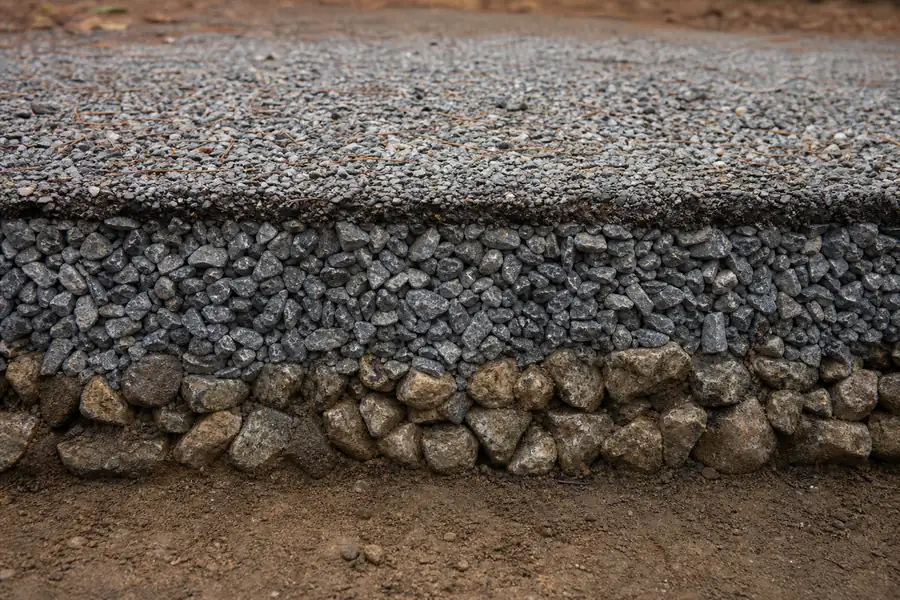
Most Connecticut driveways lose their crown over a season of plowing and heavy rain, which is why regrading is always the first job each fall. If the base has gone soft or is mixing with mud underneath, a layer of Processed Gravel over the compacted subgrade rebuilds a firm, well-draining base before you top it off. Our guide to processed gravel in Connecticut walks through how much base material a typical regrade takes.
Fill low spots before the ground freezes
Low spots and wheel ruts need to be filled with compactable stone before the first hard freeze, or they turn into standing ice by December. Water sitting in a depression freezes, expands, and pushes the surrounding gravel apart, which turns a small dip into a pothole by spring.
3/4 inch Trap Rock compacts tighter than round stone and locks together under weight, which makes it the right fill for ruts and low spots that see truck or plow traffic. Order 3/4 inch trap rock, tamp it into the low spot in 2 inch lifts, and grade it flush with the surrounding surface before the ground hardens.
If the whole surface has thinned from a season of driving and plowing, this is also the time to add a fresh topping layer instead of patching one low spot at a time. A uniform layer of driveway gravel compacts evenly and holds its crown through a winter of plow blades better than a patchwork of old and new stone.
Get the driveway ready for the plow
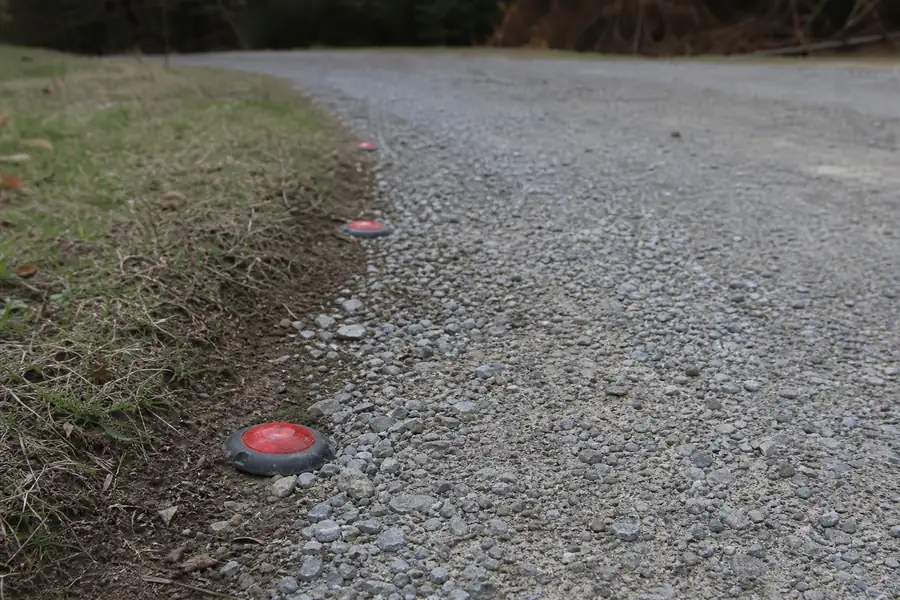
Plow-ready gravel driveway maintenance means marking the edges and knowing exactly where the gravel ends and the lawn begins. A plow operator working before daylight, or you clearing your own driveway, will scrape gravel into the yard along any edge that isn't marked.
Set fiberglass driveway markers every 15 to 20 feet along both edges before the first snow, especially near culverts, mailboxes, or drainage grates. Raise the plow blade about an inch off the surface on gravel, rather than dragging it flush, so it pushes snow without pulling stone out with it.
Put traction material down before the first storm
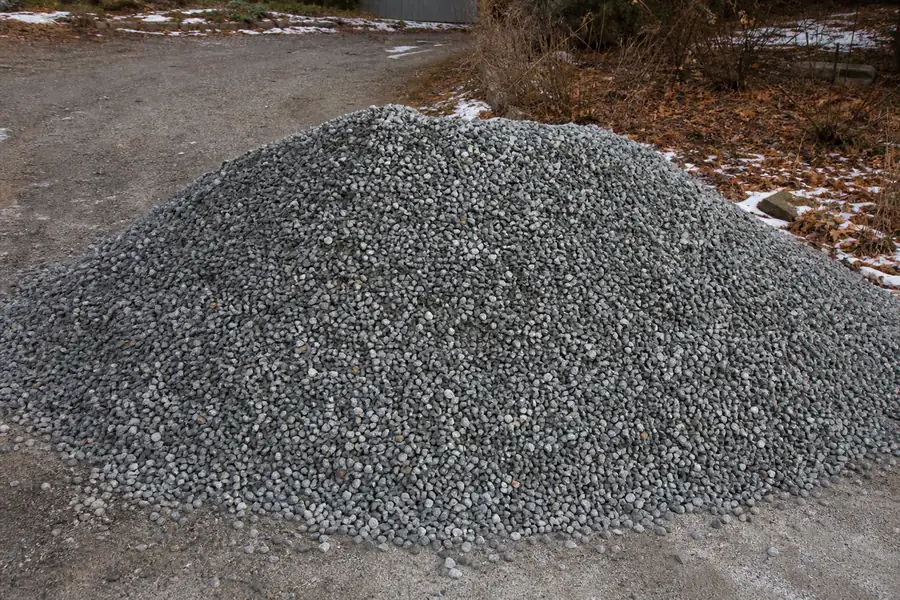
Traction sand needs to go down before the first ice event, not after, since spreading sand on top of glare ice barely helps once the surface is already slick. Keep a stockpile at the top of the driveway and near the steepest grade so it's ready the moment a forecast calls for freezing rain.
Washed sand gives the best traction underfoot and under tires because it's screened clean of clay and fines that turn slick when wet. A few buckets of washed sand staged near the garage or mudroom door covers most driveways through several storms before you need to refill.
Check drainage before freeze-up
Every culvert, ditch, and drainage grade along the driveway needs to run clear before freeze-up, because a clogged culvert backs water up under the gravel base and heaves it come spring. Walk the full length of the driveway after a fall rain and note anywhere water is standing instead of moving toward a ditch or culvert.
Clear leaves and sediment out of culvert pipes and roadside ditches by hand or with a shovel. If a low section never drains no matter how much you clean it, that's a grading problem, not a debris problem, and it needs stone and regrading, not just a rake.
Printable fall checklist
Match the material to the job first, then work through the checklist below starting in early October, and finish before nighttime temperatures start dropping below freezing on a regular basis.
| Fall task | Material | Why it works |
|---|---|---|
| Regrade or rebuild the base | Processed Gravel | Compacts into a firm, well-draining base |
| Fill ruts and low spots | 3/4 inch Trap Rock | Locks tight under plow and tire traffic |
| Fresh top layer | Driveway Gravel | Restores an even surface and crown |
| Traction before ice | Washed Sand | Clean and gritty, no slick fines |
- Rake and regrade the surface to restore a 2 to 4 percent crown
- Fill ruts and low spots with compactable stone in 2 inch lifts
- Add a fresh topping layer if the base gravel has thinned
- Set driveway markers every 15 to 20 feet along both edges
- Clear culverts, ditches, and drainage grates of leaves and sediment
- Stage traction sand near the garage or top of the driveway
- Walk the driveway after a rain to confirm water is draining, not pooling
FAQs
When should I regrade my gravel driveway before winter in Connecticut?
Plan to regrade between early October and mid-November, while the ground is still workable and before nighttime temperatures start holding below freezing. Waiting until December often means the subgrade is already too hard to reshape properly.
What stone works best for filling driveway ruts before winter?
Angular crushed stone like 3/4 inch trap rock works best because it locks together and compacts under weight, unlike smooth or rounded stone that tends to shift. Fill ruts in 2 inch lifts and grade the top flush with the surrounding driveway.
How much traction sand do I need for a gravel driveway?
Most residential driveways in Connecticut do fine with a few five-gallon buckets of washed sand staged near the entrance or garage, enough to cover the steepest section and the first few storms. Refill the stockpile as it gets used rather than trying to store a full season's supply.
Does a gravel driveway need drainage work every fall?
Yes, because culverts and roadside ditches fill with leaves and sediment over the summer, and a blocked culvert backs water up under the driveway base where it can freeze and heave. A quick walk-through after a fall rain shows whether water is draining or pooling anywhere along the driveway.
Can I add gravel to my driveway once the ground has frozen?
You can spread stone on top of frozen ground, but it won't compact properly and tends to shift or wash out once it thaws. It's better to handle regrading and base repairs in October or November and treat a mid-winter fix as temporary until spring.