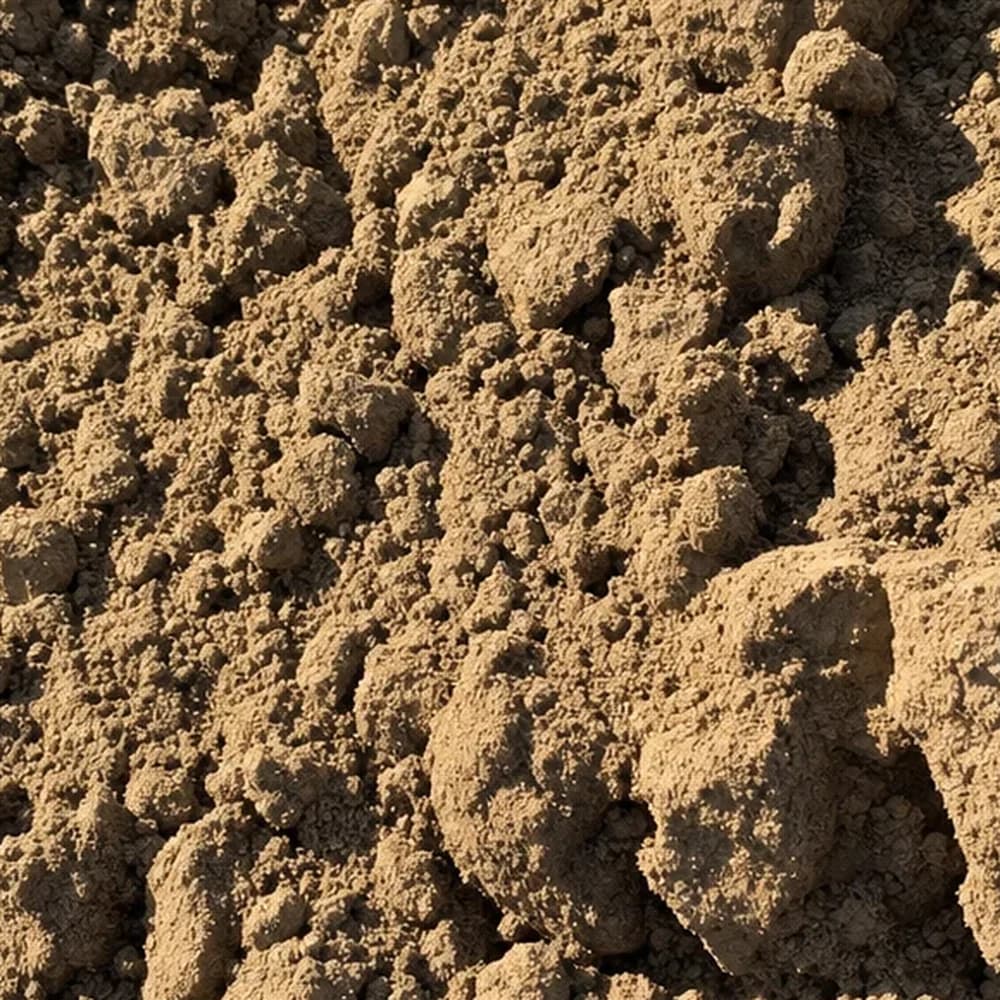
Dirt Calculator: Filling a Settled Hollow Over Glacial Till
Enter your project dimensions
Fill dirt gets bought for the wrong job more often than anything else in this catalogue. It is screened subsoil, the mineral layer sitting below whatever is alive above it, and grass planted straight into it sulks for two seasons. Right for the structure of a low spot; wrong for its last four inches. Settle that split before the tape comes out, and the dirt calculator below takes about two minutes.
Deciding whether the low spot wants fill at all
Older Connecticut lots settle in three recognizable ways. A trench over a water line or a pulled stump keeps sinking for years as the buried organic material breaks down. A hollow beside the foundation is usually backfill that was never compacted. A broad dish in the lawn is often the ground itself, sitting over a soft pocket in the till while the ledge twenty feet away has not moved an inch since the last glacier left it.
The first two want fill. The third sometimes wants a look at where the water is going first, because raising a dish that collects roof runoff just moves the puddle. Push a bar down at the low point before you order anything: if you hit ledge at eight inches, the hollow is not going to be filled so much as shaped.
Averaging a depth that is never one depth
A hollow has no single depth, so the tool needs an average. Lay a straight board or a string line across the dip at finished grade, then measure down to the ground at the deepest point and at three or four places around the shallow edge. Average those readings and use that figure.
A trench is easier and stricter: length and width in feet and depth in inches, all three measured rather than estimated, because a trench that is 26 inches wide rather than 24 is carrying eight percent more material than you think.
Typing it in: a trench, a stump crater or three dips at once
Rectangle for a trench or a squared-off dish, circle for the round crater a stump leaves, entered on its full diameter across. Multiple areas, up to five, when the lawn has three separate dips in it and one delivery is going to cover all of them.
Length, width and diameter go in as feet. Depth goes in as inches, from 0.25 up to 24, so a trench three feet deep gets entered in two passes and the two results added.
Select the material so the weight comes out right, leave the 10% box for compaction and spillage ticked, and read off cubic yards, tons and cubic feet. The email option sends the estimate to you if you want it beside the sketch later.
Ordering for the lift rather than the hole
Loose fill drops as it consolidates, often by ten to fifteen percent of its height, and the first hard rain is what usually collects that. If you order to the exact measured void you will be short, and the shortfall shows as a dip in the same place you started.
Two habits fix it. Order above the measured volume, and finish lawn repairs about half an inch proud of grade so the settling brings them level rather than low. Structural fill under a slab or a footing is a different conversation with thinner lifts, a compaction spec and an engineer attached, and is not something to size off a web page.
Spreading in six-inch lifts before the ground closes
Fill goes in layers of six to eight inches, compacted as you go. Dumping three feet into a trench and walking away guarantees a subsidence, and around here the freeze and thaw cycle finds that void faster than anywhere with a mild winter.
Season matters as much as method. The working window runs from the spring thaw through the fall; once the ground is frozen nothing compacts properly, and wet fill smears rather than knitting together. Keep the pile tarped if storms are forecast and you want to spread it while it is still crumbly. And never bury brush, stumps or old boards in the fill, because what rots underground becomes a hole five years later.
Capping the fill with four to six inches of topsoil
Bring the fill to within four to six inches of the finished grade you want, then put growing medium on top. That top layer is a separate order and a separate weight, which is why it is worth running twice.
Take a lawn dip 22 feet by 14, deepest at 7 inches and feathering to an inch at the edges, so an average of 4 inches. This is an illustration rather than a real job.
- 22 x 14 = 308 sq ft
- 308 x 4 / 12 = 102.67 cu ft
- 102.67 / 27 = 3.80 cu yd
- 3.80 x 1.20 = 4.56 tons of fill, or 4.18 cu yd and 5.02 tons with the 10% ticked
Cap the same 308 square feet with 4 inches of screened topsoil and it is another 3.80 cubic yards, which at 1.10 tons per yard is 4.18 tons. Two materials, two tonnages, one delivery address.
A utility trench works the same way. Thirty feet long, 2 feet wide, backfilled 18 inches: 60 square feet at 18 inches is 90 cubic feet, 3.33 cubic yards, exactly 4.0 tons.
Why a yard of fill weighs 2,400 lb one week and 3,000 the next
Fill dirt is sold and measured by volume, but it arrives on a weight ticket, and it is one of the few materials on this site where the water content genuinely moves the figure.
| Material | Weight per cubic yard | Tons per yard |
|---|---|---|
| Fill dirt, dry | about 2,400 lb | 1.20 |
| Fill dirt, wet | up to 3,000 lb | 1.50 |
| Screened topsoil | about 2,200 lb | 1.10 |
| Garden soil, blended | about 2,000 lb | 1.00 |
Rain changes the weight, not the volume you need, so keep ordering by the yard. What it does change is the wheelbarrow, which is worth remembering if the drop spot is a long way from the hollow.
Three tools cover this ground and they are not interchangeable. Use this one for Fill Dirt going in as structure. Use the topsoil calculator for the growing layer over it. Use the soil calculator for a blended garden soil going into raised beds and planting holes. Once the yardage is settled, set the quantity and delivery date on the product page, where delivery is arranged at checkout by ZIP code and the truck needs clear access to a firm dump spot.
Common questions
The hollow needs fill and then loam on top. Do I order them as one number?
No, they are two calculations and two products. Work the fill to within four to six inches of your finished grade, then run the same square footage again at the topsoil depth. The weights differ as well, 1.20 tons per yard against 1.10, so adding the volumes together gives the wrong ticket.
The dip in the lawn is a kidney shape with no straight edges. How do I get an area out of it?
Box it in. Walk the outline, drop a stake at the widest points, and treat it as the rectangle those stakes make, then subtract nothing. A rectangle drawn around an irregular dip over-orders by a small margin, which is a far better failure than under-ordering by a large one.
There is already a few inches of fill in the trench from last year. How do I measure what is left?
Measure from the existing surface up to your string line, not from the original trench bottom. Take the reading in three places along the run and average them, because old backfill rarely settles evenly along a trench.
What if I come up short in the middle of the job?
You end up compacting a partial lift and coming back to it, which is the one thing that makes fill settle unevenly. An extra half yard sitting on a tarp at the end of the day is easier to deal with than a trench that has been open across a rainy weekend.
How reliable is the estimate for a hole with an uneven bottom?
The volume is exact for the numbers you type, so the accuracy lives entirely in your average depth. On a rough excavation over till, take more readings rather than fewer. Five measurements averaged will usually put you within a few percent; one measurement at the deepest point will not.
Related calculators
Cheap by the yard, free to your gate.
Screened fill dirt for grading and backfill, delivered across Connecticut.