Garden Soil for Connecticut Raised Beds Over Till and Ledge
For Connecticut flower beds and vegetable plots, Garden Soil brings compost-enriched growing material to new plantings or tired soil.
- Size: Nutrient-enriched soil blend
- Grading: Enhanced with organic compost
From $474 for 1 ton, delivery included
Larger loads cost less per ton: 500 tons is $35,160 ($70.32 per ton). Pick any quantity below for a delivered price.
Free delivery included
Free delivery anywhere in Connecticut
Pick a delivery date
Weekday delivery, earliest Oct 20
Get a Free Quote
Fill out the form and our sales team will get back to you within the hour.
Size and Grading
- Size
- Nutrient-enriched soil blend
- Grading
- Enhanced with organic compost
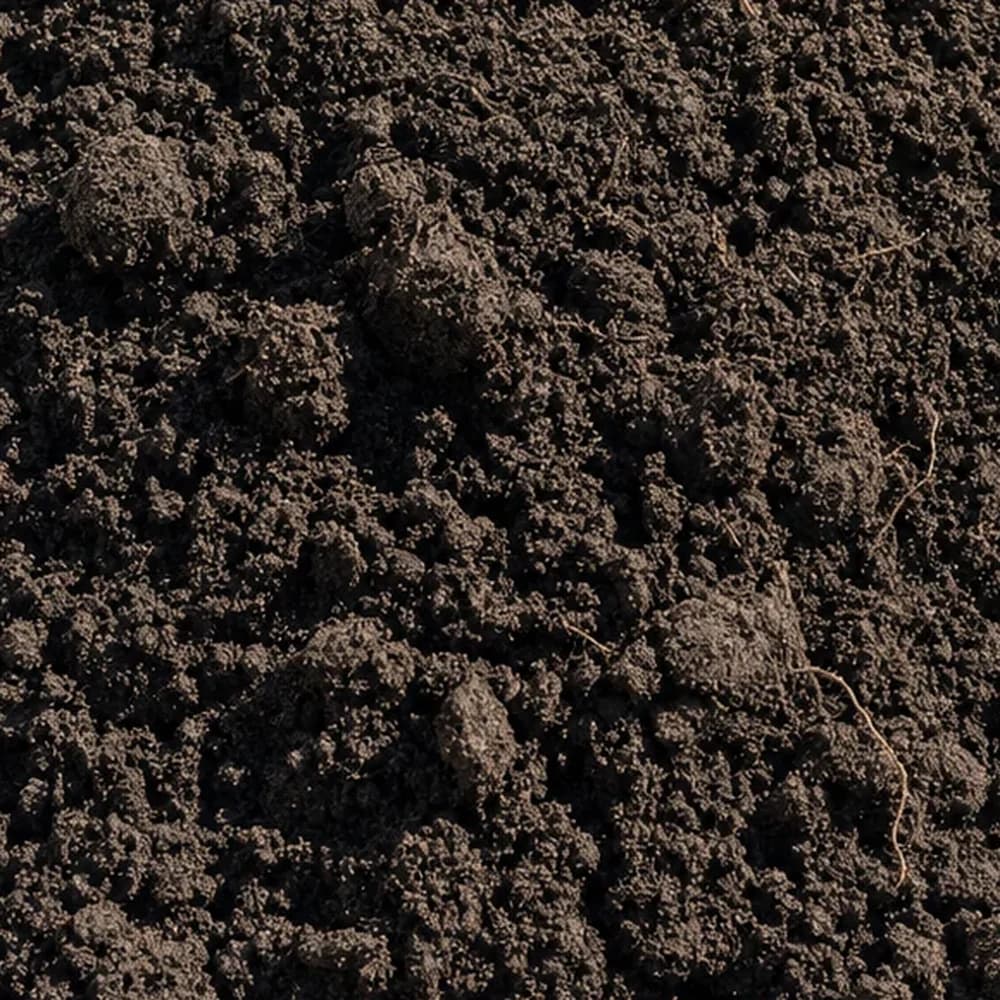
Push a hand into the pile and the first thing you notice is that it gives. It is dark, cool a few inches down, and it crumbles between your fingers instead of holding the shape of your fist the way the heavy ground in most yards around here does. Lift a double handful and it is lighter than the screened soil heaped next to it. That lightness is the compost doing its job, and it is the reason garden soil goes into a bed rather than under a lawn. What follows is the run of questions people ask at the pile, roughly in the order they ask them.
Compost blend or screened top soil: which one is this?
Two blends, two jobs, and the distinction is the organic content.
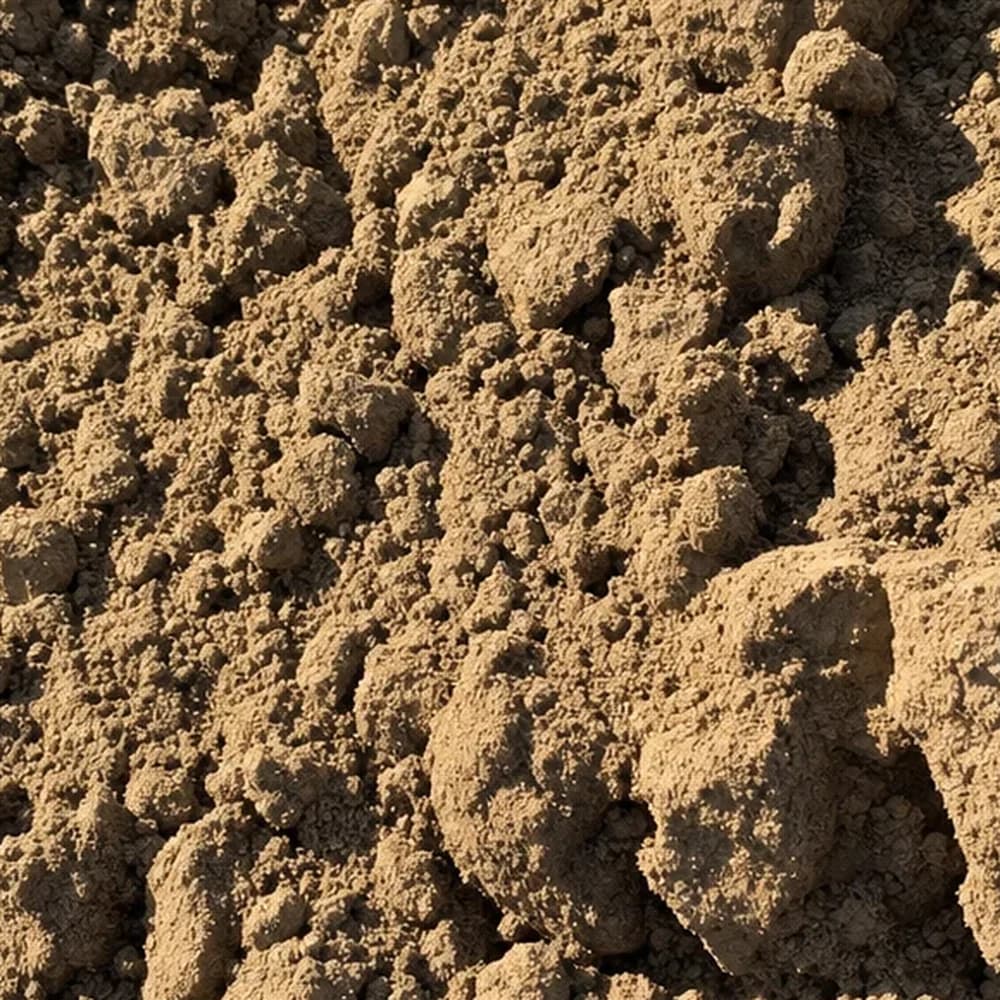
Top Soil is screened mineral soil, a balance of sand, silt and clay, and its job is volume: regrading a lawn, building up a thin spot over ledge, filling behind a wall before seed goes down.
Garden soil is a growing medium. It is blended with organic compost and nutrient-enriched material so it can carry a crop straight away, without anything mixed in first. That compost is why it holds moisture while still letting excess rain pass, and why it keeps some structure instead of compacting into a slab by July.
You can feel the difference before you see it. This site publishes a working weight of about 2,000 lb per cubic yard for the blended garden soil against 2,200 for screened top soil, both approximate. A tenth of the weight, gone, is mostly air and organic matter, and that is exactly what roots want.
Is it screened, and will I be picking stones out of it?
It is a blended soil rather than a sterilised medium, so expect it to behave like soil. The compost fraction means texture, and any bulk soil can carry the occasional small stone or piece of root.
That is worth knowing on an older Connecticut lot in particular, because the local expectation is set by whatever came out of your own ground, which is glacial till full of rock. Compared with that, this blend is soft and even. Compared with a bagged seed-starting mix it is not, and it is not meant to be.
Practically: for vegetables and flowers going in as transplants, it goes straight in. For a bed you will be sowing carrots or fine seed into, rake the top two inches over and take out anything you meet. That is a ten minute job per bed, not an afternoon.
How deep does it go in a new raised bed over a till lot?
Depth depends on what is underneath, which on most properties here is the problem rather than the bed.
Over reasonable ground, 10 to 12 inches of blend in the box is plenty. Roots that reach the bottom carry on into the soil below.
Over compacted till, or over ledge sitting close to the surface, go deeper. Twelve to eighteen inches gives most vegetables their full root run inside the bed, because nothing much is happening below the frame. A bed on ledge is effectively a container, and it wants to be sized like one.
For renewing an established border rather than building new, 2 to 3 inches spread across the surface as a top dressing is the working figure. Let the worms take it down rather than digging it in.
One habit worth keeping in this climate: fill beds slightly proud of the frame. Compost-rich soil settles over the first season, and a bed filled level in May sits an inch low by August.
My bed is an L shape. How do I turn that into yards?
Break it into rectangles and add them. The calculator takes up to five areas at once for the same reason.
A hypothetical L-shaped bed, one leg 4 feet by 16 feet and the other 4 feet by 10 feet, filled to 10 inches. 4 x 16 = 64 square feet. 4 x 10 = 40 square feet. Together, 104 square feet. 104 x 10/12 = 86.7 cubic feet. 86.7 divided by 27 = 3.2 cubic yards.
Three standard boxes for comparison, each 4 feet by 12 feet at 12 inches deep. 4 x 12 = 48 square feet per bed. 48 x 12/12 = 48 cubic feet. 48 divided by 27 = 1.8 cubic yards each, so 5.3 cubic yards for the three.
A top dressing strip along a border, 40 feet long and 3 feet wide at 2 inches: 40 x 3 = 120 square feet. 120 x 2/12 = 20 cubic feet. 20 divided by 27 = 0.75 cubic yards.
At the published weight of roughly 2,000 lb per cubic yard, a cubic yard of this blend is close to one ton, which makes the conversion unusually easy. The L-shaped bed is about 3.2 tons, the three boxes about 5.3 tons, the border strip about 0.75 tons. Check your own figures against the soil calculator before you order.
I am also putting in a gravel drive and a flagstone walk. Does this go under either?
No, on both, and it is worth being blunt about it because the spring order often bundles all three.
Under a single-car gravel drive, the layer that carries traffic is a compacted mineral base such as Processed Gravel. Organic material in a driveway base is a defect: it breaks down, it holds water, and in a state with a 42 inch frost line and repeated freezing that trapped water is what lifts and cracks the surface above.
Under a flagstone walkway, the setting bed is Stone Dust over a compacted base. Soil under flagstone settles unevenly and every slab rocks by the second season.
Where this blend does belong on those projects is beside them: the planting strips along the walk, the beds the drive runs past, the border that gets dug up while the machinery is on site anyway.
When should it land, and what needs to be clear in the driveway?
Timing is easier for soil than for stone, because nothing has to be compacted. The limit is the ground: beds cannot be worked while they are frozen or sodden, so the window opens once the thaw has drained away and runs through to autumn planting.
Ordering to land a day or two before you plan to fill is ideal. A soil pile left on a lawn for a week kills the grass under it and starts shedding in the rain, so plan for a tarp on the driveway if the beds will not be filled straight away.
Before the day, clear the tipping spot and check the wheelbarrow route for gates, steps and soft lawn. Delivery is arranged by ZIP code at checkout, and the truck needs somewhere it can reach and tip cleanly. Pick your quantity and a date on this page once the calculator has given you a figure, and if the beds are behind a gate or up a slope, say so through the contact page first.
Quickly Calculate How Much You Need
Material: Garden Soil
How to Measure
Measure the length and width of your project area in feet
Decide on depth in inches (2" for landscaping, 4" for driveways)
Enter the values above and we'll calculate the tonnage you need
Need help figuring out the right amount? We can help!
Call or text us at (860) 891-3260 and we'll help you calculate the right quantity for your project.
Not sure how much you need? The Soil Calculator has depth guides, coverage charts and worked examples for this material.
Frequently Asked Questions About Garden Soil
Garden Soil delivery across Connecticut
- Bridgeport
- Stamford
- New Haven
- Hartford
- Waterbury
- Norwalk
- Danbury
- New Britain
- Fairfield
- Greenwich
- West Hartford
- Bristol