Soil Calculator for Raised Beds Built on Rocky Ground
Enter your project dimensions
Raised beds are common here for a reason that has nothing to do with fashion. Dig eighteen inches anywhere from the Quiet Corner to the shoreline and you are as likely to find a boulder or a shelf of ledge as you are loose ground, so gardeners build up rather than down. That means buying the whole volume of a bed rather than amending what is already there, and this soil calculator exists because that volume is almost always larger than it looks.
Two habits that leave a new bed half full
The first is measuring the frame instead of the void. A 4 by 8 bed made from two-by-tens is not eight feet on the inside; it is eight feet minus the thickness of two boards, and you fill the inside. Measure the opening, not the timber.
The second is entering the height of the box rather than the depth of soil you want. A 24 inch cedar planter filled to the rim is a different order from the same planter with 14 inches of blend over a base layer, and a lot of people pay for the first while planning the second.
There is a third, milder trap. Blends with compost in them consolidate. A bed filled level on delivery day sits noticeably below the rim three weeks later, once the compost has settled and the first real rain has been through it.
Beds, half barrels and a planter entered together
Rectangle takes a framed bed. Circle takes a half barrel, a ring bed or a stock tank planter, entered on the diameter across the top. Multiple areas holds up to five, which means three vegetable beds and two planters go in as one calculation and come out as one delivery figure.
Dimensions are in feet, so a bed with an inside measurement of 3 feet 6 inches is entered as 3.5. Depth is in inches, from 0.25 up to 24, which covers a topping-up pass and a deep planter alike. Choose the soil in the material list so the ton figure is weighted correctly, leave the box adding 5% for compaction and spillage ticked if you want that margin, and press calculate.
Cubic yards, tons and cubic feet come back together, and the estimate can be emailed to you.
A yard of blend weighs 2,000 lb, a yard of fill 2,400
The volume arithmetic is the same whatever you are filling: area in square feet, times depth in inches divided by 12, gives cubic feet; cubic feet divided by 27 gives cubic yards. Soil is sold by the yard, so that is the number to plan around.
The weight only changes when you change material, and this site publishes three:
| Material | Weight per cubic yard | Tons per yard |
|---|---|---|
| Garden soil, blended with compost | about 2,000 lb | 1.00 |
| Screened topsoil | about 2,200 lb | 1.10 |
| Fill dirt | about 2,400 lb | 1.20 |
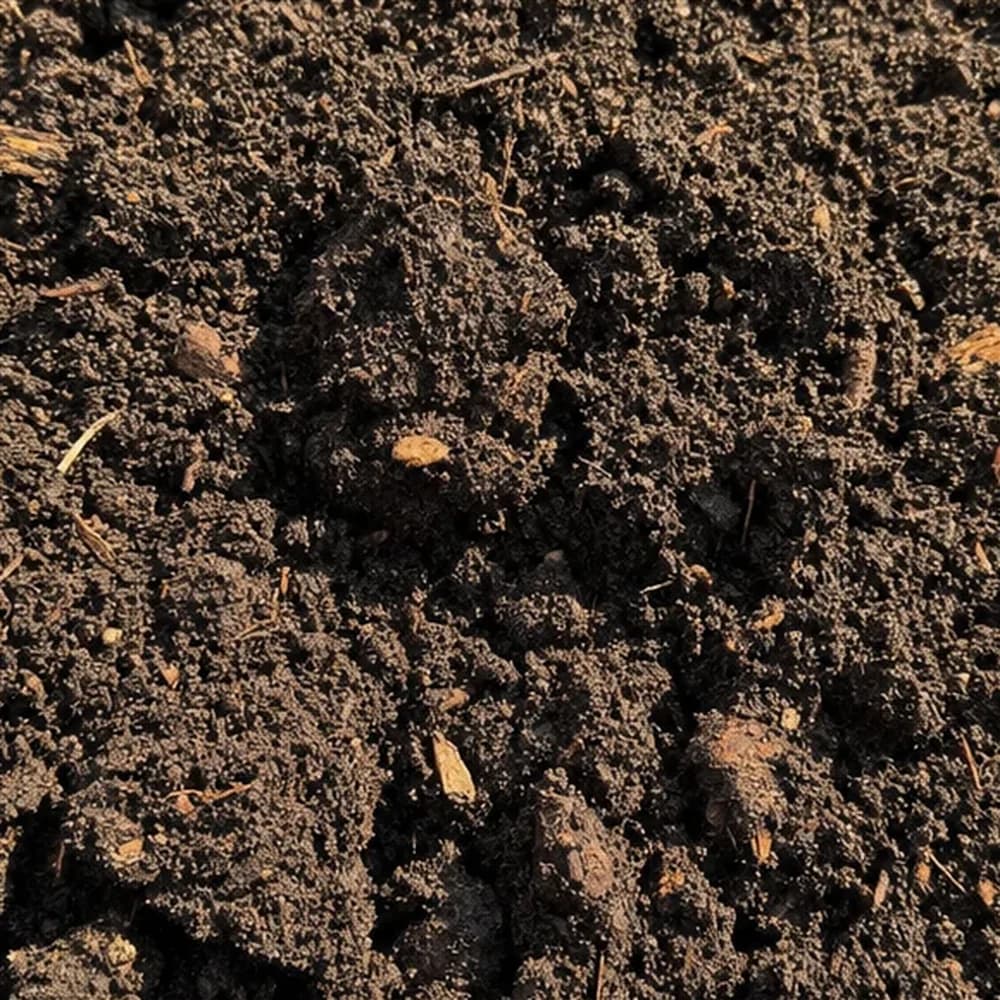
Garden soil is the lightest of the three because there is organic matter in it, and that same organic matter is what settles later. Select the one you intend to buy before you read the ton figure, because a three yard order is twelve hundred pounds heavier as fill dirt than as blend.
Blend for planting, screened loam for lawns, fill for structure
Three tools sit close together on this site and they answer different questions.
Use this page for a compost blended garden soil going into beds, planters and planting holes. Use the topsoil calculator for screened loam under seed or sod and for finish grading. Use the dirt calculator for fill dirt going in as structure, under a low spot or behind a wall, where nothing is expected to grow.
The one that costs people money is planting into fill. It is subsoil, it compacts well, and roots make very little of it. Keep it below the growing layer and it earns its place.
Filling two 4 by 10 beds and a 24-inch planter
Hypothetical jobs, worked through so the numbers can be checked.
Two vegetable beds at 12 inches
Two beds, each 4 by 10 feet on the inside, filled a foot deep with garden soil.
- 4 x 10 = 40 sq ft each, so 80 sq ft entered as two areas
- 80 x 12 / 12 = 80 cu ft
- 80 / 27 = 2.96 cu yd
- 2.96 x 1.00 = 2.96 tons
Order three yards rather than the exact figure, and keep the balance for the top up after settling.
A deep planter filled in two layers
A 4 by 8 box standing 24 inches tall, with the bottom 10 inches in fill dirt and 14 inches of blend above it.
- Lower layer: 32 sq ft x 10 / 12 = 26.67 cu ft, so 0.99 cu yd and 1.19 tons of fill
- Upper layer: 32 sq ft x 14 / 12 = 37.33 cu ft, so 1.38 cu yd and 1.38 tons of blend
Two runs of the tool, two materials, one delivery address. Fourteen inches is plenty of root room for anything short of a fruit tree, and the layer underneath is doing structural work rather than growing work.
Topping up three established beds
Three beds of 3 by 6 feet, given 4 inches of fresh blend each spring.
- 18 sq ft each, 54 sq ft in total
- 54 x 4 / 12 = 18 cu ft
- 18 / 27 = 0.67 cu yd, and 0.67 tons
Filling proud of the rim, then coming back in June
Compost rich blends drop as they consolidate, often by a tenth of their depth and sometimes more in the first weeks. Two things make that a non-issue. Fill slightly above the rim and water the bed thoroughly rather than tamping it, which closes the voids without compacting the structure you paid for. Then keep a wheelbarrow or two in reserve, under a tarp, for the top up in early summer.
Beds that are cropped hard will want an inch or two added each spring after that, so a standing habit of ordering a little long is the cheaper way to garden.
When the yardage looks right, set the quantity and date on the product page. Delivery is arranged at checkout by ZIP code and the truck needs clear access to a firm spot to tip. Have a tarp down first, because soil stains a drive and makes the cleanup an afternoon rather than a morning. Mulching the finished beds is the next order and is sized on its own tool.
Common questions
I taped the inside of a 4 by 10 frame. How far off will the yardage be?
The volume is exact for whatever you type, so the accuracy is your measurement plus the settling. Measure the inside of the frame and the depth you want filled, and the result will be within a few percent. The larger variable is the ten percent or so that compost blends lose in the first weeks.
Garden soil, screened topsoil or fill dirt: which one goes in a bed I am planting?
Garden Soil for anything being planted into, Top Soil for lawn work and grading, Fill Dirt for the structural layer underneath. Quantity and delivery date are set on that product page.
Which surface should the pile land on when the wheelbarrow route runs through a gate?
Pick the firmest flat spot the truck can reach, on the drive or the apron rather than on lawn, and put a tarp under it. Measure the gate width and the wheelbarrow route beforehand, since moving three yards through a 30 inch gate is a different afternoon from moving it through a double gate.
Two beds came back as 2.96 yards and 2.96 tons. Which line places the order?
Soil is planned by volume, because that is what fills a bed. The ton figure tells you what is on the truck and what you are moving by hand, which matters more than people expect once the pile is on the drive.
Should the depth field carry the settling allowance, or does the 5% box handle it?
Enter the finished depth you want in the bed. Blends settle, so the practical move is to enter that depth, tick the 5% box, and fill a little proud of the rim so the settling brings it level rather than low.
Related calculators
Beds measured? Soil's a click away.
Garden soil, topsoil and fill dirt by the yard, free delivery included.