Railroad Ballast for Connecticut Low Spots, Lanes and Ditch Lines
Railroad Ballast settles into an interlocking, free-draining layer for Connecticut access routes and equipment pads where water must move below heavy traffic.
- Size: Roughly 1 inch to 2.5 inches
- Grading: Graded to interlock under load while draining freely
- Type: Large angular crushed stone
From $423 for 1 ton, delivery included
Larger loads cost less per ton: 500 tons is $25,535 ($51.07 per ton). Pick any quantity below for a delivered price.
Free delivery included
Free delivery anywhere in Connecticut
Pick a delivery date
Weekday delivery, earliest Oct 20
Get a Free Quote
Fill out the form and our sales team will get back to you within the hour.
Size and Grading
- Size
- Roughly 1 inch to 2.5 inches
- Grading
- Graded to interlock under load while draining freely
- Type
- Large angular crushed stone
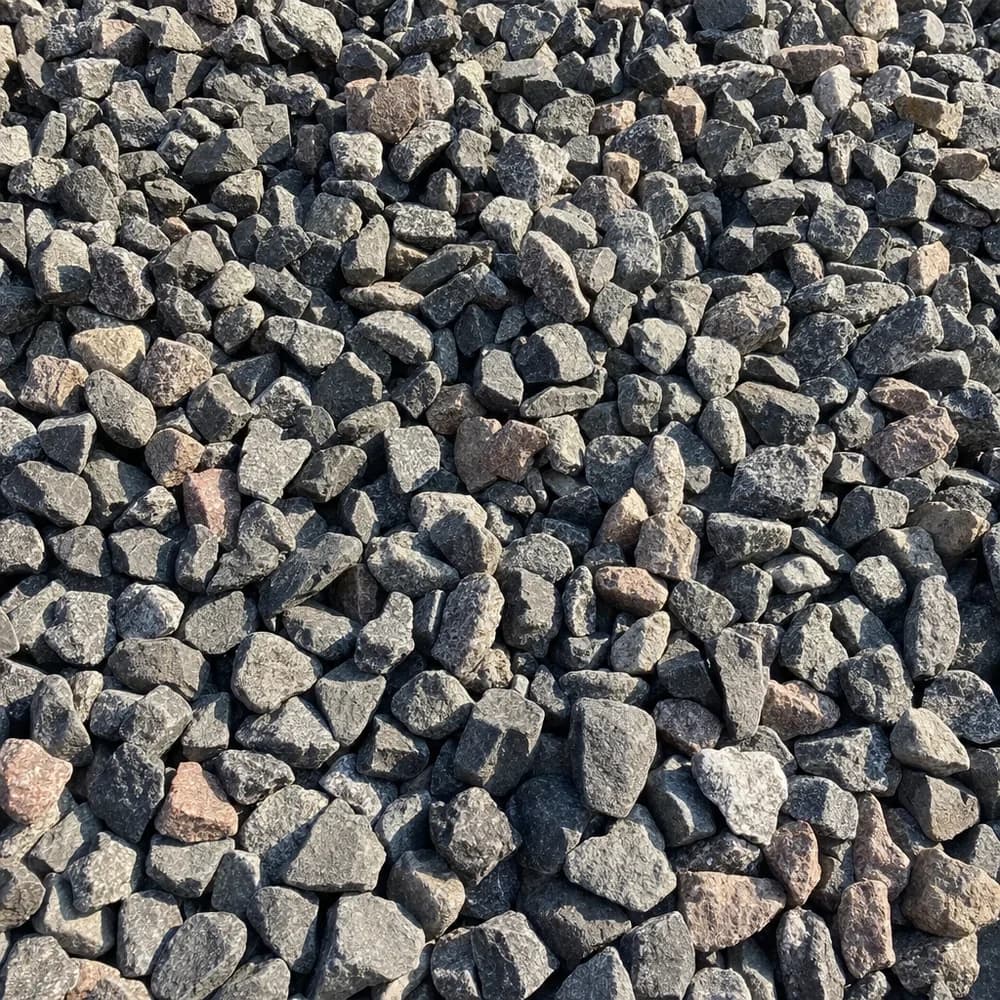
Most orders for this stone start with the same patch of ground: the low corner of a yard or working area that turns to soup at the thaw and stays that way until June. Something heavy has to stand or drive on it, a finer stone has already been tried and disappeared into the mud, and the property owner has worked out that the answer is a bigger rock. That is the right conclusion. Railroad Ballast is large angular crushed stone, graded so the pieces interlock under load while the spaces between them stay open, which is a rare combination and the reason it fixes ground that nothing lighter will.
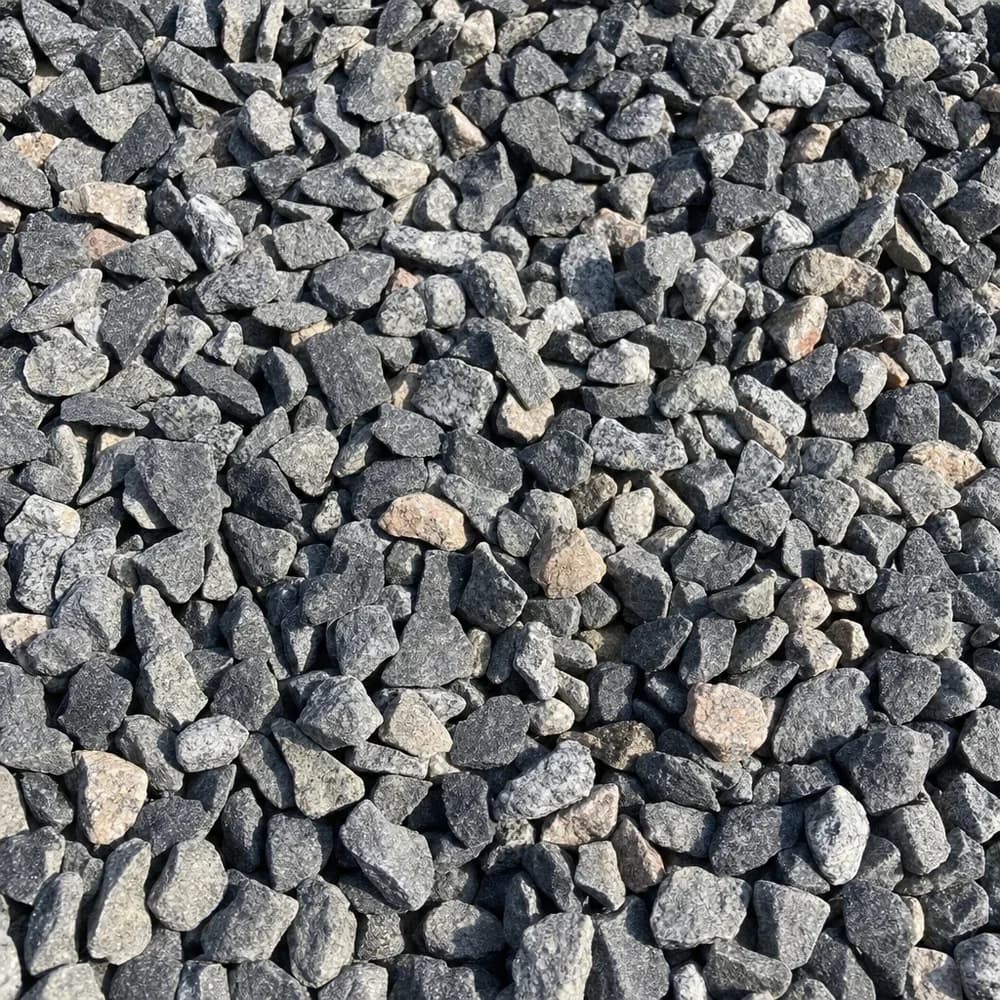
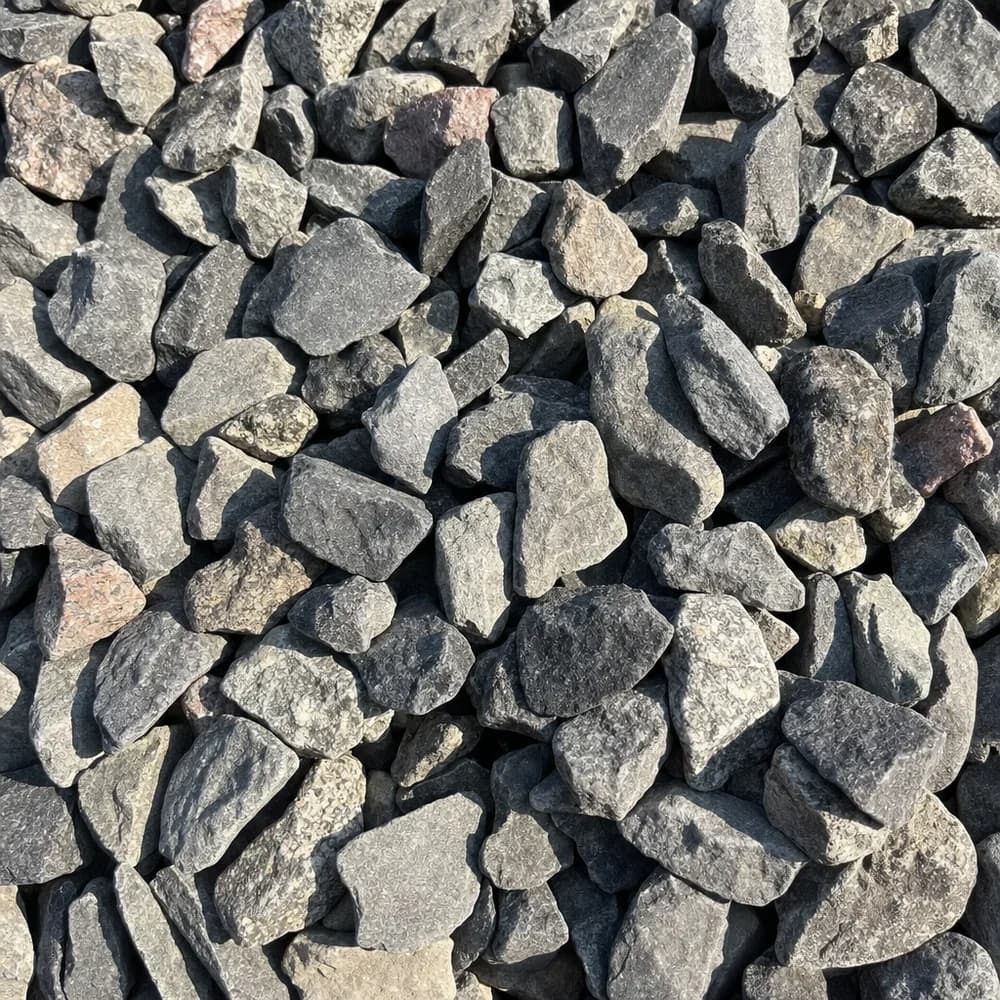
Railroad ballast at one inch to two and a half, graded to interlock
The confirmed specification is short, and worth stating precisely.
Size runs roughly 1 inch to 2.5 inches. Grading is set so the pieces lock against each other under load while still draining freely. Type is large angular crushed stone, broken rather than rounded, with the faces that come off a crusher.
Two things follow from that and they explain most of the product's behavior.
First, the pieces are large and irregular, so the range is genuinely a range. A load will have pieces at the top of the size band and pieces at the bottom, and both are within grading.
Second, interlocking is not the same as compacting. A binding material has fines that fill the spaces and tighten the layer. This has none, so it settles into contact and stays open. The stability comes from the shape of the pieces wedging together, not from a packed matrix.
Three requests it takes well, and how it holds up against a finer graded stone
| Job | How this stone behaves | What to watch |
|---|---|---|
| Low spot or yard regrade | Bridges soft ground that swallows smaller stone, drains through instead of holding water | Needs fabric under it on soft till, or it disappears the same way |
| Culvert outlet or ditch lining | Heavy and angular enough to stay put in moving water after a thaw or a heavy rain | Bank scour beyond a ditch line wants armor stone rather than ballast |
| Xeriscape or rock garden bed | Holds a defined shape and will not travel off a slope | Coarse underfoot and awkward to plant through, so set the planting pockets first |
A finer graded stone such as #57 Stone does the same drainage work at a fraction of the effort, and on ground that is merely damp it is the better choice: easier to spread, easier to walk on, easier to top with something finished. The argument for this size is soft ground and heavy loads. Where a skid steer or a loaded trailer sits directly on the stone, or where a smaller aggregate has already been swallowed by the subgrade, the larger pieces are what bridges and stays.
Thaw water over ledge, and why the smaller stone failed in the same spot
The reason a low spot repeats year after year is usually not the low spot itself. Glacial till over ledge sends water sideways, and a hollow in a yard is frequently the outlet for water that has traveled under the whole slope above it.
That gives you two things at once: ground that stays saturated far longer than rainfall alone explains, and a soft subgrade with no bearing strength. Put a smaller aggregate on it and the pieces punch down into the soft layer under traffic and vanish. The stone did not wear out. It was pushed into the mud.
Larger pieces bridge that soft layer because the load spreads across a wider contact area, and the open voids let the water keep leaving instead of sitting under the working surface through a freeze. With frost reaching around 42 inches in this state and thawing repeatedly through the season rather than once, a layer that keeps draining is what stops the same patch heaving every March.
Seasonally, this is work best done once the ground has drained in late spring or through the drier part of the summer, when a machine can get onto the site without making the damage worse.
Filter fabric, a bucket and a grade rake: placing stone this size
Nobody spreads this material with a shovel for long, and planning around that saves a weekend.
Lay filter fabric on the subgrade first, especially on soft till. Without it the ground works up between the pieces and the layer sinks into what it was meant to bridge. Lap the edges generously and pin them before the stone goes on.
Place it in one lift rather than layers. Typical depths run 6 to 8 inches on soft ground or under equipment, and 4 inches where the ground is only seasonally wet and the stone is decorative or light duty. Tip it in heaps across the area and pull it out from there with a bucket, then a grade rake for the last inch.
Compaction is a light touch. A pass or two with a plate or a roller settles the pieces into contact with each other and takes the rattle out, and that is the whole exercise. It will not go hard and should not be expected to.
Expect a few pieces at the top of the size range in any load. Set them aside as you grade and drop them into the ditch line where size does not matter.
Tonnage for a 40 by 24 low spot and 50 feet of ditch line
Hypothetical examples, worked so the method carries over. Length times width gives square feet, depth in inches divided by 12 converts to cubic feet, and dividing by 27 gives cubic yards.
A low working area 40 feet by 24 feet, at 6 inches: 40 x 24 = 960 square feet. 960 x 6/12 = 480 cubic feet. 480 divided by 27 = 17.8 cubic yards.
A ditch line 50 feet long and 4 feet across the wetted width, at 9 inches: 4 x 50 = 200 square feet. 200 x 9/12 = 150 cubic feet. 150 divided by 27 = 5.6 cubic yards.
A rock garden bed 14 feet by 9 feet, at 4 inches: 14 x 9 = 126 square feet. 126 x 4/12 = 42 cubic feet. 42 divided by 27 = 1.6 cubic yards.
This site publishes a working weight of about 2,900 lb per cubic yard for #4 stone and railroad ballast, roughly 1.45 tons per cubic yard. That figure is approximate. It puts the low spot near 25.8 tons, the ditch line near 8.1 tons and the bed near 2.3 tons.
Booking the load and clearing the drop on an older property
Run your own measurements through the stone calculator before ordering, because at this depth a few inches either way changes the tonnage more than people expect.
Then look at the ground the truck has to use. A loaded delivery vehicle needs a firm route in and a clear place to tip, and the irony of this material is that the site buying it is often the site least able to take a truck. Tip on the firmest ground available, usually the existing drive or a hard apron, and move the stone in with a machine rather than asking the truck to cross the soft area it is meant to fix. Gateposts, low branches and a stone wall on a bend are all worth measuring before the day.
Delivery is arranged by ZIP code at checkout. When the tonnage and the drop spot are settled, pick a quantity and a date here, or describe the access through the contact page and let someone talk it through with you first.
Quickly Calculate How Much You Need
Material: Railroad Ballast
How to Measure
Measure the length and width of your project area in feet
Decide on depth in inches (2" for landscaping, 4" for driveways)
Enter the values above and we'll calculate the tonnage you need
Need help figuring out the right amount? We can help!
Call or text us at (860) 891-3260 and we'll help you calculate the right quantity for your project.
Not sure how much you need? The Stone Calculator has depth guides, coverage charts and worked examples for this material.
Frequently Asked Questions About Railroad Ballast
Railroad Ballast delivery across Connecticut
- Bridgeport
- Stamford
- New Haven
- Hartford
- Waterbury
- Norwalk
- Danbury
- New Britain
- Fairfield
- Greenwich
- West Hartford
- Bristol