Stone Calculator: A Trench and a Turnaround on One Lot
Enter your project dimensions
Take one property with two jobs on it. A curtain drain along the uphill side of the foundation is 45 feet long, ten inches wide and twenty inches deep, and it swallows 3.2 tons of #57. The gravel turnaround by the barn is 620 square feet, sixteen times the surface area, and a 2 inch refresh course over it takes 5.4 tons. Almost the same delivery, and nothing about the two jobs looks alike from the driveway. That is what this stone calculator is for: depth and grade decide the tonnage far more than the size of the space does.
Graded stone is bought by its number, gravel by how it looks
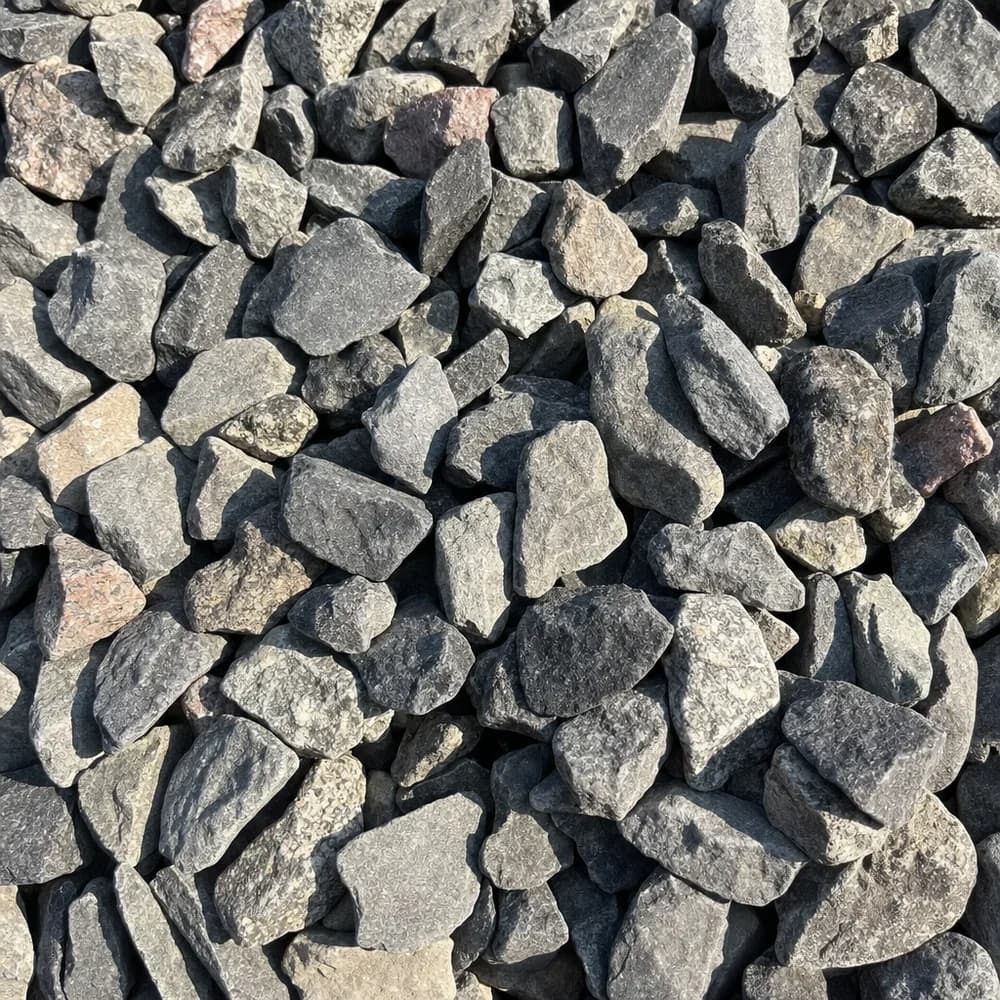
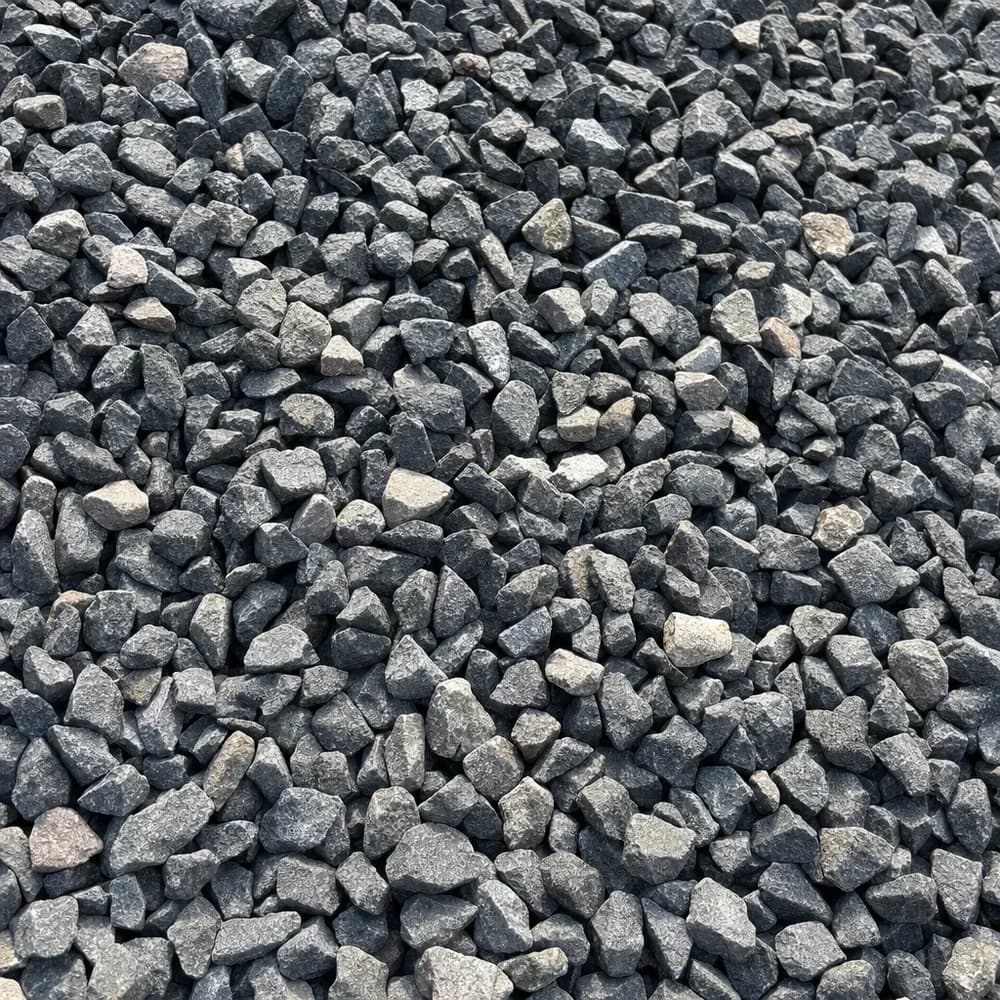
The distinction worth holding onto is that crushed stone is specified and gravel is chosen. Stone comes screened to a size range with a number attached, #57 or #67 or #89, and a drain detail or an inspector will name that number. Gravel is sold by what it does and how it finishes, which is why the gravel calculator sits on its own page and handles surfacing and paths.
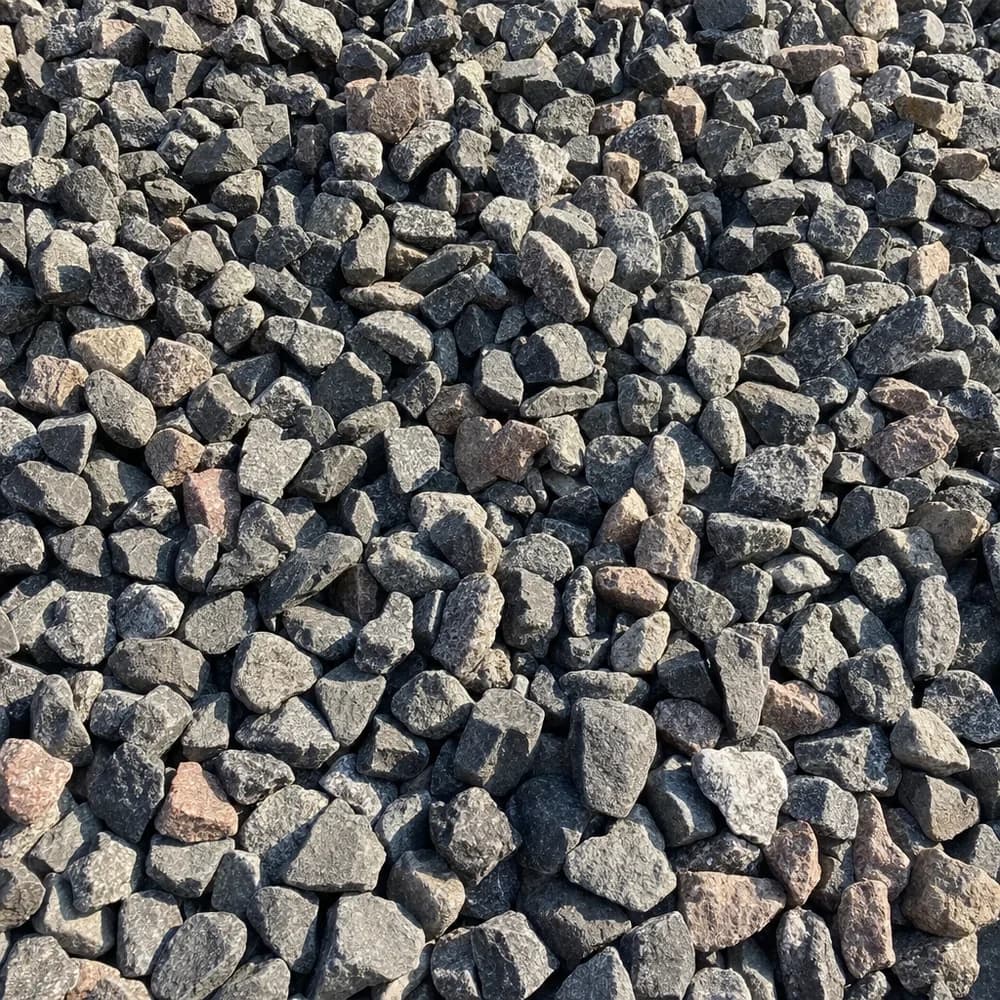
In this state the everyday crushed stone is trap rock, the hard quarry stone that turns up in every drive and drain from the Naugatuck Valley across the river valley. It is sold here as 3/4 inch trap rock and behaves like #57 in the calculation.
The other split matters more than the size: clean stone against stone with fines in it. Washed grades like #57 and drain rock hold voids that water moves through, which is what a drain needs. Material with fines tightens under a roller, which is what a base needs. Put fines in a drain and it silts up; put clean stone under flatwork and it keeps moving.
Trench width, a well ring and the 24-inch ceiling
Rectangle covers a pad, a path or a trench, where the length is the run and the width is the trench width rather than the width of the dig at the surface. Circle handles a ring around a well head or a fire pit, entered on the full diameter. Multiple areas takes up to five shapes, which suits a drain run plus the two catch pits at its ends.
Feet for length, width and diameter; inches for depth, from 0.25 up to 24. A trench deeper than two feet is entered in two passes and the results added, which is the one place the tool needs help. Select the grade in the material list, because the weight behind the ton figure moves with it, leave the 5% box for compaction and spillage ticked if you want that allowance, and calculate. Cubic yards, tons and cubic feet come back together, with the option to email the estimate on.
Where 1.40, 1.45 and 1.55 come from
The arithmetic: square feet times depth in inches divided by 12 gives cubic feet, divided by 27 gives cubic yards, times the material weight gives tons. The weights this site publishes for the graded products are close together but not identical.
| Product | Weight per cubic yard | Tons per yard |
|---|---|---|
| #57, #67 and 3/4 inch crushed stone | about 2,800 lb | 1.40 |
| #89, #8 and 3/8 inch chips | about 2,800 lb | 1.40 |
| Stone dust and screenings | about 2,900 lb | 1.45 |
| #4 stone and railroad ballast | about 2,900 lb | 1.45 |
| Crusher run and processed gravel | about 3,000 lb | 1.50 |
| Rip rap | about 3,100 lb | 1.55 |
At 1.40 tons per yard, one ton of #57 covers about 116 square feet at 2 inches, 77 at 3 inches, 58 at 4 inches and 39 at 6 inches. Switching from #57 to stone dust on the same trench adds about 4% to the weight, which on a ten ton order is worth knowing before the ticket arrives.
Rolling, settling and the five percent that covers it
Angular clean stone settles five to ten percent once traffic works it together, and anything with fines in it compacts by design. The optional 5% box is sized for that ordinary settling and for what gets lost on the ground between the pile and the trench.
Two things it does not cover. A trench with a soft bottom will take stone until the bottom stops moving. And an engineered detail that names a compacted depth needs that depth after compaction, which means entering more than the finished dimension and confirming the figure against the spec rather than against this page.
The practical version: order the calculated figure plus the allowance, and keep whatever is left at the outfall end of a drain or along the edge of a pad where the surface thins first. Chasing a half ton in a second delivery is the outcome everyone wants to avoid.
A 45-foot curtain drain and a 620-foot turnaround
Both hypothetical, both worked through.
The drain along the uphill wall
Forty-five feet of trench, ten inches wide, filled twenty inches deep with #57.
- Width: 10 / 12 = 0.833 ft, so 45 x 0.833 = 37.5 sq ft
- 37.5 x 20 / 12 = 62.5 cu ft
- 62.5 / 27 = 2.31 cu yd
- 2.31 x 1.40 = 3.24 tons
Line the trench with non woven fabric before the stone goes in and wrap it over the top, or the fines in the surrounding till will find the voids within a couple of wet seasons. The perforated pipe displaces very little, so order the full trench volume.
The refresh course over the turnaround
620 square feet at 2 inches of 3/4 inch trap rock.
- 620 x 2 / 12 = 103.3 cu ft
- 103.3 / 27 = 3.83 cu yd
- 3.83 x 1.40 = 5.36 tons
With the 5% box that becomes 4.02 cubic yards and 5.63 tons.
Matching a number to a drain, an entrance or a paver joint
If the plan names a gradation, use it. If it does not, size decides the job: #4 for construction entrances and trench bottoms that carry weight, #57 for drains, drives and concrete work, #67 around pipe, #8 and #89 for joints and finish courses, stone dust for the bed under flatwork, and railroad ballast where heavy loads sit on wet ground.
When the grade and the tonnage are settled, set the quantity and delivery date on that product page. Delivery is arranged at checkout by ZIP code and the truck needs clear access to a firm place to tip, which is worth checking on an older lot before the day rather than on it.
Common questions
There is edging around the path. Do I measure inside it or outside it?
Measure to the inside face, since that is the volume the stone fills. If the edging is bedded in stone itself, that bedding is its own small area, and on a long run it is worth entering as a second rectangle rather than ignoring.
The drive needs a base and a finish course in different grades. One calculation or two?
Two runs. The base goes in at its compacted depth with the material set accordingly, then the finish course at two or three inches with the grade you want to see. The weights differ, so adding the volumes and converting once gives the wrong tonnage.
The pad is a rough oval around a fire pit, not a rectangle. What do I enter?
Use circle mode on the widest diameter, then work out the circle of the pit itself and take its area off before entering. Where the shape is genuinely irregular, box it in with stakes and accept that a rectangle drawn around it orders slightly long.
The drive still has stone on it but is thin in the wheel tracks. How do I size a refresh?
Measure the area as normal and enter only the thickness you are adding back, usually two inches. Probe the existing depth with a screwdriver in three or four places first, because a drive that looks uniformly thin is often fine everywhere except the turn.
What goes wrong if I order light on a trench?
The trench sits open while you wait, and an open trench in this climate collects water and sloughs its sides in one rainstorm. It is the one job where the extra half yard sitting on a tarp is unquestionably worth having.
Related calculators
Spec'd it? We stock it.
Twelve graded stone products, priced per ton, free delivery across Connecticut.