3/8" Crushed Stone Over Connecticut Till: A Topping, Not a Base
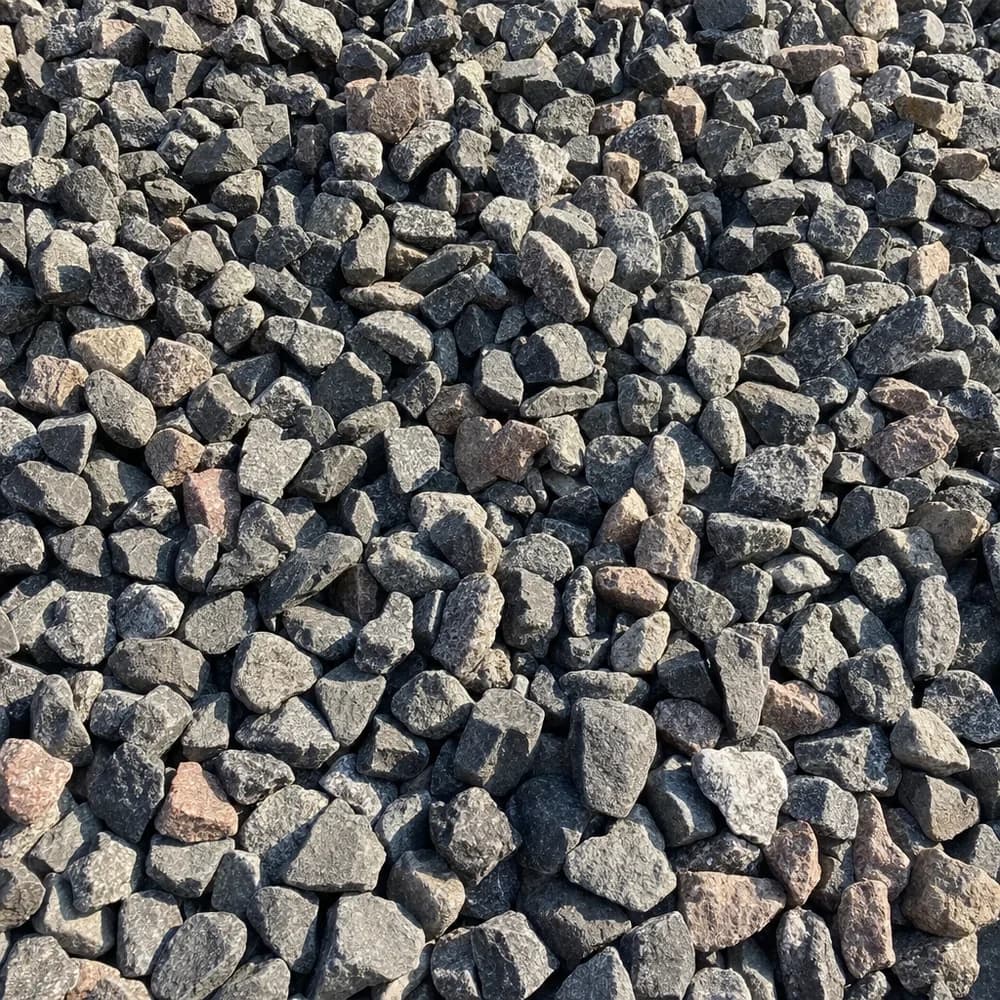
At the finished surface of a Connecticut patio, 3/8" Crushed Stone packs into a smooth walking layer with firm compaction.
- Size: Approximately 3/8 inch
- Type: Angular crushed stone
From $395 for 1 ton, delivery included
Larger loads cost less per ton: 500 tons is $24,175 ($48.35 per ton). Pick any quantity below for a delivered price.
Free delivery included
Free delivery anywhere in Connecticut
Pick a delivery date
Weekday delivery, earliest Oct 20
Get a Free Quote
Fill out the form and our sales team will get back to you within the hour.
Size and Grading
- Size
- Approximately 3/8 inch
- Type
- Angular crushed stone
Put a spade into most yards in this state and you get one of two answers back: rocky glacial till that fights you the whole way down, or ledge before you are anywhere near deep enough. Neither is a forgiving surface to lay a path or an apron on, and both are the reason a small stone put straight onto the ground disappears into it within two seasons. 3/8" crushed stone is a small angular chip, roughly three eighths of an inch, that does very well as the layer you see and very badly as the layer that carries anything.
Uniform gray chips, and what they feel like through a garden shoe
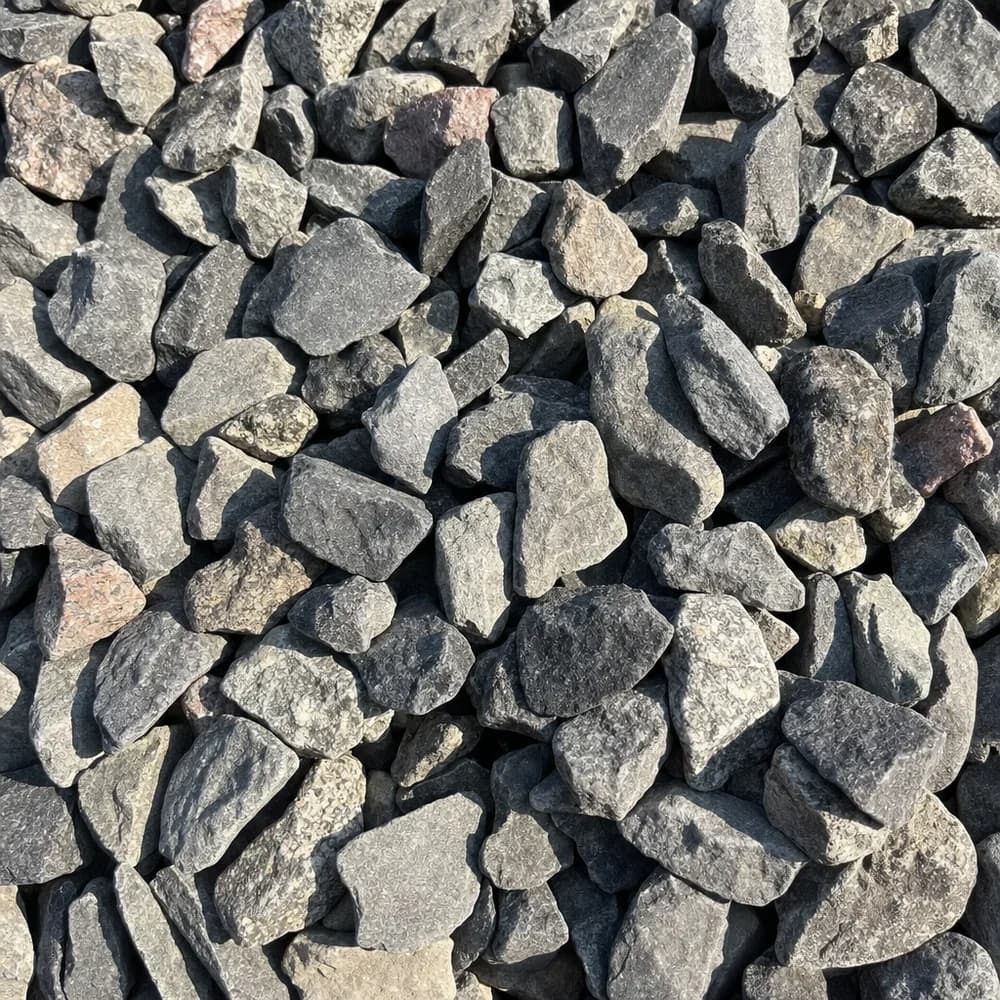
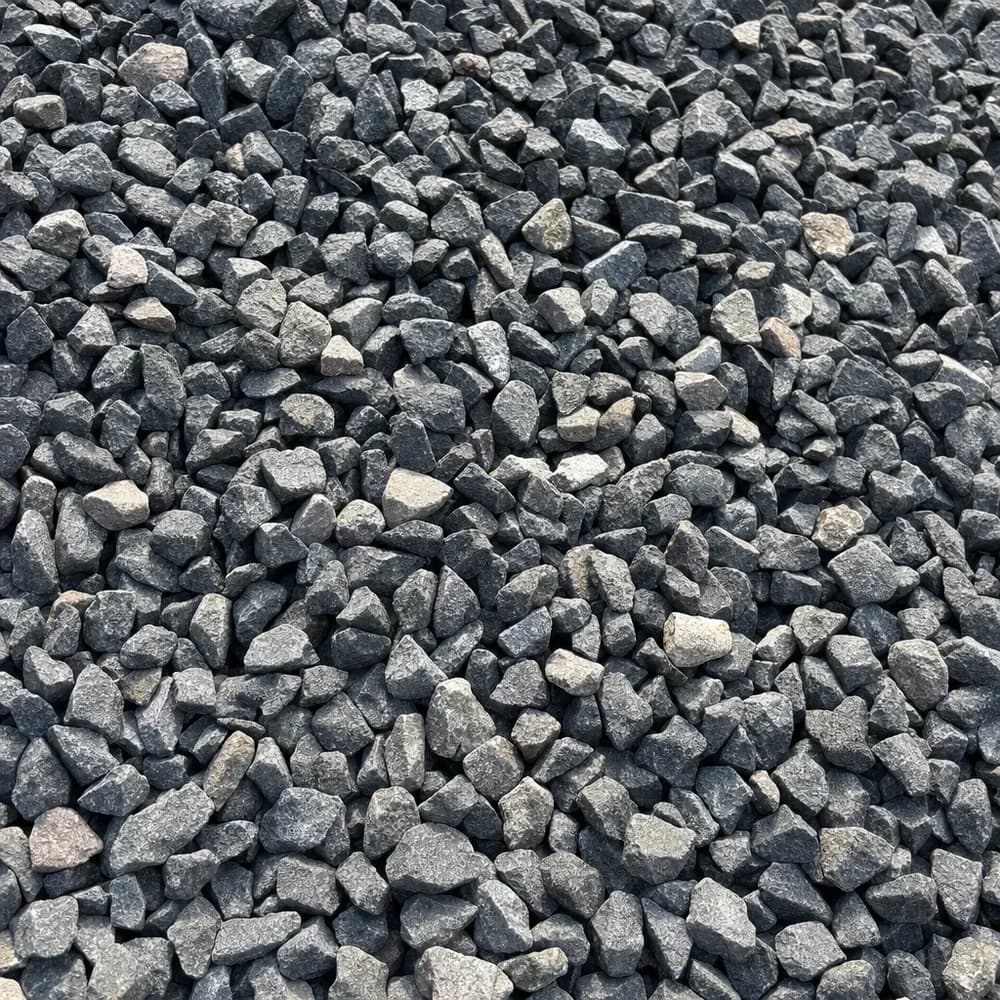
The pieces are broken rather than worn, so every one has flat faces and sharp arrises. Poured out, the pile has a matt gray look with none of the shine of a rounded stone, and because there is no tail of fines under it the color stays even instead of going dusty in dry weather.
Underfoot it is firmer than most people expect at this size. The flat faces catch on each other, so the layer locks rather than rolling, and a garden shoe sinks in perhaps a quarter of an inch and stops. Walk the same depth of rounded stone and your foot keeps going. That single difference is why this chip works on a path and the rounded version at the same size does not.
It is loud, though. A stone with this much edge on it crunches with every step, which some people want at the side door and some people cannot stand.
Where 3/8" crushed stone holds up over till and ledge
Four uses, and all of them share the same condition: it is sitting on top of something already firm.
Garden paths and small patio areas are the main one, laid as a two-inch wearing layer over a compacted base.
A driveway finish layer is the second. On a drive that has a sound base and a tired surface, this chip goes on as a topping to give a clean, even face that water passes through rather than sits on.
Bedding for pipes and utilities is the third, where a small angular stone gives even support along the run.
Landscape ground cover is the fourth, over fabric in beds and along strips where planting is not wanted.
On this ground the thing that decides all four is what happens below. Water in till moves sideways across a lot rather than sinking, so a surface with nothing draining underneath it becomes a surface with water sitting under it, and at that point the freeze does the rest.
New lawn prep and a hot tub pad: two orders to redirect
Preparing ground for a new lawn is the first request that does not belong here. Grass needs something to root into and stone gives it nothing. If the area is low, raise the grade with Fill Dirt, then finish with a few inches of Top Soil to seed into.
A hot tub pad is the second, and this one is half right. The pad has to carry real weight on saturated ground through a freeze, and a single-size chip cannot do that. The bearing layer is a compacted lift of Processed Gravel or Crusher Run, with pavers or a slab on top. Where this stone can earn a place is the strip around the pad, as a free-draining, walkable margin that keeps grass and mud away from the tub.
Two inches over a base, and what a deeper single lift does in March
Two inches is the working depth for a finished surface course. It covers the base completely, it does not roll away under a foot, and it is shallow enough that the layer stays supported by what is under it.
Going deeper to save the base is the standard mistake. Four inches of loose chip on unprepared till behaves like four inches of ball bearings: it dishes where people walk, the dish holds water, and by the March thaw the whole layer has worked down into the soft ground with till pushed up between the stones. Once that has happened the only fix is to lift it and start again lower down.
The base under it does the work. On till, that means a compacted processed gravel lift over a geotextile, or on a footpath, a shallower compacted lift with fabric beneath. Depth ordered is effectively depth in place, since a single-size stone has almost nothing in it to migrate into the voids.
Yards and tons for a 52-foot garden path and a 14 by 11 apron
Two hypothetical examples on an older lot, worked as length times width times depth in feet, divided by 27.
The path. 52 feet long, 3 feet wide, 2 inches of chip over a compacted base: 52 x 3 = 156 square feet. 156 x 2/12 = 26 cubic feet. 26 divided by 27 = 0.96 cubic yards.
The apron. A 14 by 11 area at the head of the drive, also at 2 inches: 14 x 11 = 154 square feet. 154 x 2/12 = 25.7 cubic feet. 25.7 divided by 27 = 0.95 cubic yards.
Together, 1.91 cubic yards. This site publishes about 2,800 lb per cubic yard for chips at this size, roughly 1.40 tons per yard, so 1.91 x 1.40 = 2.67 tons. Three tons covers both with enough spare to bring the edges back up after the first month.
Check your own measurements in the stone calculator before ordering, particularly if the path curves. Then choose the amount and a delivery date on this page. Delivery is set by ZIP code at checkout, and the truck needs somewhere clear to tip within wheelbarrow reach of the work.
Pea stone, #89 and walkway gravel at almost the same size
Four materials measure about the same and behave differently enough that swapping them changes the job.
3/8" Natural Pea Gravel is the rounded one. Softer to look at and kinder to bare feet, but it rolls, so it suits play areas and dry creek lines rather than a path you walk daily.
#89 Crushed Stone is this size with fines left in. Those fines make it a bedding and joint material that knits tight, not a surface you leave exposed.
#8 Crushed Stone is the washed, open-graded version, built for drainage layers and permeable paver work.
Walkway Gravel is a graded blend rather than a single size, which is what you want if the path has to compact into a firm, bound surface rather than a locked loose one.
Quickly Calculate How Much You Need
Material: 3/8" Crushed Stone
How to Measure
Measure the length and width of your project area in feet
Decide on depth in inches (2" for landscaping, 4" for driveways)
Enter the values above and we'll calculate the tonnage you need
Need help figuring out the right amount? We can help!
Call or text us at (860) 891-3260 and we'll help you calculate the right quantity for your project.
Not sure how much you need? The Stone Calculator has depth guides, coverage charts and worked examples for this material.
Frequently Asked Questions About 3/8" Crushed Stone
3/8" Crushed Stone delivery across Connecticut
- Bridgeport
- Stamford
- New Haven
- Hartford
- Waterbury
- Norwalk
- Danbury
- New Britain
- Fairfield
- Greenwich
- West Hartford
- Bristol