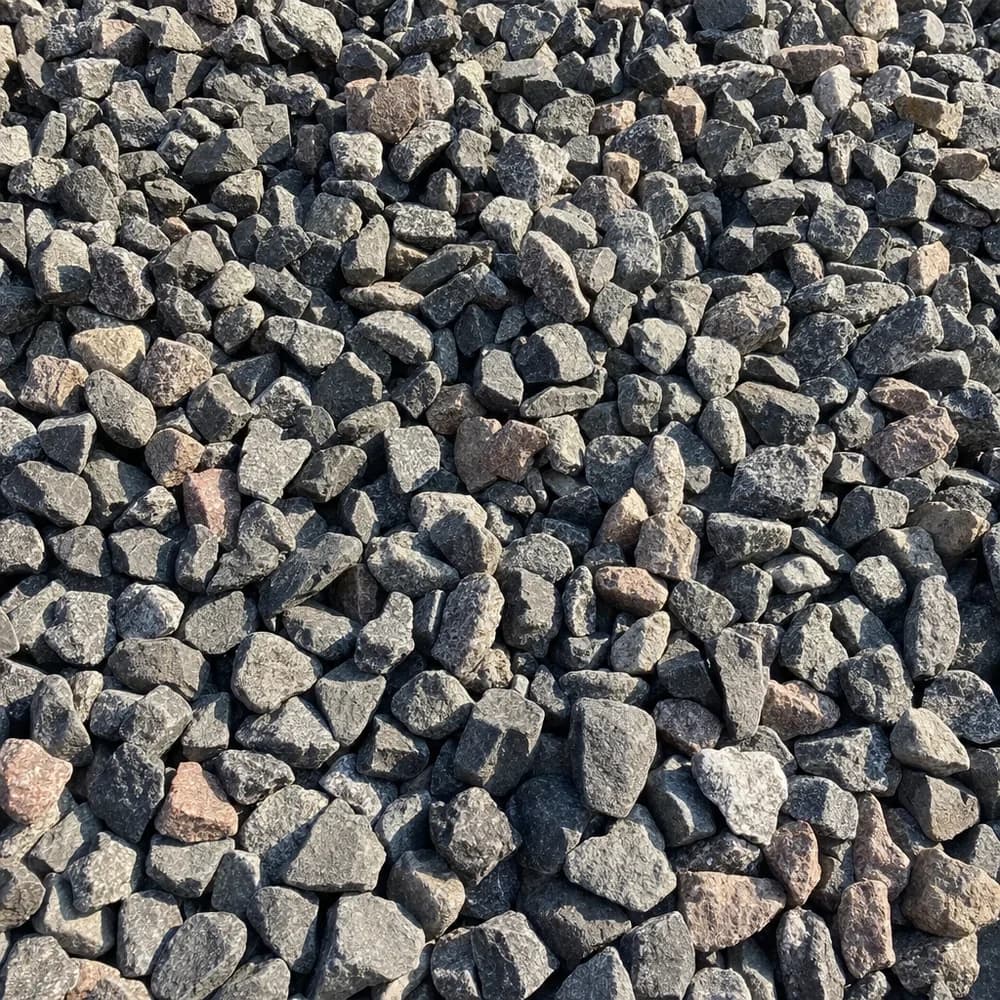
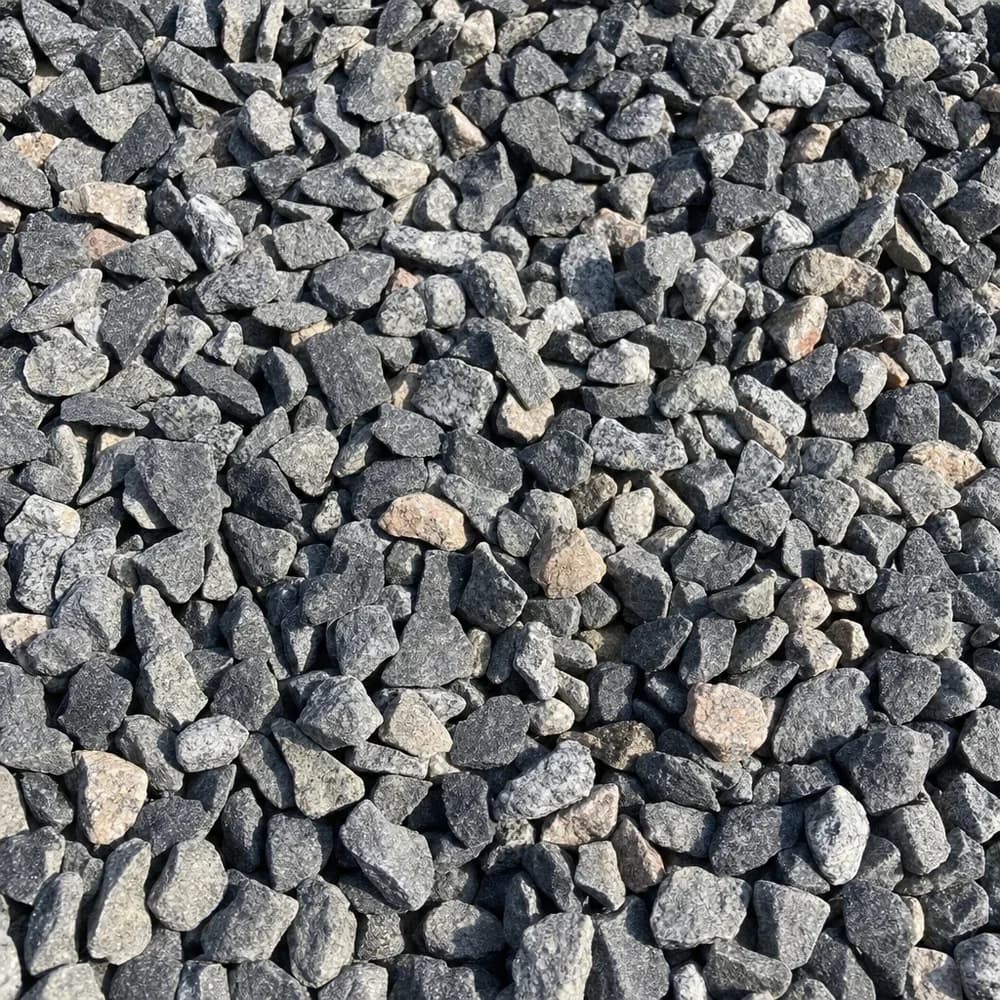
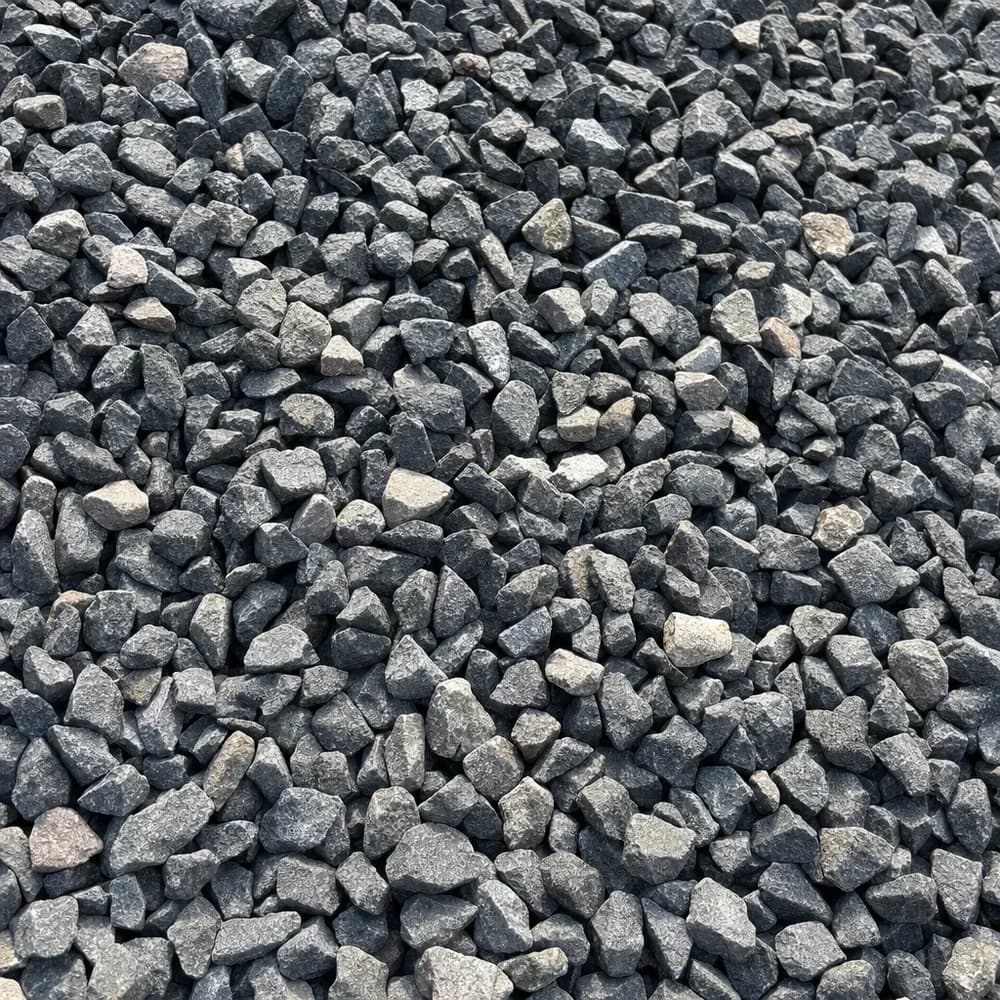
#57 Stone for Connecticut Drains, Wall Backfill and Concrete
Choosing drainage fill that holds water can leave a patio or driveway base working against Connecticut frost. #57 Stone keeps drainage paths open.
- Size: 3/16 inch to 1 inch
- Grading: #57
- Type: Angular crushed rock
From $392 for 1 ton, delivery included
Larger loads cost less per ton: 500 tons is $24,175 ($48.35 per ton). Pick any quantity below for a delivered price.
Free delivery included
Free delivery anywhere in Connecticut
Pick a delivery date
Weekday delivery, earliest Oct 20
Get a Free Quote
Fill out the form and our sales team will get back to you within the hour.
Size and Grading
- Size
- 3/16 inch to 1 inch
- Grading
- #57
- Type
- Angular crushed rock
The order that goes wrong most often on this material starts with someone trying to fix standing water using a material full of fines. Glacial till and ledge already send water sideways across most lots in this state, so the moment a binding stone goes into a trench or behind a wall, the water has nowhere left to go and the freeze and thaw does the rest. #57 stone is the correction: 3/16 inch to 1 inch angular crushed rock, graded to #57, with nothing small in it to close the gaps up.
My patio base is holding water through every thaw. Did I buy the wrong stone?
Probably, yes, if what went in was a binding material where a draining one was needed. The two families of stone look similar in a pile and behave in opposite ways.
A binding material has fines in it. Compacted, those fines fill the spaces between the larger pieces and the layer becomes tight, which is what you want under something that has to carry weight. An open-graded stone such as this one has the small sizes screened out, so the spaces between the pieces stay connected all the way through the layer and water runs down and out.
Put the wrong one in a drain and the trench becomes a tank. In Connecticut that matters more than in a mild climate, because water trapped at 42 inches of frost depth freezes, expands and lifts whatever sits above it.
Is it right for a single-car gravel drive off the town road?
It can surface one, and it has real advantages there: water goes straight through instead of sheeting toward the garage, and the angular faces give tires something to bite. But go in knowing what you are getting. Without fines, the layer never becomes a hard crust. It stays a loose stone surface that shifts underfoot, gets pushed into ridges by tires, and needs raking back now and again.
If the drive has to feel firm, the structural layer underneath should be a compacting material such as Processed Gravel, with this stone used only where drainage is the point.
A worked example for a single-car drive, 45 feet by 10 feet at 3 inches, as a hypothetical rather than a real job: 45 x 10 = 450 square feet. 450 x 3/12 = 112.5 cubic feet. 112.5 divided by 27 = 4.2 cubic yards. This site's own published weight for #57 / 3/4 inch crushed stone is about 1.40 tons per cubic yard, so 4.2 x 1.40 puts that drive at roughly 5.9 tons, an approximate figure rather than an exact one.
Can flagstone sit on it, or does the walkway want stone dust?
For a dry-laid flagstone walk, this is not the bedding course. Setting a flat stone on rock the size of a walnut gives you three or four contact points per slab and a walk that rocks underfoot from the first season.
The New England habit here is the right one: a compacted base, then a screeded bed of Stone Dust, then the flagstone. Where this stone earns its place on that job is underneath, as a drainage course in a walk that crosses wet ground, or in a narrow drain running alongside it.
Does it have any business around raised vegetable beds?
Not inside them. It is inert rock with no growing value, it holds heat, and it makes digging miserable.
Around them is a different matter. Raised beds on a till lot often sit in the place where water collects, and the paths between them turn to mud by April. A course of this stone in the paths, or a shallow drain running down the low side of the bed run, moves that water off without any of it ending up in the growing medium. Keep it out of the beds and keep Garden Soil out of the drain, and both jobs work.
How much do I need for a 40-foot foundation drain?
Take the trench, not the surface. A hypothetical run along a foundation, 40 feet long, 18 inches wide, with 12 inches of stone in it: 18 inches is 1.5 feet, so 40 x 1.5 = 60 square feet. 60 x 12/12 = 60 cubic feet. 60 divided by 27 = 2.2 cubic yards. At the same approximate 1.40 tons per cubic yard, 2.2 x 1.40 comes to about 3.1 tons of stone for that trench.
Wrap the trench in filter fabric before the stone goes in, and lap it over the top before backfilling. Without it, silt from the till works into the voids over a few winters and the drain quietly stops draining, which is the failure mode people blame on the stone.
Material is sold by the ton and the conversion from cubic yards depends on the density figure for this stone, so put your own trench dimensions through the stone calculator and take the tonnage from the tool.
When does trap rock take the job instead?
3/4 inch trap rock is the signature Connecticut quarry rock and sits very close to this one in size, which is why people mix them up on the phone. The practical difference is what you are buying it for: trap rock is the general-purpose crushed stone for drives, drainage and decorative work, while #57 is a defined gradation that engineers and concrete mixes call out by number. If a plan sheet, a septic detail or a concrete supplier asks for #57, order #57 and do not substitute.
When you have a quantity, pick it along with a delivery date on this page. Delivery is set by ZIP code at checkout, so before the day, clear a spot the truck can reach and tip into, as close to the trench as it can safely get. Loose stone is heavy to wheelbarrow and there is no reason to move it twice. If the access is awkward, describe the property through the contact page before you book.
Quickly Calculate How Much You Need
Material: #57 Stone
How to Measure
Measure the length and width of your project area in feet
Decide on depth in inches (2" for landscaping, 4" for driveways)
Enter the values above and we'll calculate the tonnage you need
Need help figuring out the right amount? We can help!
Call or text us at (860) 891-3260 and we'll help you calculate the right quantity for your project.
Not sure how much you need? The Stone Calculator has depth guides, coverage charts and worked examples for this material.
Frequently Asked Questions About #57 Stone
#57 Stone delivery across Connecticut
- Bridgeport
- Stamford
- New Haven
- Hartford
- Waterbury
- Norwalk
- Danbury
- New Britain
- Fairfield
- Greenwich
- West Hartford
- Bristol