Processed Gravel in Connecticut: What It Is and How Much You Need
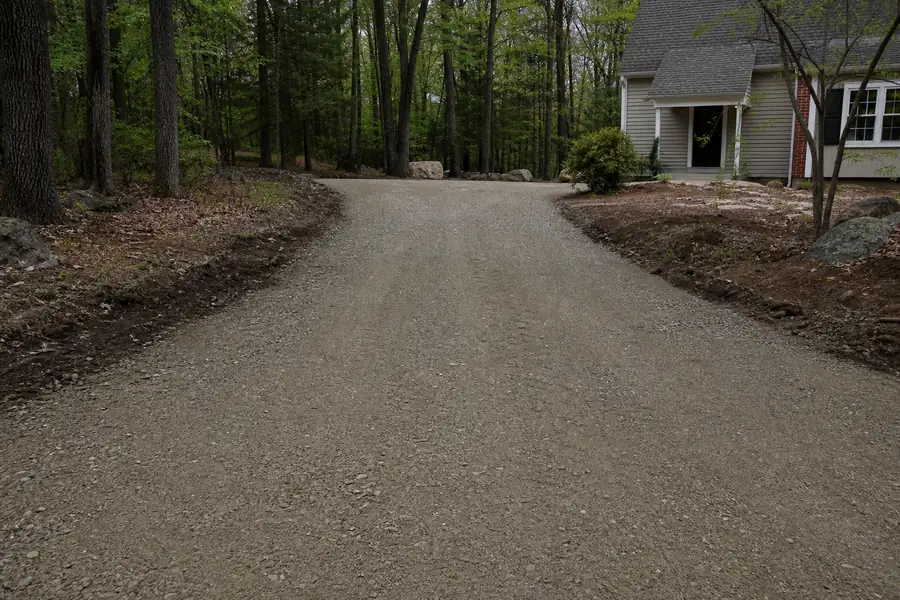
Quick answer: Processed gravel is a crushed stone and stone dust blend that Connecticut contractors use as a compacted base under driveways, patios, and walkways. One ton covers roughly 58 square feet at a 4 inch compacted depth, the standard base thickness for a residential driveway here.
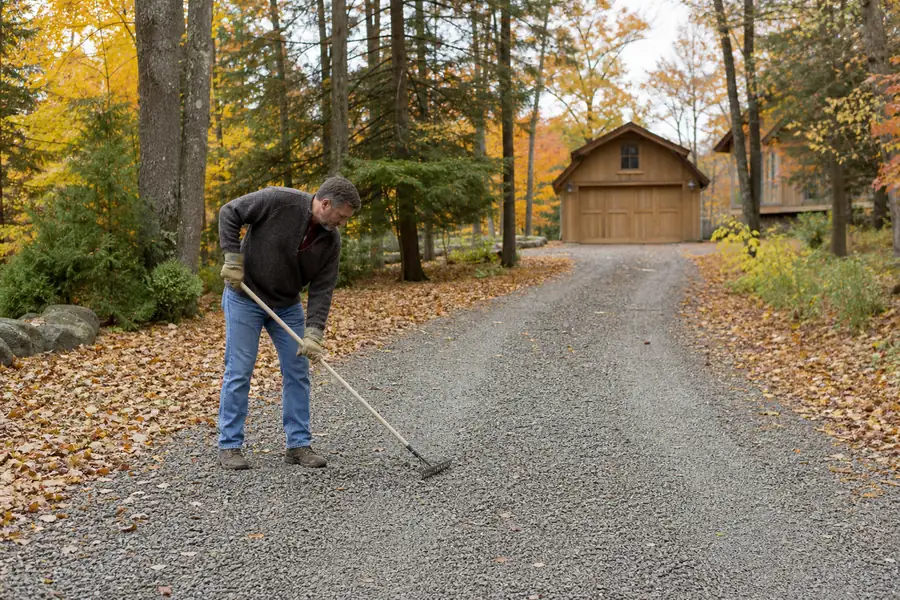
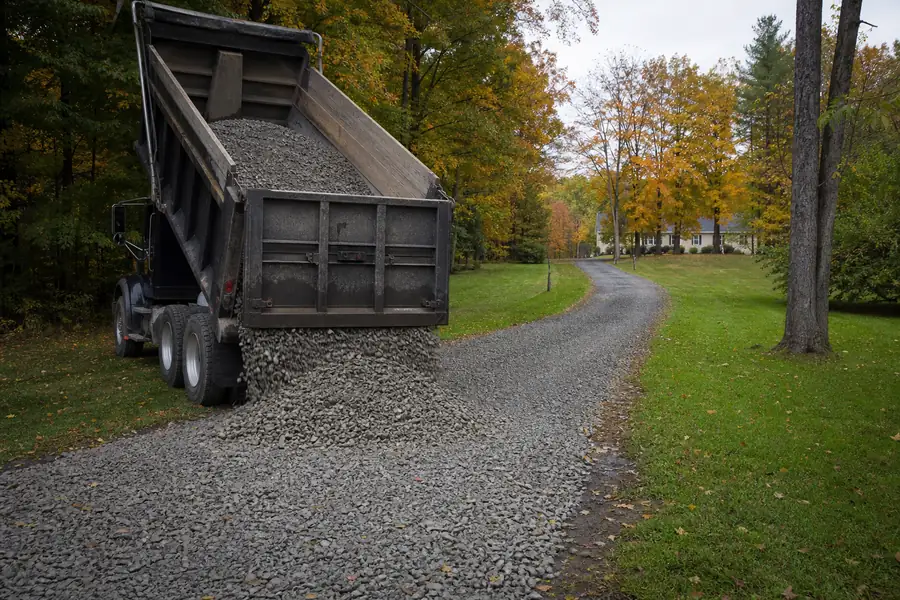
If you're pricing out a driveway base, patio prep, or drainage fix, you've probably heard someone on the job call for "processed gravel" or just "process." Here's what it actually is and how to figure out how much your project needs.
What Is Processed Gravel in Connecticut?
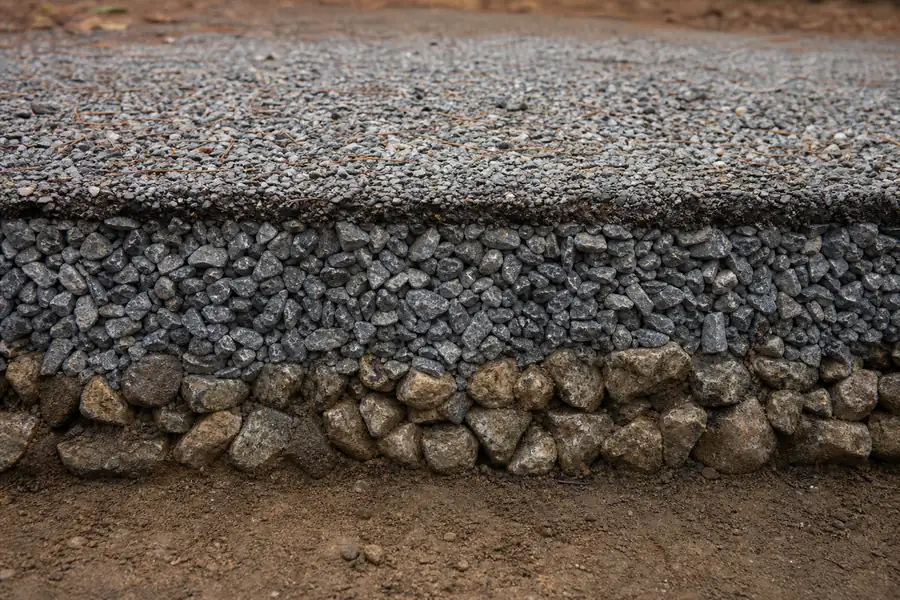
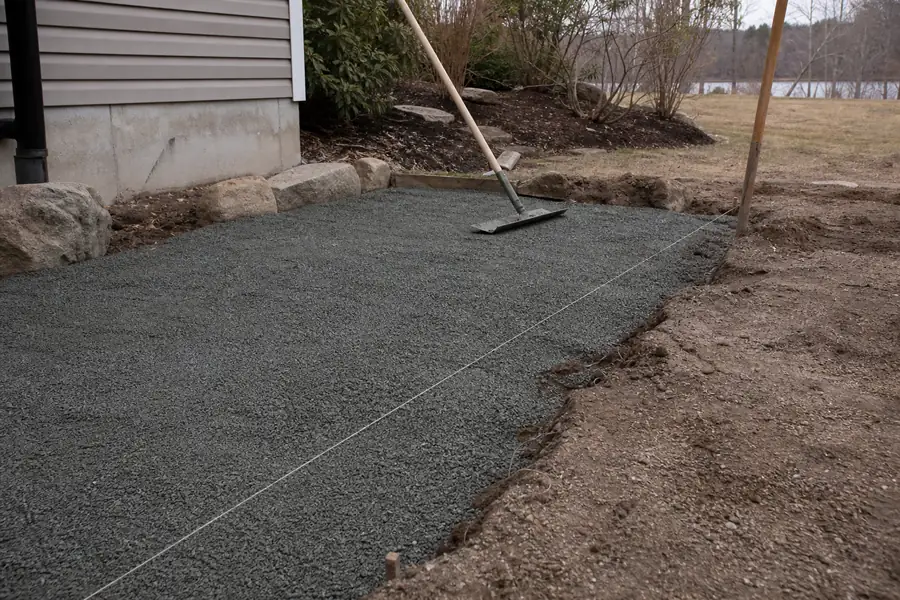
Processed gravel is crushed stone blended with stone dust into a single graded mix that locks together tight when compacted, which is why Connecticut contractors spec it as the base layer under driveways, patios, and walkways. The "processed" part refers to how the material is run through a crusher and screened so it contains a full range of particle sizes, from fist-sized chips down to fine dust, instead of one uniform stone size.
That mix of sizes is what lets it compact into a dense, load-bearing surface rather than staying loose. Around Connecticut, it's crushed from local trap rock (basalt), granite, and gneiss depending on the quarry, so the color runs from dark blue-gray to lighter gray. You'll also hear it called process, 3/4 processed, or bank run processed, but it's the same material, and it's the same one sold as processed gravel here.
How Much Processed Gravel Do You Need?
A ton of processed gravel covers roughly 58 square feet at a 4 inch compacted depth, the standard base thickness for a residential driveway in Connecticut. Coverage changes with depth because you're spreading the same weight of material thinner or thicker, so the math has to start with how deep your base needs to be.
| Compacted depth | Coverage per ton |
|---|---|
| 2 inches | ~115 sq ft |
| 4 inches | ~58 sq ft |
| 6 inches | ~39 sq ft |
| 8 inches | ~29 sq ft |
Work it backward from your project. A 20 by 50 foot driveway is 1,000 square feet. At a 4 inch base, that's 1,000 divided by 58, or about 17 tons of processed gravel. A small 6 by 8 foot walkway at 3 inches needs closer to a single ton. If you'd rather skip the arithmetic, the road base calculator does the same math for your exact dimensions.
One Connecticut wrinkle worth knowing: from roughly March into April, spring thaw brings posted weight limits on many town roads. That can mean a full tri-axle load gets split into two smaller deliveries, so build in a little extra lead time if you're ordering a large quantity during that window.
Processed Gravel Uses in Connecticut Projects
Processed gravel is the standard base material under Connecticut driveways, patios, walkways, and shed pads because it compacts into a stable, load-bearing surface that still lets water move through it. That matters here specifically: most of the state sits on glacial till over bedrock ledge, so water drains sideways rather than straight down, and a base layer that can't handle that will heave or settle.
For a driveway, a 4 to 6 inch compacted layer of processed gravel is typical, sized more for Connecticut's 42 inch frost depth than for the weight of a car. A walkway usually needs 3 to 4 inches. If you're finishing a patio with pavers on top, a thin leveling layer of stone dust goes over the processed gravel base to give the pavers a smooth, even setting bed.
Processed Gravel vs. Crusher Run and 3/4 Inch Trap Rock
Processed gravel compacts into a solid, stable base, while crusher run and 3/4 inch trap rock stay looser and drain faster, so the right pick depends on whether the job needs load-bearing stability or open drainage. Crusher run (also called bank run) is a similar mix of stone and fines but coarser overall, and it's often used as a rougher fill layer before a finer processed gravel top course goes down.
3/4 inch trap rock, sometimes sold as blue stone chips, is a single, open-graded stone size with no fines mixed in. It won't compact into a hard base the way processed gravel does, but it drains almost instantly, which makes it the better call for French drains, drainage trenches, and gravel driveways in low spots. Whether you're building a driveway apron in Hartford County or a dry-laid retaining wall along the shoreline, the choice usually comes down to that same trade-off between compaction and drainage.
FAQs
What's the difference between processed gravel and crusher run?
Processed gravel and crusher run are both blends of crushed stone and fines, but processed gravel is screened to a finer, more consistent mix that compacts harder, while crusher run runs coarser and is often used as a rougher sub-base layer. Many Connecticut jobs use crusher run as a first lift and processed gravel as the finish layer on top.
How deep should a processed gravel base be for a driveway?
Most residential driveways in Connecticut use a 4 to 6 inch compacted layer of processed gravel. Heavier vehicle traffic or soft, wet subgrade soil can push that closer to 6 to 8 inches, so it's worth checking your soil conditions before ordering.
How much does a ton of processed gravel cover?
One ton of processed gravel covers about 115 square feet at a 2 inch depth, 58 square feet at 4 inches, and 39 square feet at 6 inches. Coverage drops as the compacted depth increases because the same weight of material is spread over a smaller area.
Does processed gravel need edging to stay in place?
Edging isn't required for processed gravel to compact and hold its shape, but a border of steel, plastic, or stone helps keep the edges crisp on a driveway or walkway and stops material from migrating into the lawn over time. It's a common add-on rather than a necessity.
Can I get processed gravel delivered anywhere in Connecticut?
Yes, processed gravel delivers to homes and job sites across Connecticut, from Fairfield County through the Litchfield Hills and out to the shoreline. Delivery timing can shift slightly during spring thaw weight restrictions on town roads, so it's worth asking about lead time if you're ordering in March or April.