How to Build a Gravel Driveway That Lasts (Step-by-Step, With Layer Depths)
Quick answer: A gravel driveway that lasts starts with 4 to 6 inches of compacted processed gravel for the base, topped with 2 to 3 inches of 3/4 inch trap rock for the surface, over a graded and crowned subgrade. Skip the base depth or the crown and you get ruts, potholes and standing water within a season, especially once Connecticut's freeze-thaw cycle gets going.
I've rebuilt enough driveways that were done wrong the first time to know where people cut corners: too little base, no crown, no plan for where the water goes. Here's the build, in order, with the depths and tonnage that hold up over the long haul.
What Goes Into a Gravel Driveway That Lasts
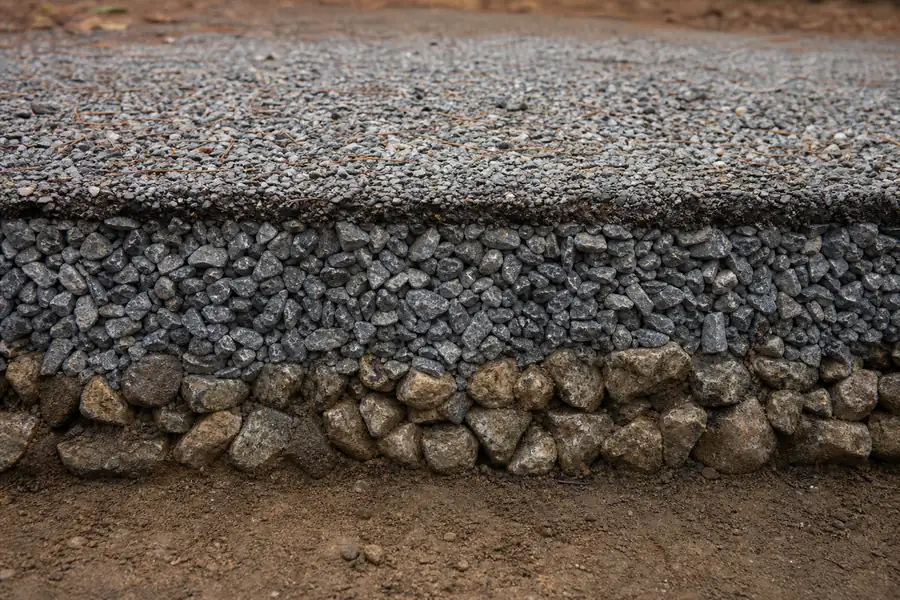
A durable gravel driveway is three layers doing three different jobs: a graded subgrade, a compacted stone base, and a stone surface course. Weaken any one of them and the whole driveway fails from the bottom up.
The base layer is processed gravel (also called process, or 3/4 processed), a crushed stone and fines mix that locks together tight when compacted and spreads vehicle loads across the subgrade. This is the material that keeps a driveway from pumping mud in spring; you can see the full spec and coverage details in our processed gravel listing.
Where the excavation hits soft, wet, or peaty native soil, a coarser sub-base lift of crusher run under the processed gravel gives the base something firm to key into before the finer material goes down. It's an extra step, but it's cheaper than repaving a driveway that heaved out its first winter.
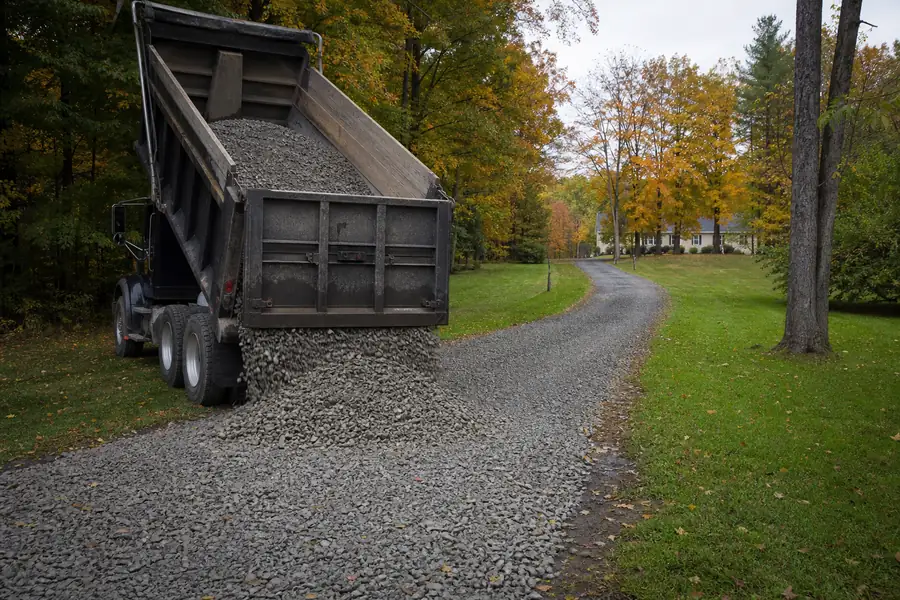
The surface course is 3/4 inch trap rock, an angular crushed stone (also sold locally as blue stone chips) that drains fast and doesn't compact into a slick, mud-holding crust the way rounded gravel does. Connecticut Rock Supply lists both the base and surface materials for this build under its driveway gravel category, so you can order the whole job in one delivery.
How to Build a Gravel Driveway Step by Step
Building it right means building it in this order, and not skipping steps to save a day.
- Excavate the driveway path 8 to 10 inches below finished grade, removing topsoil and organic material down to firm subgrade.
- Grade the subgrade with a slight crown, about 1/4 inch of rise per foot of width, so water sheds to the sides instead of pooling in the middle.
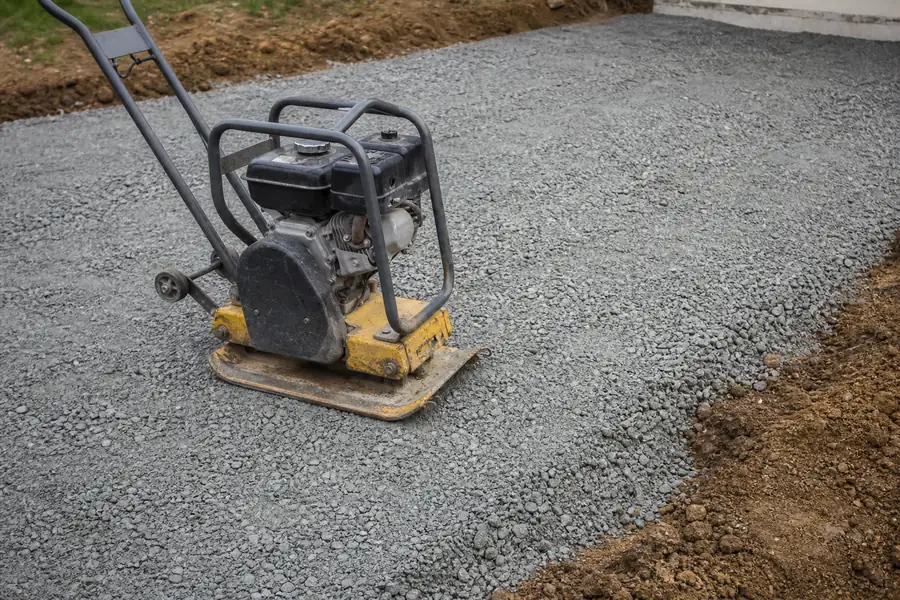
- Compact the bare subgrade with a plate compactor or roller before any stone goes down.
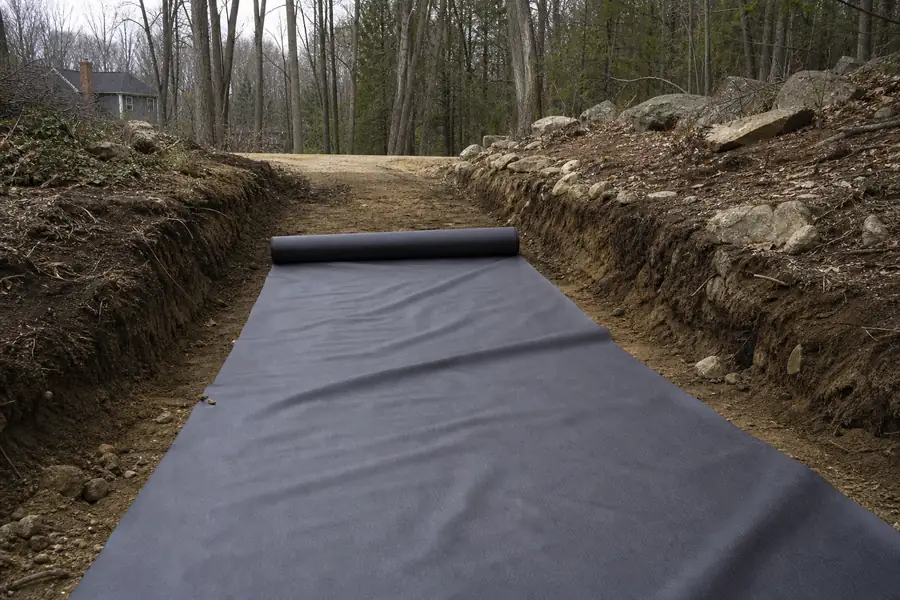
- Lay geotextile fabric over soft or clay-heavy subgrade to keep the base stone from working its way into the mud over time.
- Spread processed gravel in 2 to 3 inch lifts, compacting each lift before adding the next, until the base reaches 4 to 6 inches of compacted depth.
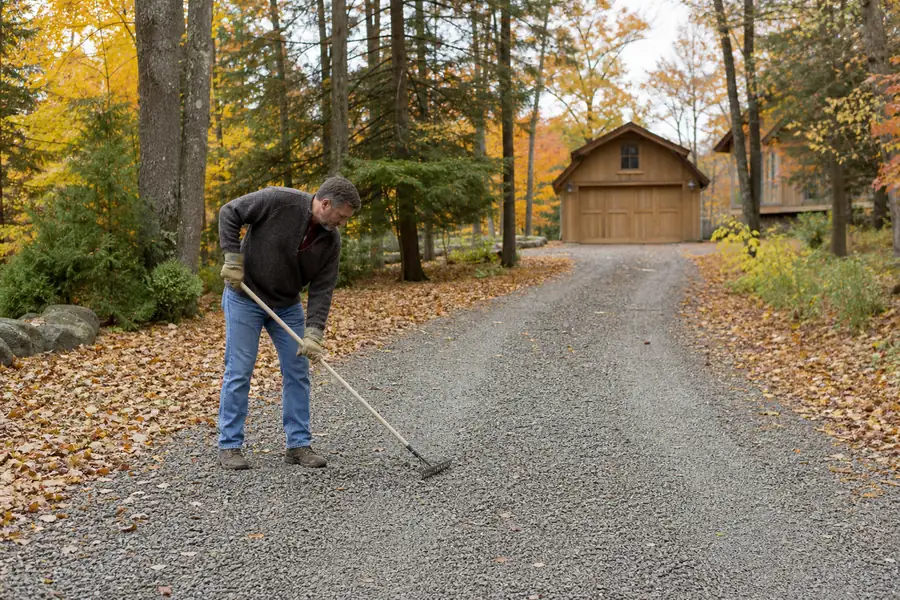
- Spread 3/4 inch trap rock over the compacted base at 2 to 3 inches, maintaining the crown, and compact again.
- Grade drainage swales or a shoulder along both sides so water leaving the crown has somewhere to go.
Layer Depths and Tonnage for a Gravel Driveway
For a standard 10 foot wide, 100 foot long driveway (1,000 square feet), plan on roughly 20 to 25 tons of processed gravel for the base and 10 to 12 tons of 3/4 inch trap rock for the surface. Add 18 to 20 tons of crusher run if a soft sub-base lift is needed.
| Layer | Material | Compacted depth | Tons per 100 ft (10 ft wide) |
|---|---|---|---|
| Sub-base (soft soil only) | Crusher Run | 4 in | 18-20 tons |
| Base | Processed Gravel | 4-6 in | 20-25 tons |
| Surface | 3/4 inch Trap Rock | 2-3 in | 10-12 tons |
Those figures assume roughly 100 square feet of coverage per ton at 2 inches deep, which is the standard rule of thumb for crushed stone. Wider or longer driveways scale directly off that same math, and it's worth running your exact dimensions before you order so you're not short a load mid-project.
Frost, Drainage and Why Depth Matters in Connecticut
Connecticut's glacial till subsoil moves water sideways instead of letting it drain straight down, so a shallow or uncrowned gravel driveway holds water right where you drive, and that water heaves the surface when it freezes. A gravel driveway doesn't need to reach the region's 42 inch frost depth the way a footing does, but a thin, saturated base will still lift and rut through a hard winter.
The fix is the same base depth and crown covered above, plus keeping the stone free of fines that trap water instead of letting it pass through. For the full spec rundown on what makes a good compactable base, our guide to processed gravel in Connecticut goes deeper on grain size and drainage behavior.
One more local wrinkle: many Connecticut towns post spring weight limits on local roads through March and April to protect the pavement during thaw. If you're ordering a big load during that window, ask about it, since a full tri-axle delivery sometimes has to split into two smaller runs to stay legal.
FAQs
How deep should the base be for a gravel driveway?
Most Connecticut gravel driveways need 4 to 6 inches of compacted processed gravel for the base, topped with 2 to 3 inches of surface stone. Driveways that carry heavier vehicles, like a truck or RV, hold up better with a base closer to 6 inches.
Can I build a gravel driveway directly on top of dirt without a stone base?
No. Skipping the compacted stone base means the surface stone sinks into the native soil under load, and the driveway ruts and potholes within a season, especially through a wet Connecticut spring. The base layer is what spreads the weight and keeps water moving instead of pooling under the surface.
How much does a gravel driveway cost in Connecticut?
Cost depends mostly on driveway length, width, and how much excavation the site needs, since material is priced per ton and varies with quantity and delivery distance. Getting a quote against your exact dimensions is the only way to get an accurate number, rather than relying on a rough per square foot estimate.
How often does a gravel driveway need more stone added?
Plan on topping the surface course with fresh 3/4 inch trap rock every 2 to 4 years, depending on traffic and snowplowing. Plowing is the biggest factor since a metal blade set too low scrapes surface stone off with the snow each winter.
Do I need geotextile fabric under a gravel driveway?
Fabric is worth it over soft, wet, or clay-heavy subgrade, where it keeps the base stone from working down into the mud over time and losing its load-bearing strength. On firm, well-drained native soil it's optional, though many contractors install it anyway as cheap insurance.