Stone Dust Patio Base in Connecticut: Depth, Tonnage and Frost
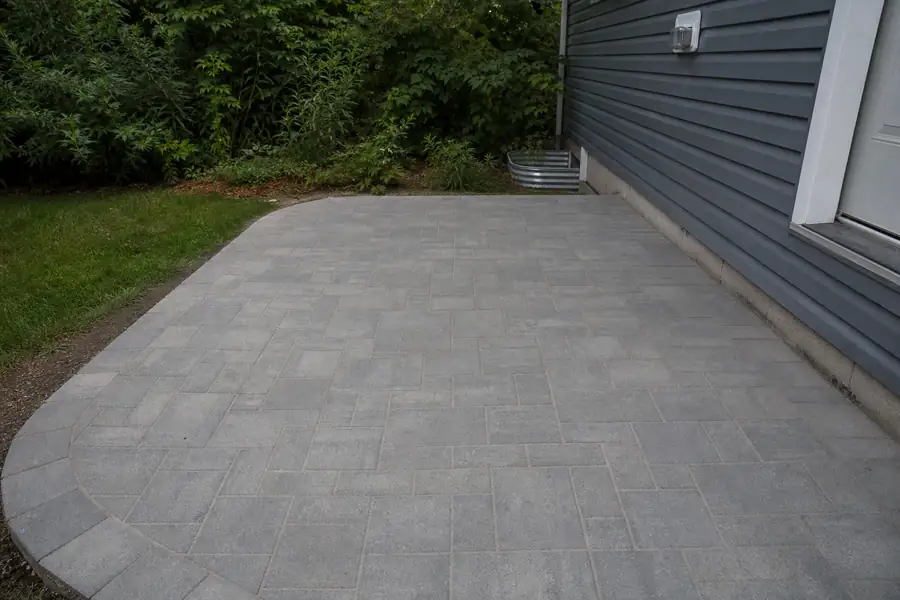
Quick answer: A stone dust patio base runs about 1 inch of screenings laid over a compacted 4 to 6 inch layer of Processed Gravel. That combination handles most paver and flagstone patios in Connecticut without any need to dig down to the state's 42 inch frost depth.
Stone dust, also called screenings, is the fine crushed stone byproduct left over from making crushed stone. It packs tight and screeds flat, which is why it works so well as the leveling layer directly under pavers or flagstone. It is not, by itself, a structural base, and it should never be the only material under a patio.
How Deep Should a Stone Dust Patio Base Be?
The stone dust layer itself should be about 1 inch thick after it's screeded and compacted, sitting on top of a separately compacted gravel base. The gravel base is where the real depth decision happens, and it scales with what's going on top and what's underneath it.
| Patio type | Gravel base depth | Stone dust layer |
|---|---|---|
| Small paver patio, stable soil | 4 inches | 1 inch |
| Standard paver or flagstone patio | 4 to 6 inches | 1 inch |
| Heavy pavers, poor drainage, clay-heavy soil | 6 to 8 inches | 1 inch |
Most Connecticut patios sit on glacial till, which drains slowly and holds water near the surface. That's the main reason to push toward the deeper end of these ranges rather than the shallow end, even on a patio that looks like a simple job on paper.
How Much Stone Dust Do You Need for a Patio?
One ton of stone dust covers roughly 100 square feet at 1 inch deep, once it's compacted. A typical 200 to 300 square foot patio, the size of most backyard seating areas in Connecticut, takes about 2 to 3 tons of screenings for the leveling course alone.
| Patio size | Stone dust needed (1 inch) |
|---|---|
| 100 sq ft | 1 ton |
| 200 sq ft | 2 tons |
| 300 sq ft | 3 tons |
| 400 sq ft | 4 tons |
That's the screenings figure only. The gravel base underneath adds separately, since it's a different material at a different depth. Run your own numbers through the paver base calculator before you order, since square footage and depth both move the tonnage fast.
Does a Stone Dust Patio Base Need to Go Below Frost Depth?
No. A patio does not need to reach Connecticut's 42 inch frost depth the way a foundation footing does, because a patio is a flexible, unattached surface. It can shift slightly with seasonal ground movement without cracking, unlike a poured slab or a wall tied to a structure.
That doesn't mean frost is irrelevant. A patio base that's too thin, or built on soil that holds water, will still heave unevenly over a few winters, and pavers will telegraph that movement as a wavy surface. The fix isn't more depth toward frost line, it's compaction and drainage: a well-compacted gravel base sheds water sideways instead of holding it under the stone dust where it can freeze and lift.
What Goes Under the Stone Dust in a Connecticut Patio?
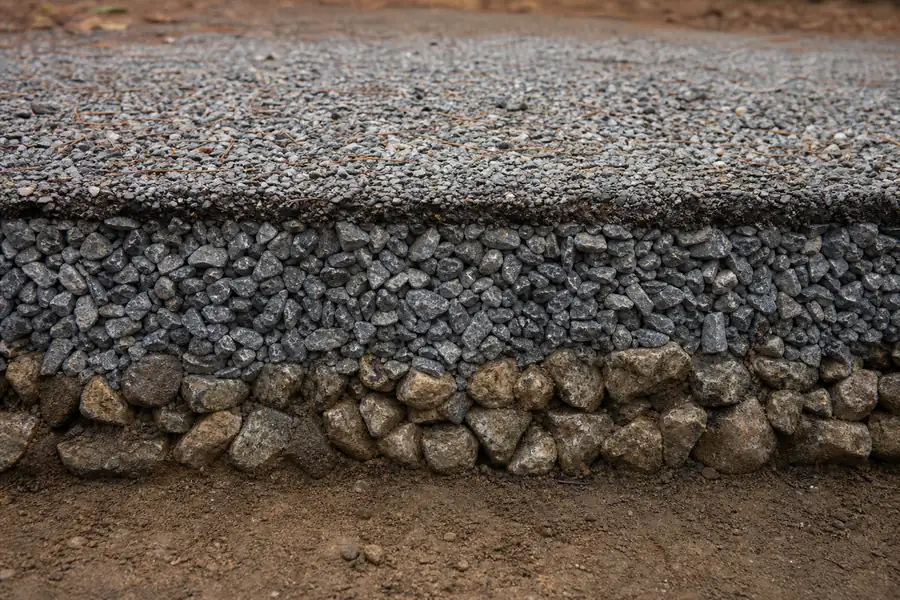
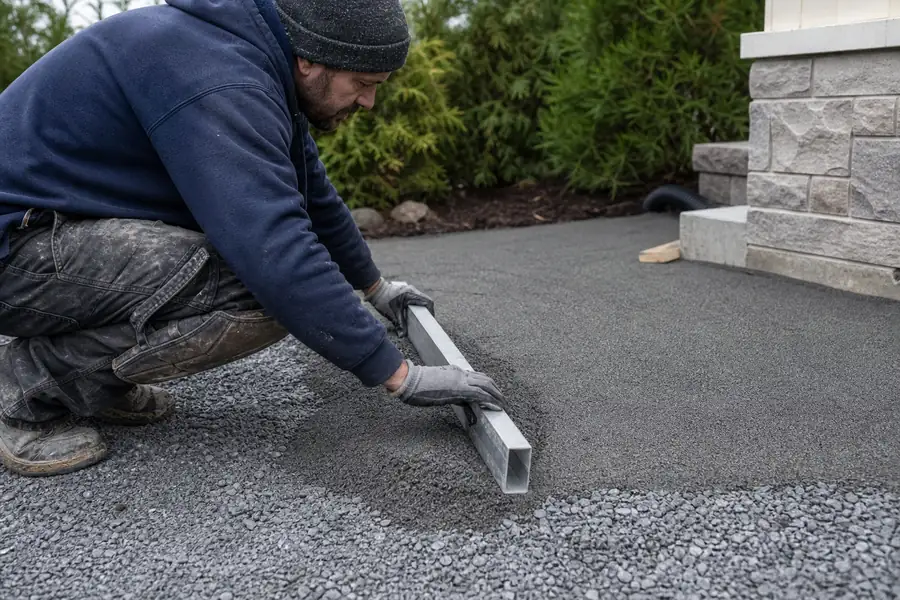
A proper patio base is built in layers, from the ground up: compacted subgrade, then a compacted gravel base, then the 1 inch stone dust screed, then the pavers or flagstone. Skipping a layer, or skimping on compaction between layers, is the single most common reason a patio settles unevenly within a few seasons.
- Subgrade: native soil, compacted and graded to drain away from the house
- Base: 4 to 6 inches of Processed Gravel, compacted in lifts
- Drainage layer (heavy clay or poor drainage sites): a course of Drain Rock under the base to move water off the site instead of letting it pool against ledge
- Screed layer: 1 inch of stone dust, screeded flat and level
- Surface: pavers or flagstone, set and joint-swept
On sites where the till is especially dense or the yard already holds water after rain, adding a drain rock course before the gravel base is cheap insurance against a patio that heaves or ponds. It's a small addition to the total tonnage and a common ask from contractors working the wetter lots around Hartford and New Haven.
FAQs
Can I skip the gravel base and just use stone dust under pavers?
No. Stone dust alone compacts well but doesn't provide the load-bearing structure or drainage a patio needs, and pavers set directly on screenings over soil will settle and shift within a season or two. The gravel base is what carries weight and moves water; the stone dust is only the leveling layer on top of it.
How thick should stone dust be under flagstone?
About 1 inch, the same as under concrete pavers. Flagstone is heavier and less uniform in thickness than pavers, so some installers set individual stones by hand into a slightly thicker bed in spots, but the target screed depth stays around 1 inch.
Does a stone dust patio base get muddy in wet weather?
A properly compacted base with adequate drainage underneath should not stay muddy, since water moves through and away rather than sitting on top. If a patio does puddle or turn soft after rain, it usually means the base was under-compacted or the site needs a drain rock layer added beneath the gravel.
What's the difference between stone dust and paver sand?
Stone dust (screenings) is crushed stone fines that compact hard and lock together, which is why it's preferred under patios that will see foot traffic and settling forces. Sand stays looser and is more commonly used for the final joint-fill between pavers rather than as the structural bedding layer itself.
Do I need a permit for a stone dust patio base in Connecticut?
Most towns in Connecticut don't require a permit for a ground-level patio that isn't attached to the house and doesn't include structural walls, but requirements vary by municipality. Check with your local building department before starting, especially if the patio includes a retaining wall or sits near a property line.