Stone Dust in Connecticut: The Bedding Course, Not the Base
Also sold as #10 Stone Screenings
Also known as: screenings, paver base
On Connecticut glacial till, Stone Dust forms a firm, level setting bed for pavers and flagstone when it is wetted and compacted.
- Size: 1/4 inch minus
- Grading: Stone dust and fine particles
- Type: Angular crushed stone
From $449 for 1 ton, delivery included
Larger loads cost less per ton: 500 tons is $27,195 ($54.39 per ton). Pick any quantity below for a delivered price.
Free delivery included
Free delivery anywhere in Connecticut
Pick a delivery date
Weekday delivery, earliest Oct 20
Get a Free Quote
Fill out the form and our sales team will get back to you within the hour.
Size and Grading
- Size
- 1/4 inch minus
- Grading
- Stone dust and fine particles
- Type
- Angular crushed stone
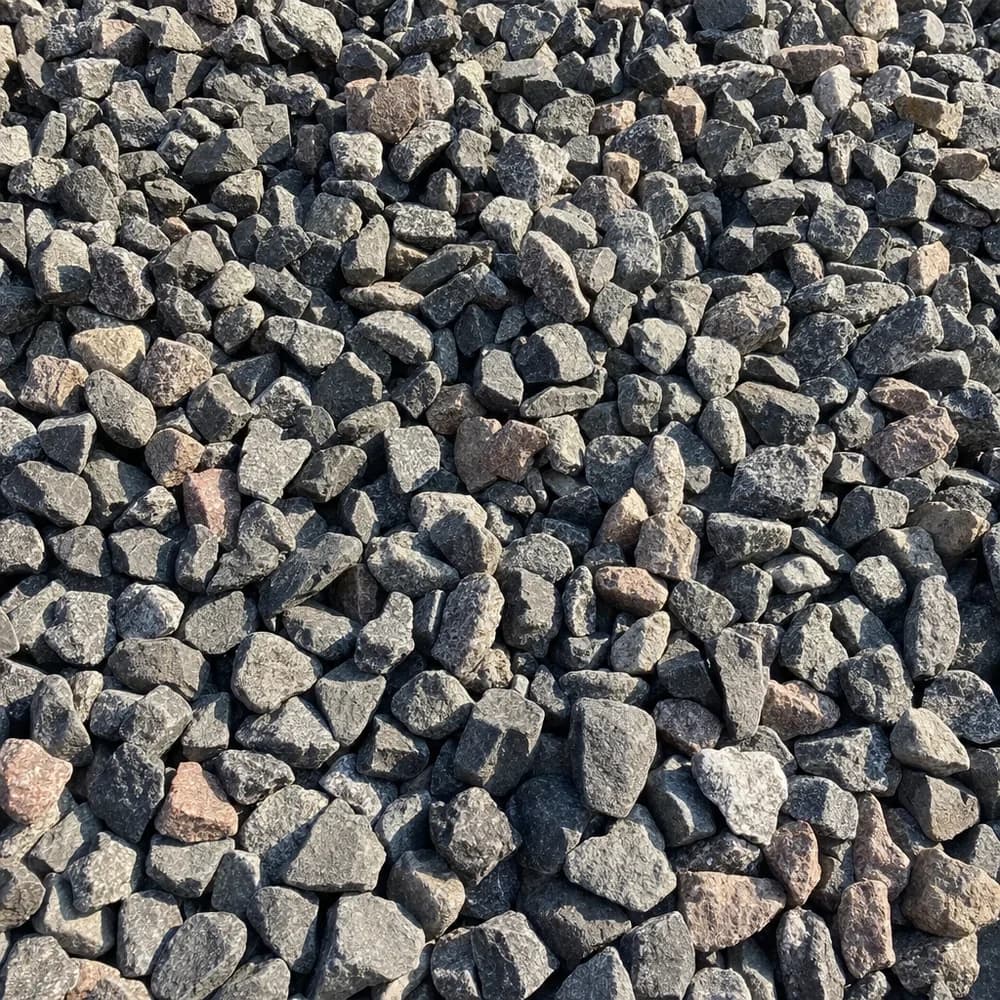
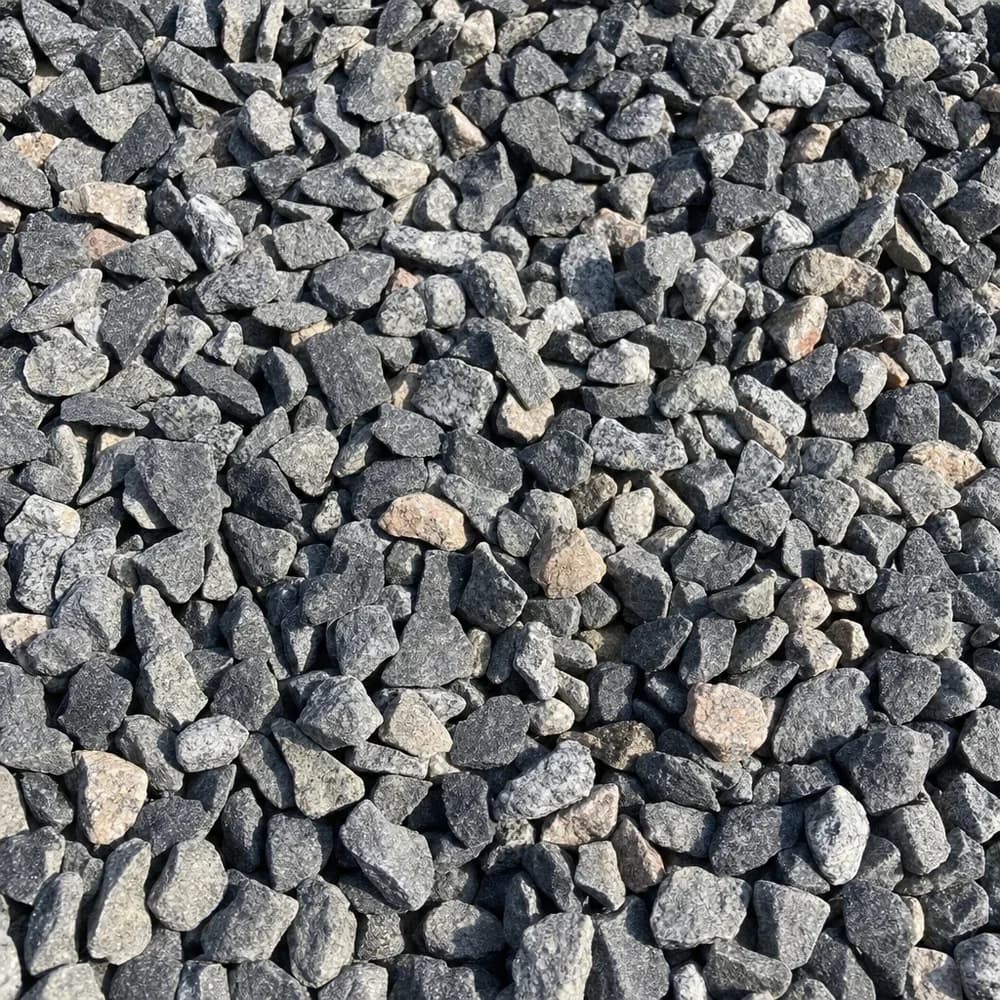
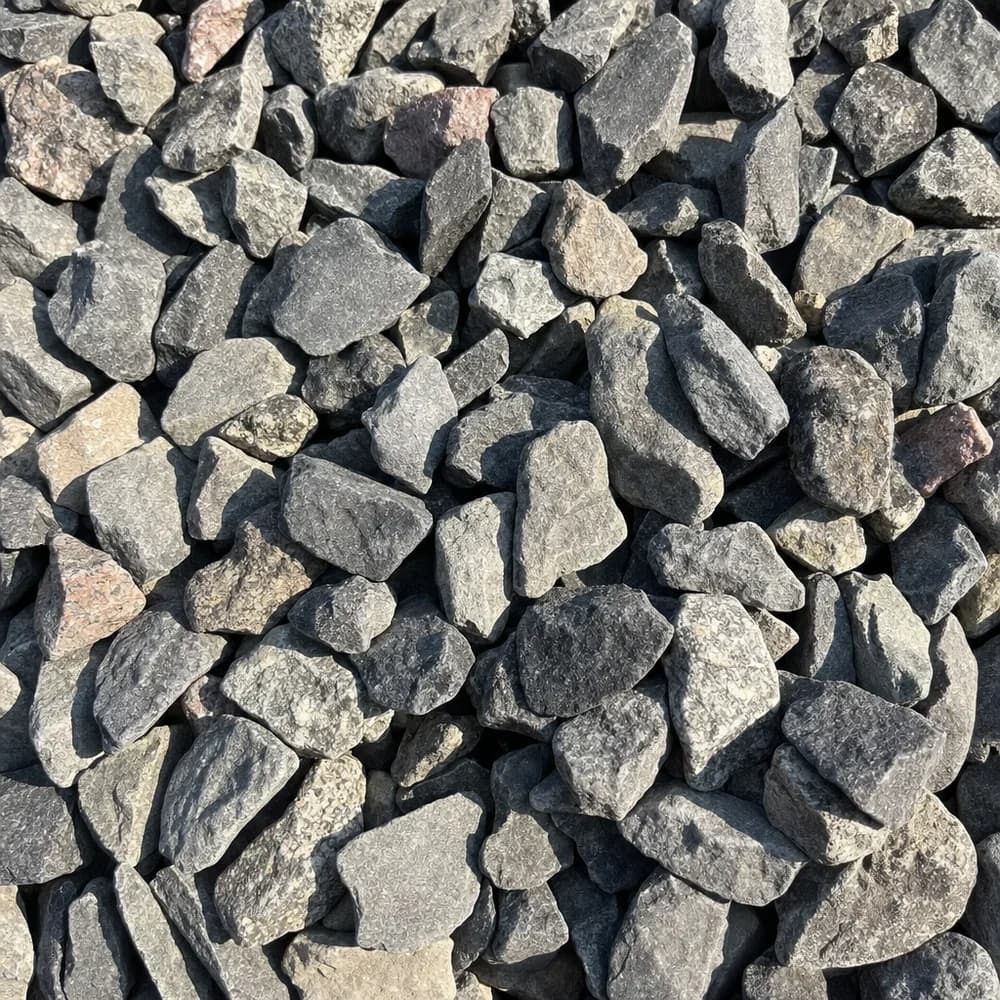
Two gray piles get ordered for the same patio every spring and only one of them belongs on top. Crusher run and stone dust both carry fines, both pack hard, and in a photograph they are difficult to tell apart. The difference is the top of the sieve: crusher run runs up to around three quarters of an inch with everything below it, while this material is a quarter inch minus, angular crushed stone screened down to dust and fine particles with nothing large left in it. That single distinction decides which layer each one goes into, and getting it backwards is the most common reason a New England patio rocks underfoot by its second winter.
Two gray piles a quarter inch apart, and which layer each one owns
Put a handful of each side by side and the difference is obvious. Crusher run has pieces you can pick out individually with dust packed around them. Stone dust is fine all the way through, gritty rather than stony, and it holds a fingerprint when it is damp.
That structure is why they are not interchangeable. The larger pieces in crusher run are what carry load, which makes it the structural layer under a patio, pad or drive. Stone dust has nothing large enough to carry anything, but it screeds perfectly flat and locks tight when it is watered and tamped, which makes it the setting bed that a paver or a piece of bluestone sits still on.
Build with only one of them and something goes wrong. Only crusher run, and every flagstone teeters on the three highest pieces under it. Only stone dust, and the whole assembly settles because nothing underneath is holding the weight.
Order it when something flat has to sit still and stay sitting
The jobs this material suits all share a requirement: a piece of something flat has to be set level and stay level through a freeze.
Paver and bluestone bedding is the main one. Screed it over a compacted base, set the stone into it, and the bed conforms to the underside of each piece instead of fighting it.
Joint filling is the second. Brushed into the gaps around pavers, brick or flagstone and watered in, the fines settle and knit the pieces to each other, which also closes the gaps weeds arrive through.
Bringing a subgrade to level is the third. Where a shed, a hot tub pad or a run of decking piers needs a flat plane on uneven ground, this material works into shallow low spots and leaves a smooth surface after tamping.
A compacted path finish is the fourth. Watered and tamped, it dries to a dense surface firm enough for a garden cart or a wheelchair, which is why it turns up on so many barn paths and side yards.
Leave it out of the downspout splash area and the retaining wall backfill
Two jobs come up regularly on the phone and the answer for both is no.
A downspout splash area wants water to leave. This material is designed to knit into a nearly solid layer when wet, so it holds rainwater at the surface, washes into a rut under the outlet, and freezes into a lifted plate by February. That splash area wants a clean open stone such as #67 Stone over fabric.
Retaining wall backfill is worse. The fines pack against the back of a wall, water builds behind them, and in this climate the ice that forms in that trapped water pushes on the wall all winter. Backfill behind a wall wants an open-graded rock so pressure never builds, with a drain line at the base running out to daylight.
The habit worth keeping is to ask whether the layer needs to hold water out or let water through. This material holds water out.
Under a 10 by 12 shed pad: the order the layers go in
A shed pad is the clearest illustration of the two-layer rule, and it is a job most people on an older lot can do themselves.
Strip the footprint back past the organic layer and a foot wider than the shed on each side, then shape the bottom so it falls gently to one side. On glacial till that stays wet, lay filter fabric across the bottom before anything else goes in, or the subgrade soil and the base stone will mix over a few winters and the pad will settle unevenly.
The structural layer goes in next, 4 to 6 inches of Crusher Run placed in lifts no thicker than about three inches, damp, and compacted with a plate between lifts.
The bedding course is last, about an inch of this material, screeded flat off two pipe rails, wetted and tamped. That inch is what takes the skids or blocks and leaves them level. Going thicker does not make the pad flatter, and a thick bed of fine material is exactly what heaves when frost reaches it.
An inch of stone dust under bluestone, three inches on a barn path
Depth is where most orders go wrong, and the number depends on which job the material is doing.
As a bedding course under pavers, bluestone or shed blocks, about 1 inch screeded is the working figure. That is a loose depth before compaction, and it will tighten a little as the stone is set and tamped. The base beneath it carries the structure, so a deeper bed adds settlement rather than strength.
As a finished path or pad surface, 2 to 3 inches over a compacted base is the range, laid in a single lift, watered, and tamped to a firm crust. That figure is loose too. Expect it to lose roughly a fifth of its depth once it is compacted, so order to the loose measurement and finish thinner.
As joint fill there is no depth at all. Brush it in, wet it, let it settle, and brush more in until the joints stop taking it.
Taking an odd-shaped patio in rectangles, then turning yards into tons
The calculator handles up to five areas at once, which is the practical way to measure anything that is not a rectangle: break it into rectangles, work each one out, and add them.
A hypothetical patio in two parts, 12 feet by 14 feet with a 6 foot by 8 foot extension off one corner. 12 x 14 = 168 square feet. 6 x 8 = 48 square feet. Together that is 216 square feet.
Bedding at 1 inch: 216 x 1/12 = 18 cubic feet. 18 divided by 27 = 0.67 cubic yards.
A hypothetical barn path for comparison, 3 feet wide and 50 feet long, finished at 3 inches: 3 x 50 = 150 square feet. 150 x 3/12 = 37.5 cubic feet. 37.5 divided by 27 = 1.4 cubic yards.
This site publishes a working weight of about 2,900 lb per cubic yard for stone screenings and dust, roughly 1.45 tons per cubic yard, and that figure is approximate. The patio bedding comes out near 1.0 ton and the path near 2.0 tons.
Run your own rectangles through the paver base calculator instead of scaling those figures, then choose a tonnage and a delivery date on this page. Delivery is arranged by ZIP code at checkout, and the truck needs somewhere clear to tip that is close to the work. A wheelbarrow of damp screenings is heavy, so think about that route before the day rather than on it.
Quickly Calculate How Much You Need
Material: Stone Dust
How to Measure
Measure the length and width of your project area in feet
Decide on depth in inches (2" for landscaping, 4" for driveways)
Enter the values above and we'll calculate the tonnage you need
Need help figuring out the right amount? We can help!
Call or text us at (860) 891-3260 and we'll help you calculate the right quantity for your project.
Not sure how much you need? The Stone Calculator has depth guides, coverage charts and worked examples for this material.
Frequently Asked Questions About Stone Dust
Stone Dust delivery across Connecticut
- Bridgeport
- Stamford
- New Haven
- Hartford
- Waterbury
- Norwalk
- Danbury
- New Britain
- Fairfield
- Greenwich
- West Hartford
- Bristol