Drain Rock in Connecticut: Washed Stone for the Buried Half of the Job
In Connecticut, Drain Rock belongs behind retaining walls and in drainage runs where seasonal water meets glacial till.
- Size: 3/4 inch to 1-1/2 inch
- Grading: Washed to remove fines and dust
- Type: Rounded or angular varieties
From $382 for 1 ton, delivery included
Larger loads cost less per ton: 500 tons is $22,595 ($45.19 per ton). Pick any quantity below for a delivered price.
Free delivery included
Free delivery anywhere in Connecticut
Pick a delivery date
Weekday delivery, earliest Oct 20
Get a Free Quote
Fill out the form and our sales team will get back to you within the hour.
Size and Grading
- Size
- 3/4 inch to 1-1/2 inch
- Grading
- Washed to remove fines and dust
- Type
- Rounded or angular varieties
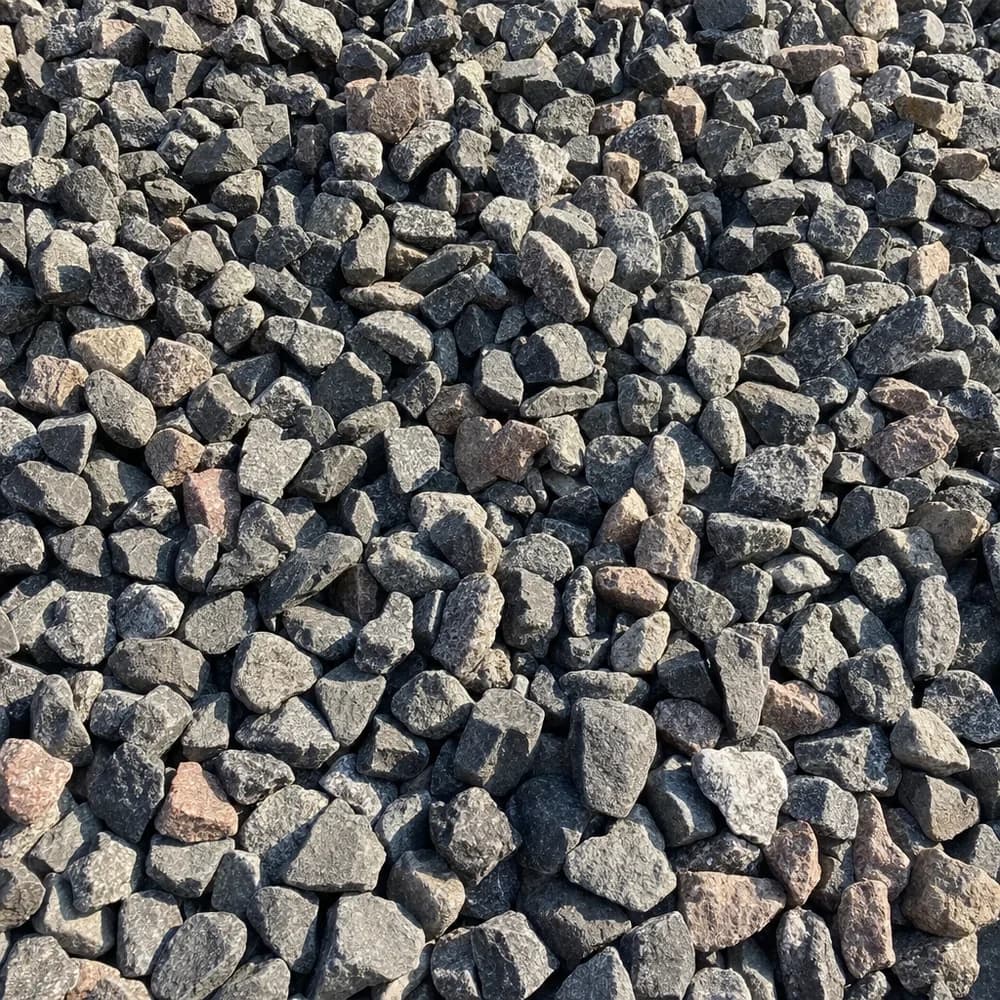
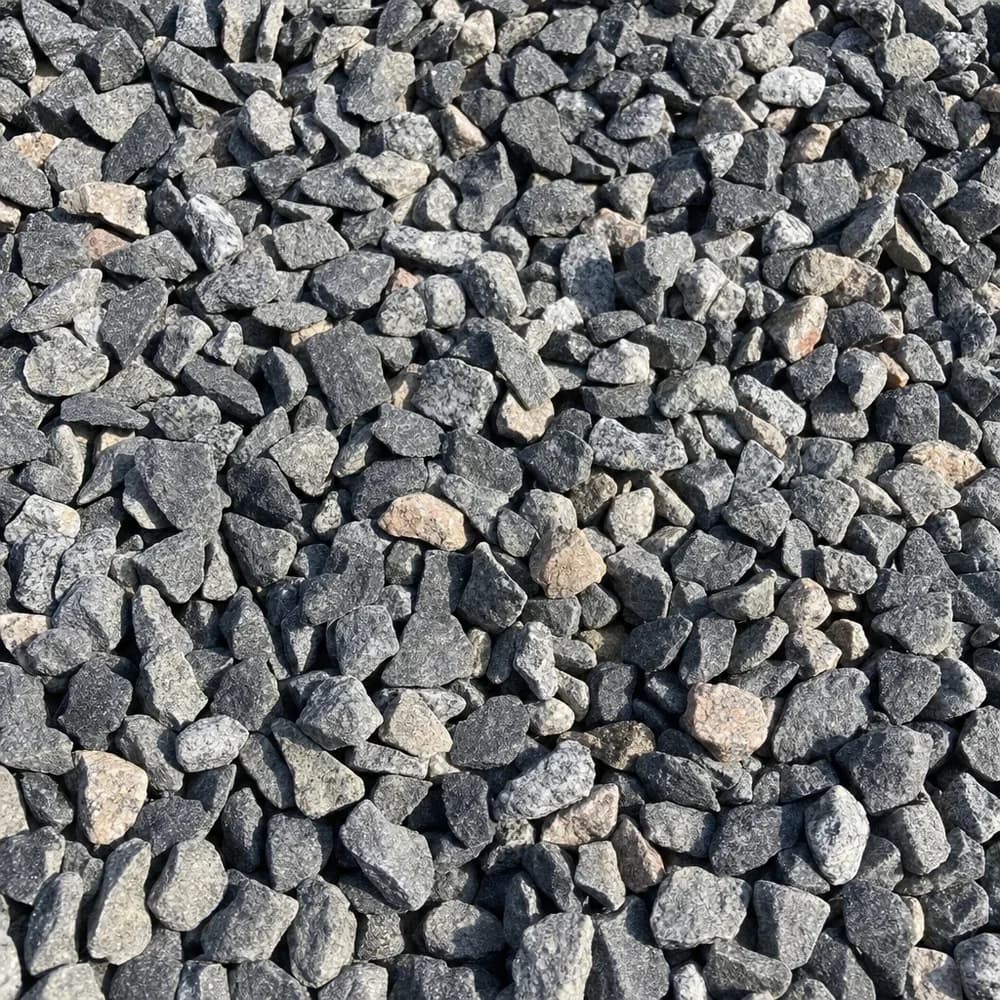
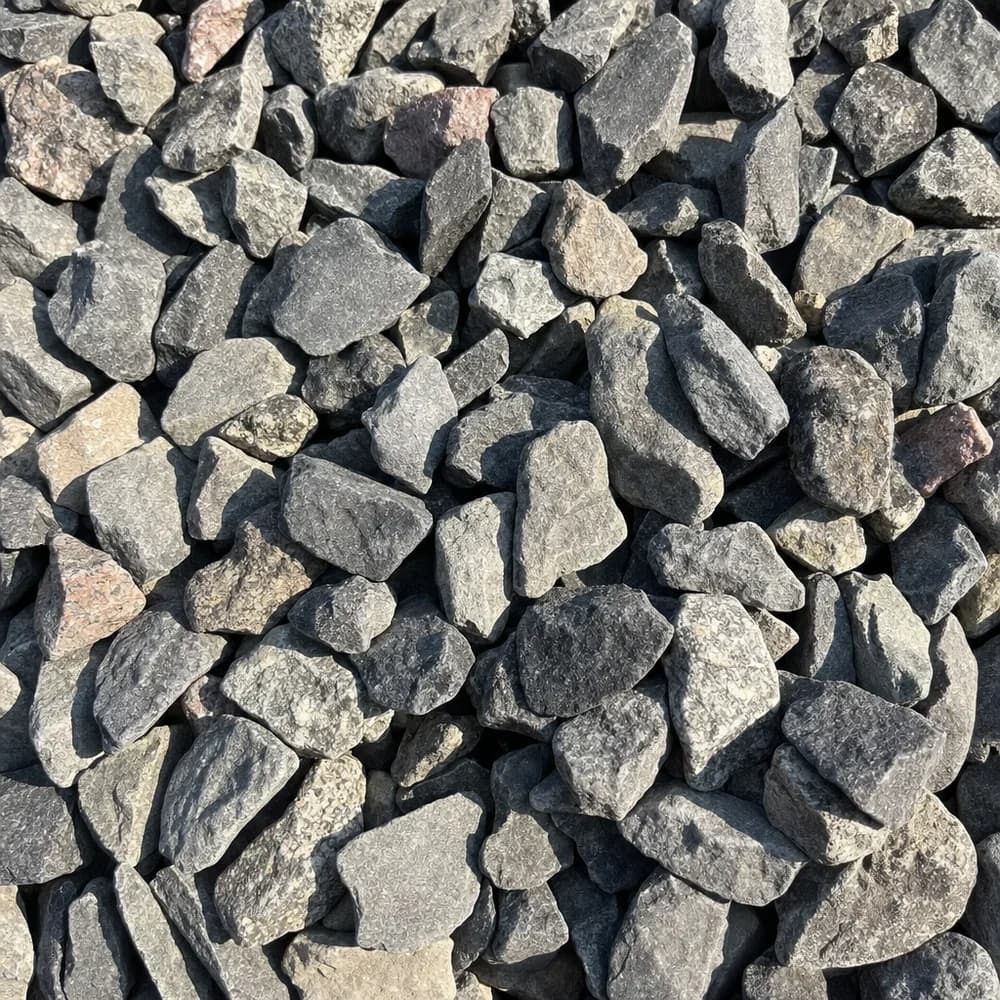
The order that comes up more than any other for drain rock is the perimeter run: a trench along the uphill side of a house or a footing, opened because water crossing a till lot has been arriving at the foundation for years and finally showed up inside. It is washed stone at three quarters of an inch to an inch and a half, rounded or angular, with the fines and dust taken out so the voids between the pieces stay open for as long as the trench is there.
Thaw to hard frost: the months a trench can actually be opened here
Drainage work sits inside a narrower window than most landscape jobs, and the ground sets it rather than the calendar.
The early limit is the thaw. Ground still frozen at the bottom of a trench cannot be graded to a fall, and saturated till collapses the trench walls as fast as the bucket opens them. The late limit is the first hard freeze, which stops any compaction of the backfill and makes the finished grade impossible to shape.
Between the two, the spring thaw is when the problem announces itself and late summer into autumn is when the ground is usually workable enough to fix it. That gap is worth planning for, because a failure noticed in March generally has to wait for the ground to dry out.
Marking the outlet before anyone opens the ground
Three things get decided before the excavator moves, and all three are harder to change afterwards.
Where the water goes is the first. A drain with no outlet is a buried reservoir. Find the daylight point, the drywell or the legal discharge, and check there is fall to it the whole way. On ledge-heavy ground that sometimes means the trench cannot go as deep as you wanted and the run has to take a different line.
Where the ledge is comes second. Probe the route before you commit to a depth. Around here it is common to find rock exactly where the trench needed another foot.
What sits under the stone is third. On saturated till, geotextile between the soil and the stone is the difference between a drain that works for decades and one that silts up in five years. Order the fabric with the stone rather than after it.
Where drain rock goes: footing perimeters, leach beds and behind a wall
Four jobs cover most of it, and every one of them is buried.
French drain systems and curtain drains are the first, intercepting water moving sideways through till before it reaches a basement or a low corner of the yard.
Septic and leach field construction is the second, where a clean, uniform drainage bed is what the system is designed around. Work to whatever the engineered design and the local approval specify rather than to a page like this one.
Retaining wall backfill is the third. Water arriving behind a wall has to escape, and open washed stone gives it the route. Angular pieces are the better pick here because they interlock and hold their structure under the load of the soil pressing against them.
Foundation drainage is the fourth, around footings and basement walls, where the aim is to keep hydrostatic pressure off the structure through the freeze and thaw cycle.
Rounded material has a place too, in exposed landscape drainage where the stone will be seen and a natural look is worth having.
The wet RV pad, the play area and the lane off the town road
Three requests arrive for this stone and only one of them is partly right.
A play area wants something forgiving that a child can land on. Washed stone at this size is neither, and it also rolls. Use Shredded Mulch for a cushioned surface, or 3/8" Natural Pea Gravel where a fine rounded stone is preferred.
A long rural lane wants a surface that binds and sheds. Loose washed stone ruts under a wheel and works its way into the shoulders within a season. That is a job for compacted Processed Gravel, finished with Driveway Gravel.
An RV or boat parking pad is the one with a real answer here, but only underneath. The pad itself wants a compacted, bound surface. If the spot ponds because water crosses it, a lift of washed stone over fabric under that surface gives the water a route through instead of a pool under the bearing layer. Drain rock is the drainage half of that build, never the top of it.
Tons for a 90-foot curtain drain and a 4-foot drywell
Two hypothetical figures, worked as length times width times depth in feet, divided by 27.
The curtain drain. A 90-foot run across the uphill side of a house, trench 16 inches wide with 14 inches of stone around the pipe: 90 x 1.33 = 120 square feet. 120 x 14/12 = 140 cubic feet. 140 divided by 27 = 5.19 cubic yards.
The drywell. A pit 4 feet square and 4 feet deep: 4 x 4 x 4 = 64 cubic feet. 64 divided by 27 = 2.37 cubic yards.
Together, 7.56 cubic yards. No separate weight is published for this material, so use the closest listed family, 3/4 inch crushed stone at roughly 2,800 lb per cubic yard, or about 1.40 tons per yard. That gives 7.56 x 1.40 = 10.6 tons, which rounds sensibly to eleven. Treat the figure as approximate, since a rounded stone and an angular stone at the same nominal size do not weigh quite the same in a truck.
Put your own trench dimensions into the calculator this site pairs with drain rock before ordering, and remember to take the pipe out of the sum on a large-diameter run.
Silt, roots and the cleanout you will want in five years
A buried drain gives you almost no warning when it stops working, so the upkeep is really about leaving yourself a way to check.
Silt is the usual cause of failure, arriving from the trench walls, from the surface, or from dirty backfill dropped straight onto the stone. Fabric handles the first two and a separation layer handles the third.
Roots are the second, particularly where the run passes a willow or a maple, and they find a perforated pipe eventually.
Both are easier to deal with if the run has a cleanout or an inspection point at each end when it goes in. That costs little at the time and is the only thing that lets anyone flush the line later without digging it up. Once a year, after leaf fall, check the daylight outlet is clear, which is the most common reason a working drain appears to have failed.
Quickly Calculate How Much You Need
Material: Drain Rock
How to Measure
Measure the length and width of your project area in feet
Decide on depth in inches (2" for landscaping, 4" for driveways)
Enter the values above and we'll calculate the tonnage you need
Need help figuring out the right amount? We can help!
Call or text us at (860) 891-3260 and we'll help you calculate the right quantity for your project.
Not sure how much you need? The River Rock Calculator has depth guides, coverage charts and worked examples for this material.
Frequently Asked Questions About Drain Rock
Drain Rock delivery across Connecticut
- Bridgeport
- Stamford
- New Haven
- Hartford
- Waterbury
- Norwalk
- Danbury
- New Britain
- Fairfield
- Greenwich
- West Hartford
- Bristol