Processed Gravel for Connecticut Driveways, Pads and Turnarounds
Also sold as Road Base
Also known as: process, 3/4 processed, bank run processed
For a Connecticut driveway apron, Processed Gravel provides a dense compacted base over ground affected by frost and glacial till.
- Size: 3/4 inch minus
- Grading: Graded mix of crushed stone, gravel and binding fines
- Type: Crushed aggregate blend
From $372 for 1 ton, delivery included
Larger loads cost less per ton: 500 tons is $19,470 ($38.94 per ton). Pick any quantity below for a delivered price.
Free delivery included
Free delivery anywhere in Connecticut
Pick a delivery date
Weekday delivery, earliest Oct 20
Get a Free Quote
Fill out the form and our sales team will get back to you within the hour.
Size and Grading
- Size
- 3/4 inch minus
- Grading
- Graded mix of crushed stone, gravel and binding fines
- Type
- Crushed aggregate blend
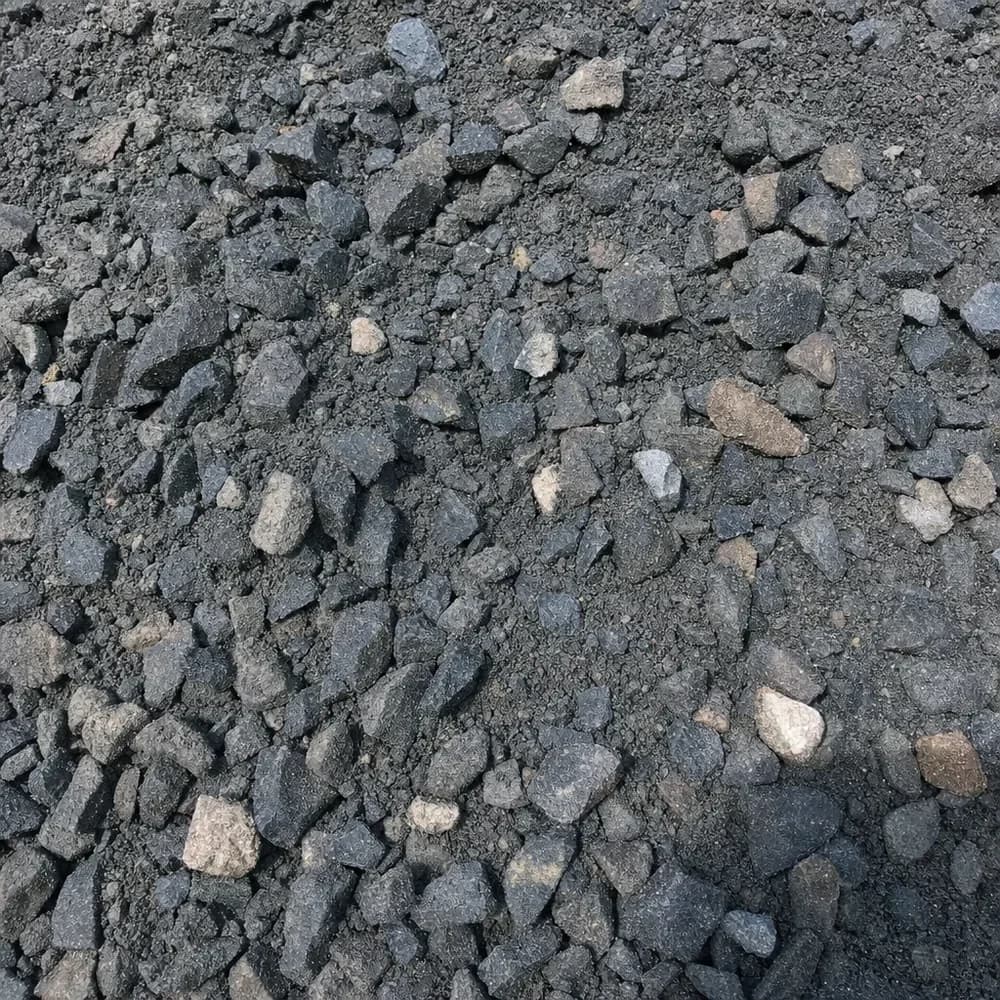
Tip a load out at the head of an older drive and the useful thing to do is crouch down and squeeze a handful. Processed gravel does not look like clean stone. There is angular rock in it up to about an inch across, and packed around that rock is a gray crushed flour that coats a glove and holds its shape when you press it. Set beside a washed stone it reads as the dirty pile in the yard. That gray flour is the reason to order it.
One inch minus, plus the gray flour holding it together
The size is one inch minus. Nothing in the load is larger than roughly an inch, and every size below that is in there too, down to dust. The grading is a graded mix of crushed stone, gravel and binding fines, and the type is a crushed aggregate blend rather than one screened size.
In this corner of New England the material gets asked for as process, or three-quarter process, which is the word you will hear from anyone who has been grading drives here for a while. It is listed on this site as Processed Gravel so the size and the grading sit somewhere you can check them. What you are buying is the spread of sizes: the larger pieces carry load, the smaller ones fill the spaces between them, and the fines bind the course once it has been dampened and rolled.
The turnaround and parking pad most process orders on old lots are for
The job that brings most people here is a piece of ground that vehicles stand on or turn on. A parking pad beside a detached garage. A turnaround at the top of a steep drive so nobody has to reverse blind into the road. The apron where a gravel drive meets the town road and takes the worst of the plow and the braking.
Older Connecticut properties make that work more awkward than the square footage suggests. The drive is often one lane with a dry stone wall down one side, so the truck has a single line in and a single place to put the load, and everything after that moves by machine or by wheelbarrow. We would check the turning room and the low limbs before settling on a depth, because a load that cannot be dropped near the work turns a weekend job into three of them.
Forty-two inches of frost, ledge underfoot, and why a thin lift lets go
Frost depth in this state runs to about 42 inches, and the freezing and thawing repeats rather than happening once a winter. No practical driveway base is going below that, so the course is not there to sit under the frost line. It is there to hold together while the ground underneath it moves.
That is why depth and compaction matter here more than what you eventually put on top. A course laid thin, or laid dry and never rolled, keeps voids in it. Voids take on water, the water freezes, and the layer lifts and comes apart in March.
The ground adds a second problem. Much of Connecticut is rocky glacial till with ledge close to the surface, so water tends to run sideways across a site instead of soaking straight down. A pad can sit on ground that looks dry in August and still be fed from uphill every spring. We would trace where that water arrives before choosing a depth, because a base built over a subgrade that stays wet will pump its fines out no matter how well it was rolled.
Lifts, moisture and the plate: placing it between the thaw and the first freeze
Prepare the subgrade and deal with the water first. Strip the organic layer, shape the ground so it falls the way you want water to leave, and intercept any sideways flow before it reaches the pad.
Then place the material in lifts instead of one deep dump, damp it lightly, and compact each lift before the next goes on. A plate compactor suits a pad or a walk; a roller is the sensible tool once you are past a few hundred square feet. The course is done when the surface tightens under the machine and stops shoving ahead of the plate.
Timing is simple in this climate. Base work runs spring through fall. Frozen ground will not compact, so a course rolled onto frost is a course you will be rebuilding.
Where Crusher Run takes over, and why a foundation drain wants open stone
Two materials sit close enough to this one to be worth naming. Crusher Run is angular crushed stone at three-quarter inch minus blended with stone dust and fines, and it locks up tight under a plate, which suits a shed pad or a paver base where you want the densest possible layer. Processed gravel, with its wider spread of sizes, is the one usually chosen for drive, apron and pad work.
The third job people try to use it for is a French drain along a foundation, and that one is a mistake. A drain works because water can move through the stone, and fines are precisely what stops water moving. That trench wants a washed, open material such as #57 Stone, which keeps its voids open instead of closing them up. Put the binding material where the ground has to be firm and the clean stone where the water has to run.
Counting yards for a 30 by 12 dog run and a 22 by 20 turnaround
Two hypothetical examples, worked through so you can repeat the arithmetic on your own measurements. Length times width times depth in feet, divided by 27.
A side-yard dog run, 30 feet by 12 feet, at 4 inches: 30 x 12 = 360 square feet. 360 x 4/12 = 120 cubic feet. 120 divided by 27 = 4.4 cubic yards. This site's own published weight for road base is about 1.50 tons per cubic yard, so 4.4 x 1.50 is roughly 6.6 tons, an approximate figure rather than an exact one.
A turnaround pad, 22 feet by 20 feet, at 6 inches: 22 x 20 = 440 square feet. 440 x 6/12 = 220 cubic feet. 220 divided by 27 = 8.1 cubic yards. At the same approximate 1.50 tons per cubic yard, 8.1 x 1.50 comes to about 12.2 tons.
Both figures are the volume sitting in the ground at the depth you entered, so measure for the depth you want once it has been rolled. Material here is sold by the ton, and turning cubic yards into tons depends on the density of this blend, so put your own measurements through the processed gravel calculator and take the tonnage from the tool rather than estimating it.
When you have a number, choose your quantity and a delivery date on this page. Before the day itself, clear a dump spot the truck can reach and get back out of, since delivery is arranged by ZIP code at checkout and the driver needs somewhere to tip. If the access is the difficult part of your job, describe it through the contact page first and Connecticut Rock Supply can work the approach out with you.
Quickly Calculate How Much You Need
Material: Processed Gravel
How to Measure
Measure the length and width of your project area in feet
Decide on depth in inches (2" for landscaping, 4" for driveways)
Enter the values above and we'll calculate the tonnage you need
Need help figuring out the right amount? We can help!
Call or text us at (860) 891-3260 and we'll help you calculate the right quantity for your project.
Not sure how much you need? The Road Base Calculator has depth guides, coverage charts and worked examples for this material.
Frequently Asked Questions About Processed Gravel
Processed Gravel delivery across Connecticut
- Bridgeport
- Stamford
- New Haven
- Hartford
- Waterbury
- Norwalk
- Danbury
- New Britain
- Fairfield
- Greenwich
- West Hartford
- Bristol