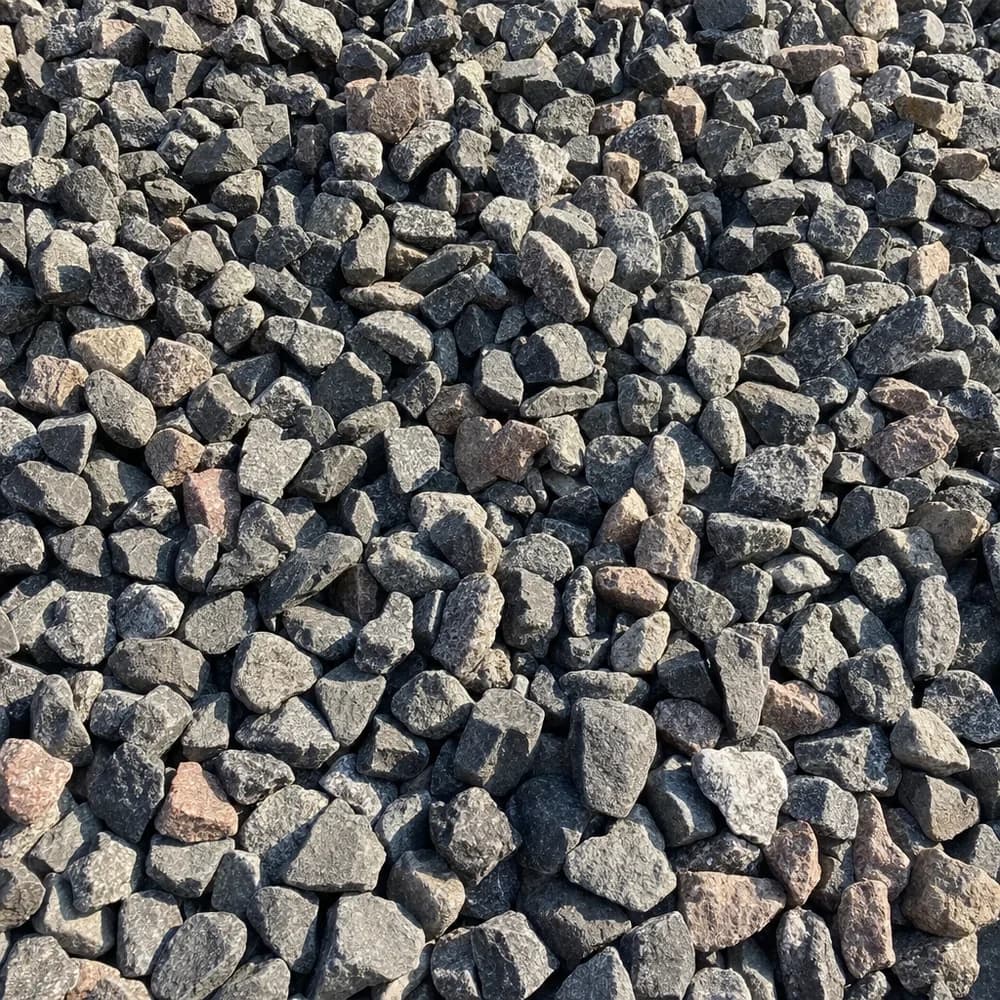
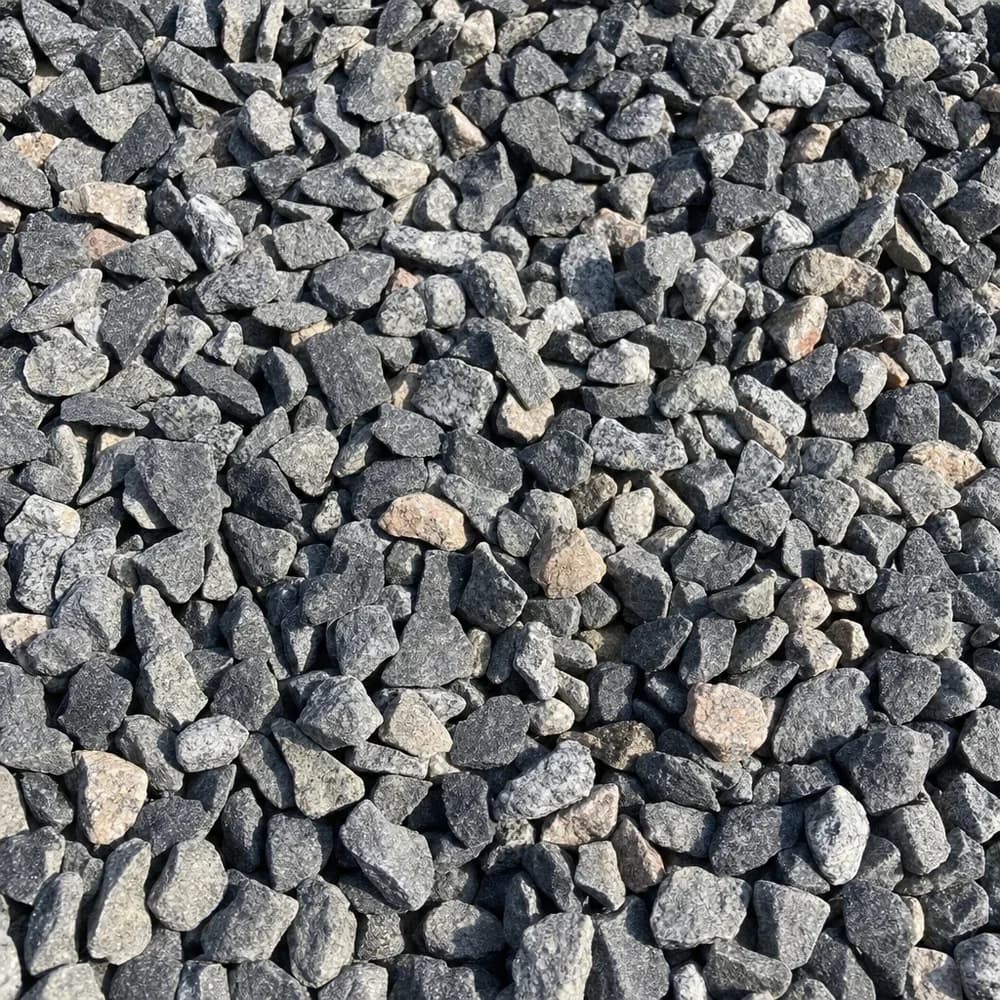
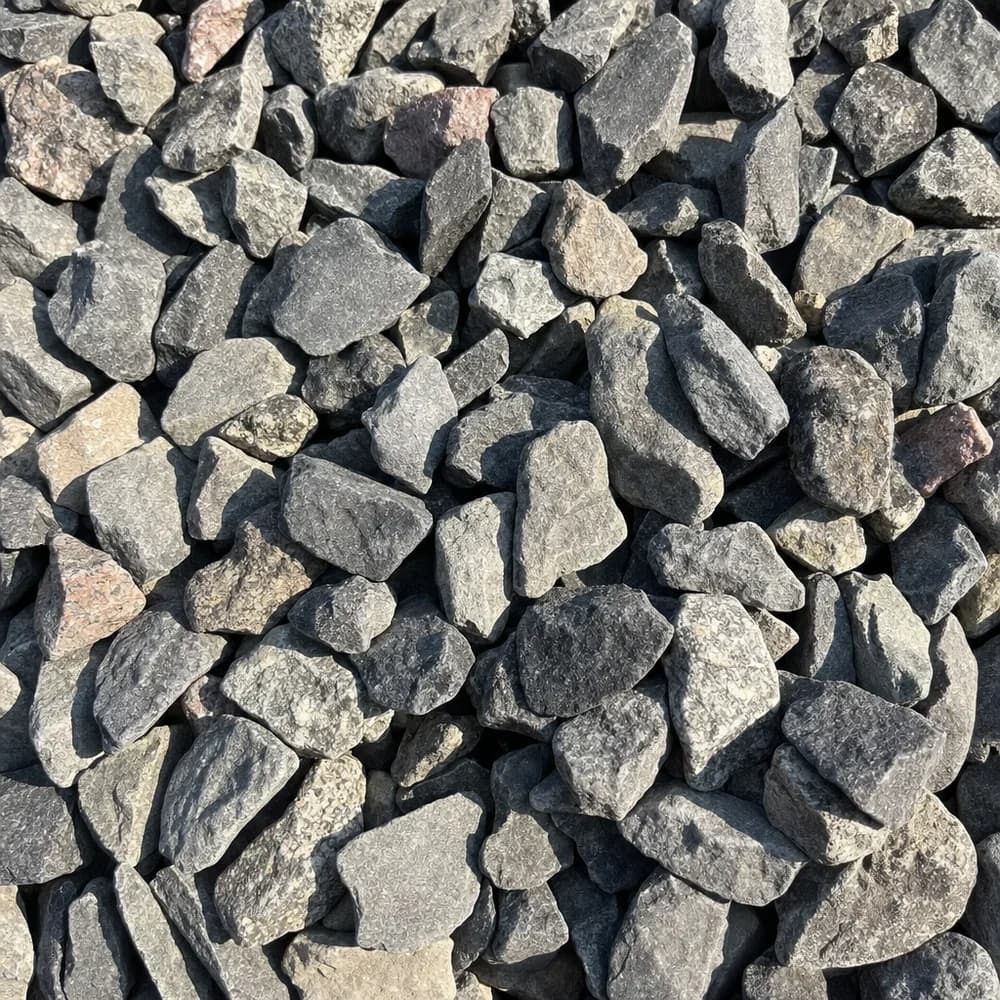
#4 Crushed Stone for Wet Ground Under Connecticut Drives and Pads
Under a Connecticut driveway apron or patio build, #4 Crushed Stone creates open space for water movement before the surface materials go on.
- Size: About 3/4 inch to 1-1/2 inches
- Grading: #4
- Type: Angular crushed stone
From $423 for 1 ton, delivery included
Larger loads cost less per ton: 500 tons is $25,535 ($51.07 per ton). Pick any quantity below for a delivered price.
Free delivery included
Free delivery anywhere in Connecticut
Pick a delivery date
Weekday delivery, earliest Oct 20
Get a Free Quote
Fill out the form and our sales team will get back to you within the hour.
Size and Grading
- Size
- About 3/4 inch to 1-1/2 inches
- Grading
- #4
- Type
- Angular crushed stone
The question that brings most people to this listing is whether the problem is the surface or what is underneath it. A drive that ruts in one spot every March, a pad that pumps water when a truck rolls across it, a foundation with a damp line along one wall: none of those are fixed by better stone on top. They are all the same complaint, which is that water has arrived somewhere it cannot leave. #4 Crushed Stone is angular rock graded roughly 3/4 inch to 1-1/2 inches, with voids big enough that silt takes years to close them, and it is bought almost entirely for the layer where that water has to go.
Where #4 crushed stone goes most often here: under a rebuilt turnaround
Turnarounds and parking pads on older Connecticut lots fail before the rest of the drive does, and the reason is usually location rather than traffic. A turnaround is often cut into a slope, which means it sits at the point where water running sideways over ledge comes out.
Rebuilding one starts by taking the whole area down past whatever is left of the old base, then shaping the bottom to drain toward a ditch, a swale or a low corner. A course of this stone goes in there, thick enough to hold a reservoir of open space, with the finer compacting material built over it.
The result is a pad where water reaching the excavation runs through the bottom layer and leaves, rather than pooling against the underside of the base and lifting it each time it freezes. The stone is not what carries the vehicles. The compacted layers above it do that, and they can only do it because they are sitting on something dry.
The same sequence is what goes under a side-yard dog run on soggy ground, at a smaller depth, with a finer surface on top that paws can stand on.
Open voids against ledge, sideways water and a 42-inch frost line
Three local conditions make this size useful, and they compound each other.
Ledge close to the surface means water has a floor to travel along. It moves laterally across a property rather than soaking down, which is why a drive can be wet in one band and dry either side of it.
Glacial till carries fines. Those fines move with the water and pack into any void they find, which is why smaller drainage stone silts up faster here than it does in sandy ground. A larger void takes much longer to close, which is the practical argument for this gradation over a finer one on genuinely wet sites.
Then the frost line, around 42 inches, with freeze and thaw repeating through the season rather than once a winter. Every cycle acts on whatever water is trapped in the assembly. Keeping the bottom layer open and draining is what keeps that water out of the freeze in the first place.
On slopes this stone earns its place for a second reason. The pieces are heavy and angular enough to stay where they are put, which is why it also turns up in ditch lines, along channels and as gabion basket fill.
Placing it low in the build, and covering it before anything drives on it
Two rules cover most of the installation, and both are about what goes next to it rather than the stone itself.
Fabric first. Line the excavation with filter fabric before the stone goes in, and lap it over the top before the next layer is placed. Without that separation the till soil above and below works into the voids over a few winters, and a drainage layer that has silted up cannot be cleaned out in place.
Then cover it. This is not a finished surface. Walking on a loose 1-1/2 inch stone is unpleasant and driving on it turns ankles and tires alike, so the design should always put a finer compacting course over the top, tightened with a plate or a roller. Along a foundation drain, that cover is usually fabric and backfill rather than another stone course.
Depths in practice: 6 to 8 inches under a drive or pad on wet ground, 4 inches where the ground is only seasonally damp, and a trench depth rather than a spread depth wherever it is going alongside a foundation. Place it in one lift. There is no point compacting it in layers because it does not compact in any meaningful sense, and a pass or two with a plate to settle the pieces into contact is all it wants.
Where #57 Stone and Railroad Ballast take the job instead
Two neighbors on the catalogue do overlapping work, and the choice between them is about void size against surface behavior.
#57 Stone is the step down, at 3/16 to 1 inch. It is the gradation engineered details and concrete mixes name by number, and it is the better choice for a foundation drain trench, a septic detail or anywhere a plan sheet specifies. Its voids are smaller, so on a silty till site it will close up sooner, but it is far easier to work with by hand and it is the standard everyone recognizes.
Railroad Ballast is the step up, roughly 1 to 2.5 inches and graded to interlock under load. Where a surface has to carry heavy equipment while draining and will not get a finer cover, ballast is the one that settles into a stable layer rather than staying loose.
The short version: follow the plan sheet to #57 if there is one, reach for ballast where heavy machinery sits directly on the stone, and use this size for the buried drainage course under a rebuilt drive or pad.
Tons for a 26 by 18 parking pad and a 60-foot foundation drain
Both examples below are hypothetical, worked so the arithmetic carries to your own dimensions. Length times width gives square feet, depth in inches divided by 12 converts to cubic feet, and dividing by 27 gives cubic yards.
A drainage course under a parking pad 26 feet by 18 feet, at 6 inches: 26 x 18 = 468 square feet. 468 x 6/12 = 234 cubic feet. 234 divided by 27 = 8.7 cubic yards.
A foundation drain trench 60 feet long, 18 inches wide, with 12 inches of stone in it: 18 inches is 1.5 feet, so 1.5 x 60 = 90 square feet. 90 x 12/12 = 90 cubic feet. 90 divided by 27 = 3.3 cubic yards.
This site publishes a working weight of about 2,900 lb per cubic yard for #4 stone, roughly 1.45 tons per cubic yard, and that figure is approximate. It puts the pad course at around 12.6 tons and the trench at around 4.8 tons.
For an odd-shaped area, break it into rectangles and add the cubic feet before dividing by 27. Put your own numbers through the stone calculator rather than scaling these, then send the dimensions and a description of the access through the contact page if you would rather have a quote by email than pick a quantity here. Delivery is arranged by ZIP code at checkout and the truck needs a clear place to tip, ideally within machine reach of the excavation.
Quickly Calculate How Much You Need
Material: #4 Crushed Stone
How to Measure
Measure the length and width of your project area in feet
Decide on depth in inches (2" for landscaping, 4" for driveways)
Enter the values above and we'll calculate the tonnage you need
Need help figuring out the right amount? We can help!
Call or text us at (860) 891-3260 and we'll help you calculate the right quantity for your project.
Not sure how much you need? The Stone Calculator has depth guides, coverage charts and worked examples for this material.
Frequently Asked Questions About #4 Crushed Stone
#4 Crushed Stone delivery across Connecticut
- Bridgeport
- Stamford
- New Haven
- Hartford
- Waterbury
- Norwalk
- Danbury
- New Britain
- Fairfield
- Greenwich
- West Hartford
- Bristol