#67 Stone for Connecticut Pipe Bedding, Wall Drains and Splash Areas
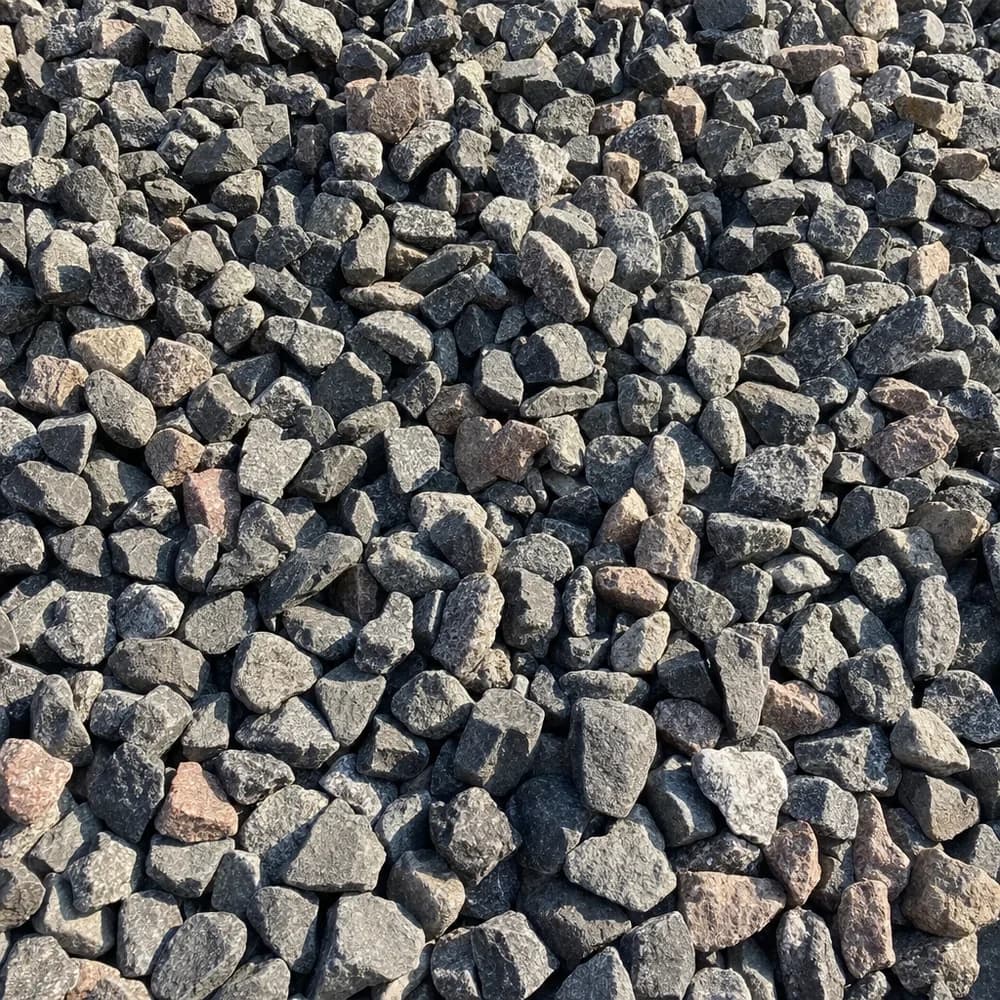
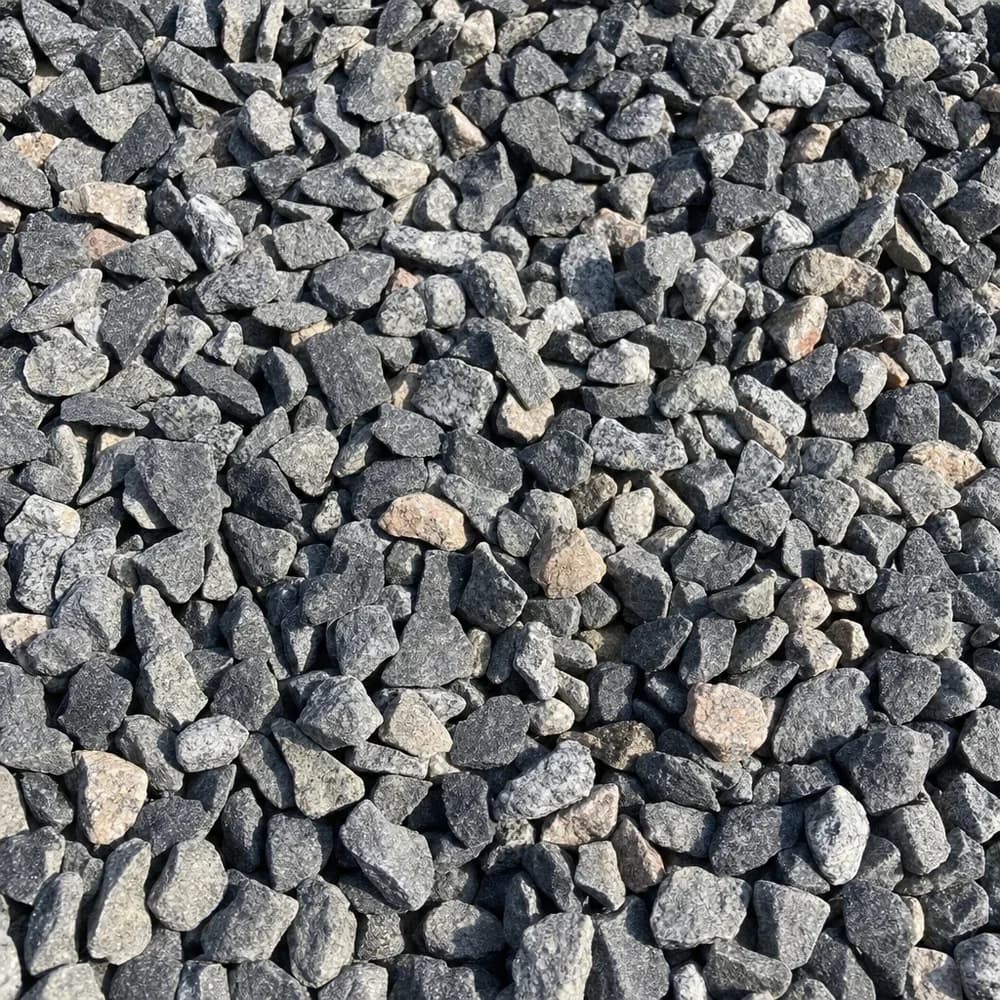
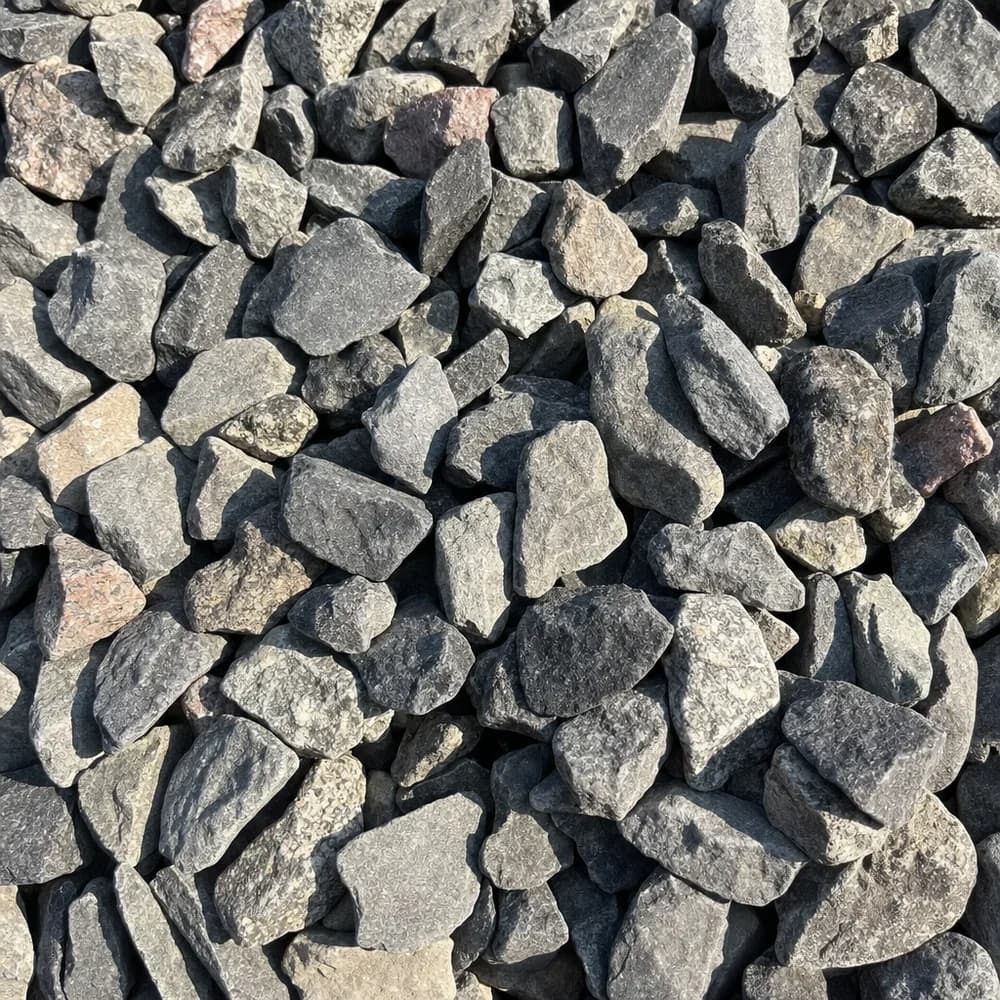
#67 Stone gives Connecticut paths and planting areas a uniform crushed-stone appearance while supporting drainage work around glacial till.
- Size: 1/4 inch to 3/4 inch
- Grading: #67
- Type: Angular crushed stone
From $449 for 1 ton, delivery included
Larger loads cost less per ton: 500 tons is $27,195 ($54.39 per ton). Pick any quantity below for a delivered price.
Free delivery included
Free delivery anywhere in Connecticut
Pick a delivery date
Weekday delivery, earliest Oct 20
Get a Free Quote
Fill out the form and our sales team will get back to you within the hour.
Size and Grading
- Size
- 1/4 inch to 3/4 inch
- Grading
- #67
- Type
- Angular crushed stone
Take a handful off the pile and the product explains itself. Every piece is somewhere between a quarter inch and three quarters, angular, with sharp faces where the crusher broke it. Tip the handful from one palm to the other and it rattles rather than slumps, and when it is gone your hand is clean. There is no gray flour on it, no damp clay smell, nothing packed into the gaps. That absence is the product. #67 stone is graded to keep the small sizes out so the spaces between the pieces stay connected, which is why it belongs in the parts of a build where water has to keep moving.
Order #67 stone for the draining half of a job, not the bearing half
Most outdoor builds on an older Connecticut lot are two jobs stacked on each other. One layer carries weight, another layer moves water away, and they want opposite materials.
Choose this stone when the layer has to stay open. Around a pipe, behind a wall, under a downspout, in a trench that has to keep taking water for decades: in all of those, connected voids are the requirement and anything that binds is a fault. Choose it too when a concrete mix calls for a #67 aggregate by number, because that is a defined gradation rather than a description.
Skip it when the layer has to stop moving under weight. Nothing here binds. Run a plate over it and the pieces settle into contact with each other, take the rattle out, and stop. There is no crust and there never will be. A pad, a drive or a patio base that has to feel solid wants a binding material such as Crusher Run instead, with this stone kept to the drainage part of the same build.
Behind a wall on a till lot, where sideways water has to find a way out
Glacial till with ledge under it does not let water soak away the way deep soil does. It reaches the rock and travels sideways, and on a sloped lot that often means it arrives at the back of a retaining wall from uphill.
If the backfill behind that wall holds fines, the water stops there. Then the frost line, which sits around 42 inches in this state, reaches it and the ice pushes outward on the wall through every cold snap. Walls on old properties lean for exactly this reason far more often than they lean from the load in front of them.
The fix is the same on every wall. An open stone behind the face, wrapped in filter fabric so the surrounding soil cannot work into it, with a perforated line at the base running out to daylight or to a low point. The stone is not holding the wall. It is making sure nothing ever builds pressure against it.
Pipe bedding follows the same logic on a smaller scale. Under and around a water, sewer or conduit run, this gradation supports the pipe evenly along its length instead of on a few high points, while still letting water pass.
Downspout splash areas that stop working after three winters
A splash pit under a downspout is a small job that fails quietly. It works for two or three seasons, then the water starts sitting on top, and people assume the stone has worn out.
It has not. The voids have filled with silt. On till the fine particles travel with every rain, and once they pack into the spaces between the pieces the layer becomes a pan instead of a sponge.
Filter fabric is what prevents it, and the detail that matters is lapping it over the top of the stone as well as under it, not just lining the hole. Fabric underneath alone stops silt arriving from below while leaving the surface open to everything washing off the roof and the bed above.
Where the splash area is decorative as well as functional, note that this stone stays loose. It shifts if you walk on it and it travels toward the edges, so set an edge that holds it, and rake it back into line in the spring.
Under a 12 by 20 garage pad: which layer this stone is, and which it is not
A detached garage pad makes the two-layer split easy to see.
The subgrade is stripped to firm ground and shaped to fall gently to one side. On wet till, a drainage course of open stone goes in at the bottom, with fabric under it, so any water arriving sideways passes beneath the pad rather than sitting against it. That is this material's layer, or a coarser one if the ground is genuinely wet.
The structural course goes above it, a compacted binding base built in lifts. That is what carries the slab or the frame, and it needs the fines this stone does not have.
Where people go wrong is trying to make one layer do both, usually by compacting open stone and hoping it firms up. It does not. Keep the two apart, separate them with fabric so they do not mix over a few winters, and each does its job.
A cubic yard, a wheelbarrow load, and 30 feet of wall drain in tons
This site publishes a working weight of about 2,800 lb per cubic yard for #57, #67 and 3/4 inch crushed stone, which is roughly 1.40 tons per cubic yard. That figure is approximate, and it is the one used below.
Coverage first, because it is the number people want before they measure anything. A cubic yard is 27 cubic feet. Spread 3 inches deep, it covers 27 divided by 0.25, which is 108 square feet. At 4 inches it covers 81 square feet. At 6 inches, 54 square feet.
That same cubic yard weighs around 1.4 tons, which is worth knowing before anyone plans to collect a yard in a light pickup. It is also about fourteen heaped contractor wheelbarrow loads, so the distance between the drop spot and the work matters more than the quantity does.
A hypothetical wall drain, 30 feet long, 12 inches wide and 18 inches deep: 1 x 30 = 30 square feet. 30 x 18/12 = 45 cubic feet. 45 divided by 27 = 1.7 cubic yards, or about 2.3 tons.
A hypothetical splash bed, 4 feet by 6 feet at 4 inches: 4 x 6 = 24 square feet. 24 x 4/12 = 8 cubic feet. 8 divided by 27 = 0.3 cubic yards, or about 0.4 tons.
Work your own trench through the stone calculator and take the tonnage from the tool. When you have it, either pick a quantity and a date on this page, or send the measurements and the access details through the contact page and ask for a quote by email. Delivery is arranged by ZIP code at checkout, and the truck needs a clear spot to tip into.
Quickly Calculate How Much You Need
Material: #67 Stone
How to Measure
Measure the length and width of your project area in feet
Decide on depth in inches (2" for landscaping, 4" for driveways)
Enter the values above and we'll calculate the tonnage you need
Need help figuring out the right amount? We can help!
Call or text us at (860) 891-3260 and we'll help you calculate the right quantity for your project.
Not sure how much you need? The Stone Calculator has depth guides, coverage charts and worked examples for this material.
Frequently Asked Questions About #67 Stone
#67 Stone delivery across Connecticut
- Bridgeport
- Stamford
- New Haven
- Hartford
- Waterbury
- Norwalk
- Danbury
- New Britain
- Fairfield
- Greenwich
- West Hartford
- Bristol