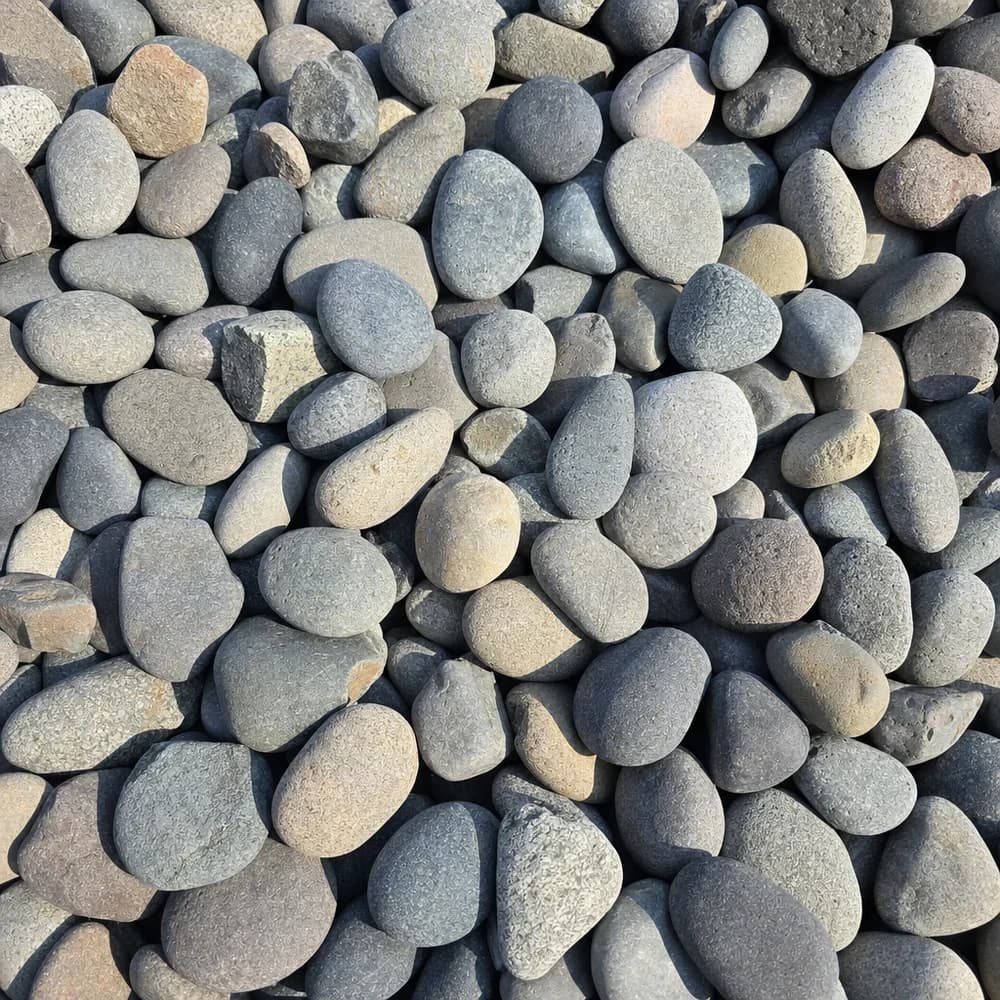
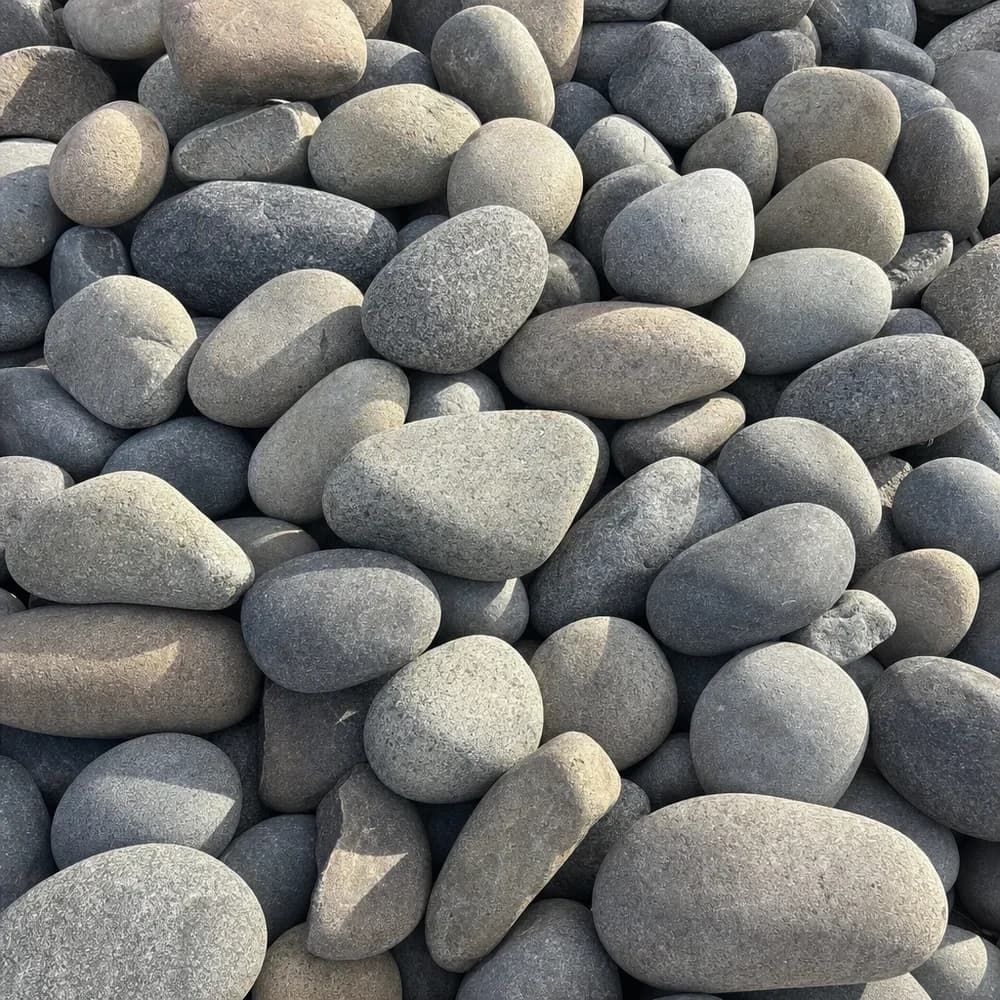
3/8" Natural Pea Gravel on a Connecticut Lot: Rounded, Not Angular
For Connecticut patios and drainage areas, 3/8" Natural Pea Gravel provides a smooth walking surface while allowing water to move through the stone.
- Size: Approximately 3/8 inch
- Type: Small, smooth, naturally rounded stones
- Color: Tans, creams, grays, browns and occasional reds
From $655 for 1 ton, delivery included
Larger loads cost less per ton: 500 tons is $42,610 ($85.22 per ton). Pick any quantity below for a delivered price.
Free delivery included
Free delivery anywhere in Connecticut
Pick a delivery date
Weekday delivery, earliest Oct 20
Get a Free Quote
Fill out the form and our sales team will get back to you within the hour.
Size and Grading
- Size
- Approximately 3/8 inch
- Type
- Small, smooth, naturally rounded stones
- Color
- Tans, creams, grays, browns and occasional reds
Most properties this stone lands on share a description: an older lot, glacial till with ledge not far under it, a slope somewhere, and water that runs across the ground rather than soaking into it. That ground decides more about how a decorative stone performs than the stone itself does. 3/8" Natural Pea Gravel is small rounded material in tans, creams, grays, browns and the occasional red, smooth because it was tumbled rather than crushed, and on the right part of a lot it holds for years. On the wrong part, it travels. Knowing which is which is most of what this page is for.
Where 3/8" natural pea gravel sits against the angular stone at the same size
Three small stones sit close together in the catalogue and they behave differently enough to matter.
| Material | Shape | Behavior underfoot | Best at |
|---|---|---|---|
| 3/8" Natural Pea Gravel | Rounded, tumbled, naturally colored | Loose and comfortable, rolls on a slope | Beds, rings, play areas, drainage cover |
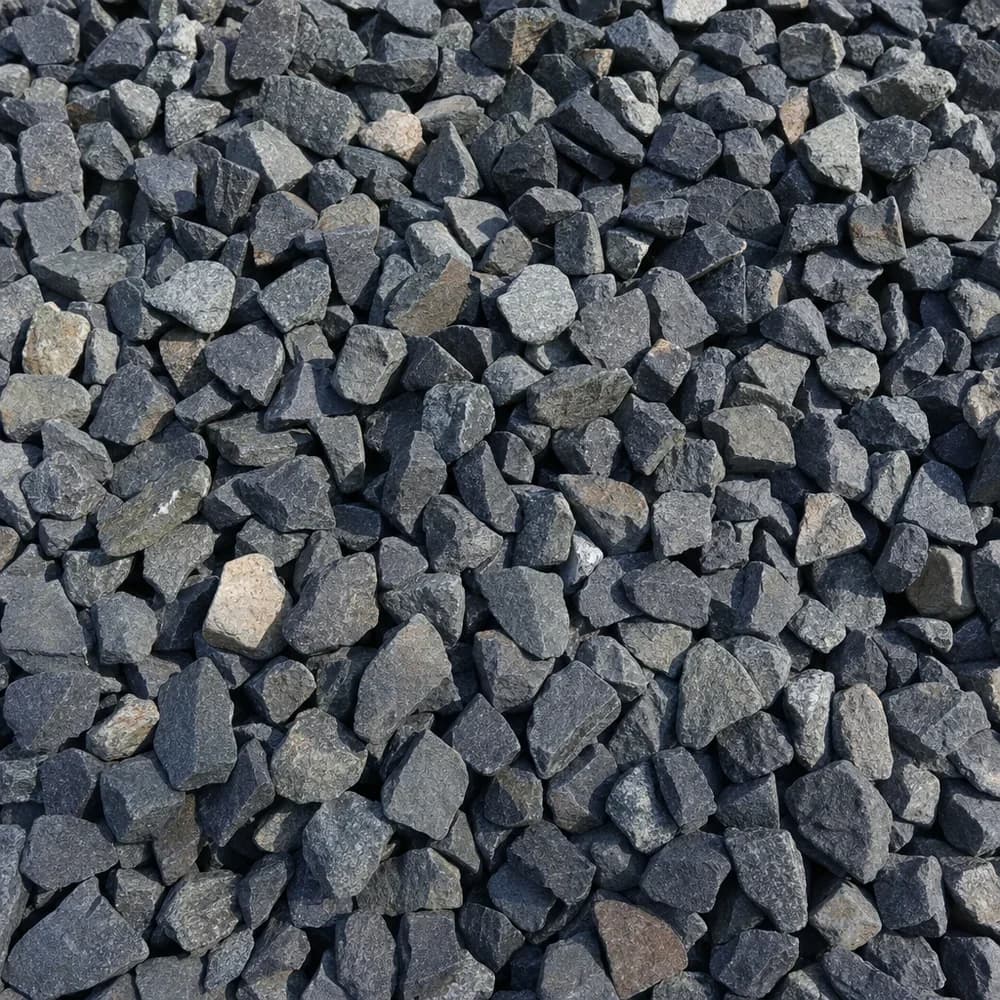
| 3/8" Crushed Stone | Angular, crushed faces | Locks together, stays put, sharp | Pipe bedding, thin drainage layers, topping a base |
| Walkway Gravel | Angular, graded mix of sizes | Packs into a walkable path surface | Paths and garden walks that take traffic |
The trade is comfort against grip. Rounded stone is pleasant on bare feet and paws, with none of the sharp edge a crushed product leaves. The same roundness means nothing interlocks, so every piece moves when something pushes it.
River Rock is the fourth option people weigh against it, and the difference is scale rather than shape. Both are rounded. At 1 to 3 inches, river rock stays in a swale where pea stone would wash, but it is too coarse to walk on. For a narrow bed or a seating area, the smaller stone wins. For a channel that actually carries water, go up.
A dry creek line and a fire pit ring it suits, and an equipment pad it will not hold
Three requests, and they do not get the same answer.
A dry creek bed is a good fit with one caveat. As a decorative line that moves roof and slope water across a yard, this stone looks right and drains freely. If the channel genuinely runs during a thaw or after a heavy storm, the stone will migrate downhill. The usual answer is a graded channel: larger rock through the running line, this stone along the dry shoulders.
A fire pit surround is where it is at its best: level ground, edged by the pit and usually a paver ring, light and often barefoot traffic, and a surface that drains after rain instead of holding a puddle by the chairs. Keep the stone clear of where the fire actually sits, since it is not sold for that.
A pole barn or equipment pad is a no. Rounded stone rolls under a tire, ruts on the first turn, and will not compact into anything that carries weight. A pad like that wants a compacted base of Processed Gravel or Crusher Run built for the load.
What has to be under it before the first winter on till
A decorative stone bed is only as good as the preparation under it, and on till the preparation is doing more work than usual.
Strip the organic layer rather than laying over grass. Roots and topsoil compress and hold water, so stone laid on them sinks unevenly and looks patchy by the second spring.
Set an edge before any stone arrives. It decides whether the bed still has a clean line in three years. Rounded 3/8 material has nothing holding it laterally, so it migrates toward every open edge. Steel, timber, set stone or a spade-cut trench all work, as long as they sit deep enough not to be pushed out of line by frost. On many older properties here an existing stone wall or bed edge already does the job for one or two sides.
Then fabric across the bottom. On ground where water travels sideways, fabric is what stops till soil and stone mixing over a few freeze and thaw cycles, which is the slow version of a bed that ends up looking dirty.
Where the bed sits against a foundation or below a downspout, put a drainage course of open stone under it and run the water somewhere. This material is a cover over that system, not the system itself.
Two inches looks thin and three inches rolls: settling the depth
Depth is the decision the live listing never helps with, and it is a real trade-off.
Two inches over fabric is the working figure for a decorative bed that is looked at more than it is walked on. It covers, it reads as a finished surface, and because the layer is shallow there is not enough loose material to move much.
Three inches suits a seating area or anywhere people walk regularly, because a thin layer scuffs through to the fabric. Accept that at three inches the stone rolls underfoot and travels more, which is why the edge matters.
More than three inches on a walking surface gets unpleasant. Rounded stone at depth behaves like ball bearings and is hard going for a wheelbarrow or anyone unsteady. If drainage needs more depth, take it in angular open stone underneath and finish shallow with this on top.
On any slope worth noticing, reduce the depth and increase the edging, or use an angular stone instead. Rounded material and gradient are a poor combination and no depth fixes it.
Tons for a 22-foot creek line and a 9-foot fire pit ring
Hypothetical examples, worked so the method carries to your own shapes. Rectangles are length times width. Circles are 3.14 times the radius squared. Depth in inches divided by 12 gives feet, and cubic feet divided by 27 gives cubic yards.
A dry creek line 22 feet long, averaging 3 feet wide, at 3 inches: 22 x 3 = 66 square feet. 66 x 3/12 = 16.5 cubic feet. 16.5 divided by 27 = 0.6 cubic yards.
A fire pit ring with a 9 foot outer diameter around a 3 foot pit, at 3 inches. Outer radius 4.5 feet, so 3.14 x 4.5 x 4.5 = 63.6 square feet. Inner radius 1.5 feet, so 3.14 x 1.5 x 1.5 = 7.1 square feet. Subtract: 63.6 minus 7.1 = 56.5 square feet. 56.5 x 3/12 = 14.1 cubic feet. 14.1 divided by 27 = 0.5 cubic yards.
This site publishes a working weight of about 2,800 lb per cubic yard for 3/8 inch pea gravel, roughly 1.40 tons per cubic yard, and the figure is approximate. The creek line comes to about 0.9 tons and the fire pit ring to about 0.7 tons.
Picking a quantity, a date and a drop the wheelbarrow can reach
Run your own shapes through the pea gravel calculator before ordering, and round up rather than down, because topping a bed up later from a second load rarely matches perfectly.
Then think about the route. Small stone wheelbarrows well, but a ton is still a ton, and the distance from the tipping spot to a back garden is what people underestimate. Delivery is arranged by ZIP code at checkout, and the truck needs a clear place to tip, which on a fenced property generally means the driveway with the gate open.
Pick your tonnage and a delivery date here on the page once the numbers are settled. If the bed is behind a gate, up steps or at the far end of the lot, describe the access through the contact page first so the drop spot is agreed before the day rather than on it.
Quickly Calculate How Much You Need
Material: 3/8" Natural Pea Gravel
How to Measure
Measure the length and width of your project area in feet
Decide on depth in inches (2" for landscaping, 4" for driveways)
Enter the values above and we'll calculate the tonnage you need
Need help figuring out the right amount? We can help!
Call or text us at (860) 891-3260 and we'll help you calculate the right quantity for your project.
Not sure how much you need? The Pea Gravel Calculator has depth guides, coverage charts and worked examples for this material.
Frequently Asked Questions About 3/8" Natural Pea Gravel
3/8" Natural Pea Gravel delivery across Connecticut
- Bridgeport
- Stamford
- New Haven
- Hartford
- Waterbury
- Norwalk
- Danbury
- New Britain
- Fairfield
- Greenwich
- West Hartford
- Bristol