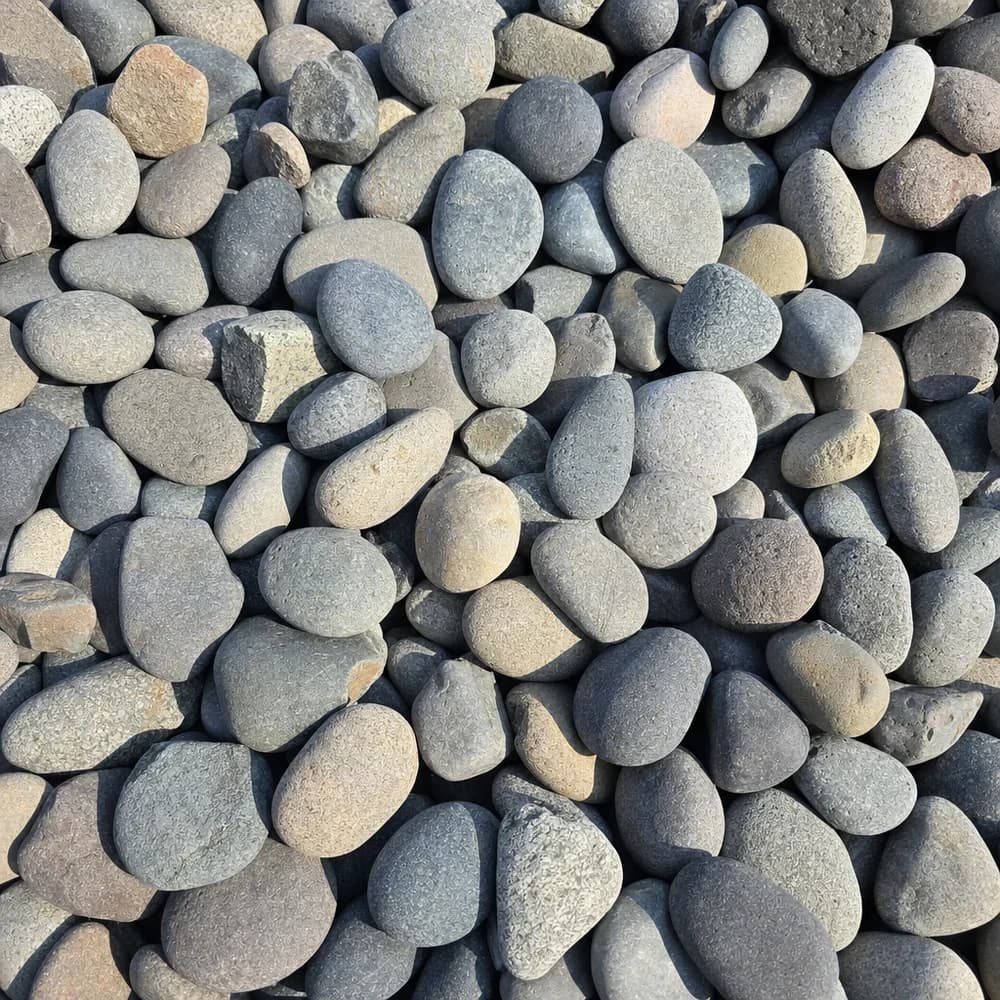
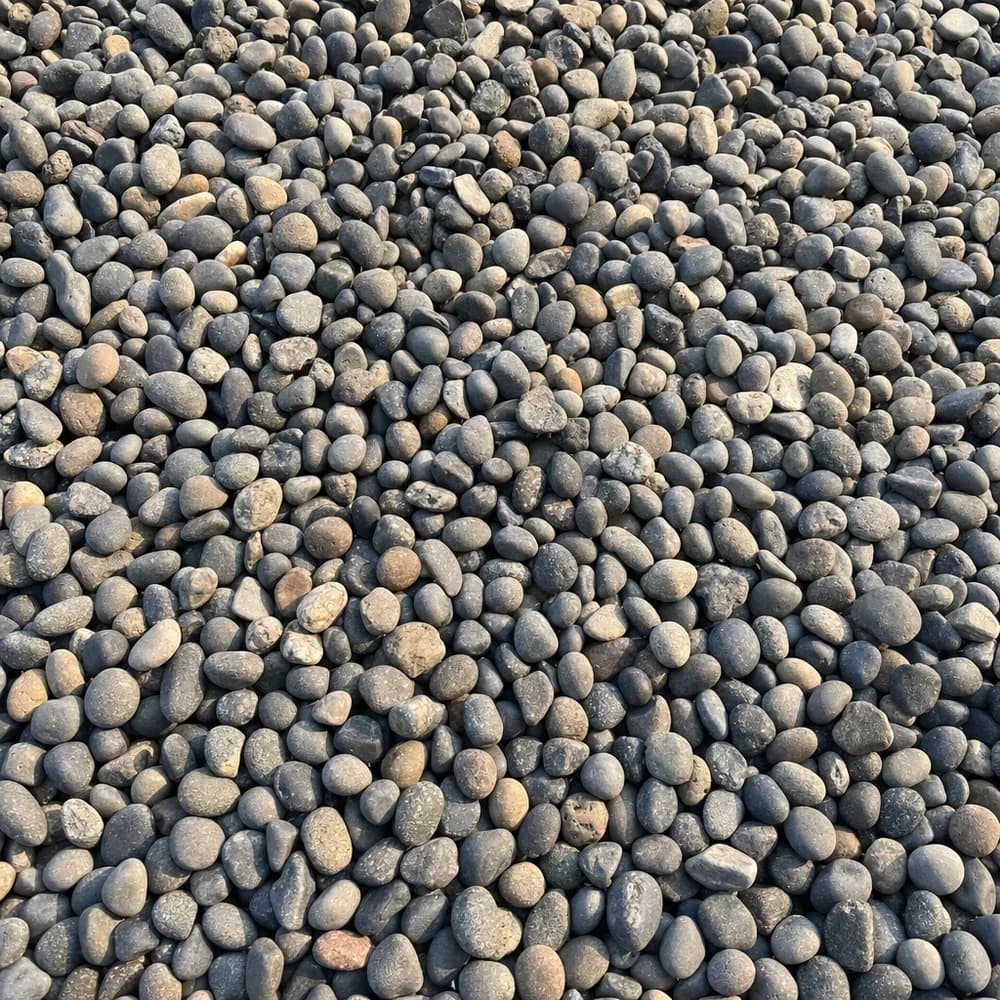
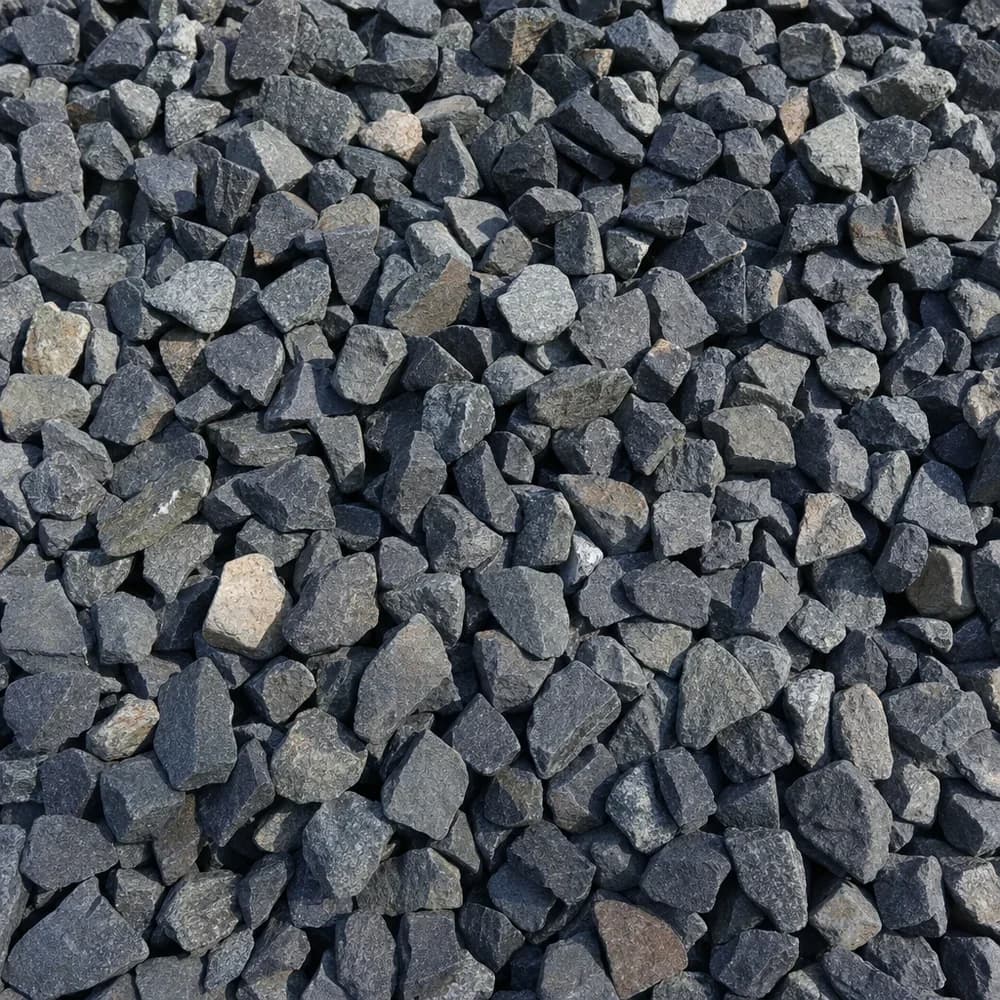
Large River Rock for Connecticut Creek Lines and Scour Points
A common mistake in Connecticut is using small decorative stone where a landscape feature needs weight. Large River Rock gives it a steadier, more natural finish.
- Size: 2 inches to 4 inches
- Type: Smooth, naturally rounded stones
- Color: Tans, grays and browns
From $1,100 for 1 ton, delivery included
Larger loads cost less per ton: 500 tons is $92,270 ($184.54 per ton). Pick any quantity below for a delivered price.
Free delivery included
Free delivery anywhere in Connecticut
Pick a delivery date
Weekday delivery, earliest Oct 20
Get a Free Quote
Fill out the form and our sales team will get back to you within the hour.
Size and Grading
- Size
- 2 inches to 4 inches
- Type
- Smooth, naturally rounded stones
- Color
- Tans, grays and browns
The window for this kind of work opens when the ground dries out and the water drops, which around here usually means late summer through autumn, before the ground closes up for the winter. That is when a pond edge can be reshaped without standing in it and a swale can be dug on ground that holds a shape. Large river rock is the material most of that work ends in: smooth, naturally rounded stone at 2 inches to 4 inches, in tans, grays and browns, heavy enough that the next heavy rain leaves it where you put it.
Choose large river rock when the smaller stone has already moved once
The clearest reason to step up to this size is that something smaller has already failed in the same spot.
A bed of fine stone that has washed into a line at the low end. A splash area under a big roof valley that has been topped up twice and scattered again. A swale that cuts a channel through whatever was laid in it. All three are the same signal: the water arriving is moving more material than the stone can resist, and the answer is mass rather than more of the same.
It is also right where a feature is too small for its surroundings. Beside a mature maple, a stone wall or an old barn foundation, fine stone reads as gravel and this size holds its own.
Skip it anywhere someone has to walk, wheel or park
The same weight that makes it work is what rules it out elsewhere.
Nothing at 2 to 4 inches is comfortable to walk on. Ankles turn on it and a wheelbarrow will not cross it, so keep it out of paths and off the strip people cut across to reach the bins. It is no better under a vehicle, where rounded stone rolls instead of locking and ruts on the first pass. And it is not a base for anything: no grading, no fines and no flat faces to seat against each other, so it cannot be compacted into a layer that carries load.
Where the requirement is a walked or driven surface, Driveway Gravel and Walkway Gravel are the materials built for it.
Dry creek lines, water feature edges and the turn where runoff cuts
Four applications account for most of what this stone is used for on Connecticut lots.
A dry creek bed is the main one. Where water crosses a property sideways through till, a defined channel gives the runoff somewhere to go and turns a wet strip into a feature. Put the larger pieces on the outside of the bends, where the flow does its work, and let the line widen and narrow rather than run parallel.
Pond and water feature borders are the second, where the stone makes a built edge look like it belongs to the ground rather than sitting on it.
Erosion control is the third, on slopes and banks and at the point where a swale discharges, where smaller stone gets carried off.
Landscape accents are the fourth, set in beds or beside a specimen plant where the planting needs a fixed point.
Where a bank is actively failing or a shoreline is taking wave energy, this is not enough stone. That is RipRap territory, sized and placed as armoring rather than decoration.
A surface stone and never a base: the shed pad and wall backfill questions
Two requests come in for this material that belong to other products.
A shed or garage pad base is the first. A pad has to spread the load evenly and stay flat through a winter of frost heave, which needs a graded, compactable material. Rounded cobble shifts under point loads and cannot be compacted. Build the pad on a compacted lift of Processed Gravel or Crusher Run, with a screeded bedding course on top if pavers are going down.
Retaining wall backfill is the second. Backfill has to drain freely and hold its open structure while soil presses against it, which favors angular washed stone. Rounded pieces settle tighter and lose the void space that made them worth using. Use Drain Rock behind the wall and keep this stone for the landscape in front of it.
A downspout splash area goes either way. For an ordinary downspout the 1 to 3 inch River Rock is the sensible size. Step up to this one where a large roof area discharges at a single point and the smaller stone has already moved.
Yards and tons for a 30-foot creek line and a splash basin
Two hypothetical figures, worked as length times width times depth in feet, divided by 27.
The creek line. 30 feet long, averaging 4 feet wide, at 4 inches: 30 x 4 = 120 square feet. 120 x 4/12 = 40 cubic feet. 40 divided by 27 = 1.48 cubic yards.
The splash basin. A 5 by 4 area at the discharge point, 5 inches deep so no fabric shows between the stones: 5 x 4 = 20 square feet. 20 x 5/12 = 8.33 cubic feet. 8.33 divided by 27 = 0.31 cubic yards.
Together, 1.79 cubic yards. No separate weight is published for this size, so use the closest listed family, river rock at 1 to 3 inch, around 2,700 lb per cubic yard or about 1.35 tons per yard. That gives 1.79 x 1.35 = 2.4 tons. Order two and a half, and treat it as approximate: stone this size stacks with large gaps and the packing depends on how the pieces fall.
Put your own channel measurements through the river rock calculator, measuring a creek line in three or four sections of different width rather than one long average. Then set the quantity and a delivery date on this page. Delivery is arranged by ZIP code at checkout, and since pieces this size are placed by hand, ask for the drop as close to the channel as access allows.
Low water in September, and what the March thaw rearranges
Low water in late summer and early autumn is what makes a pond edge or a stream margin workable without fighting the level, and the ground is firm enough then to take a machine without tearing the lawn. Once the freeze sets in, nothing can be dug or shaped.
The first spring is the test. Meltwater shifts a few pieces at the turns and drops silt at the wide points, which is normal rather than a failure. Walk the line after the thaw and reset whatever has rolled out of place, working from the outside of the bends where the flow is strongest. The other annual job is leaf litter, raked out of the gaps in autumn before it rots into the silt that weeds germinate in.
Quickly Calculate How Much You Need
Material: Large River Rock
How to Measure
Measure the length and width of your project area in feet
Decide on depth in inches (2" for landscaping, 4" for driveways)
Enter the values above and we'll calculate the tonnage you need
Need help figuring out the right amount? We can help!
Call or text us at (860) 891-3260 and we'll help you calculate the right quantity for your project.
Not sure how much you need? The River Rock Calculator has depth guides, coverage charts and worked examples for this material.
Frequently Asked Questions About Large River Rock
Large River Rock delivery across Connecticut
- Bridgeport
- Stamford
- New Haven
- Hartford
- Waterbury
- Norwalk
- Danbury
- New Britain
- Fairfield
- Greenwich
- West Hartford
- Bristol