River Rock for Connecticut Beds, Splash Areas and Dry Creek Lines
River Rock sits neatly around Connecticut garden beds and water features, adding rounded earth tones where surface water needs to drain away.
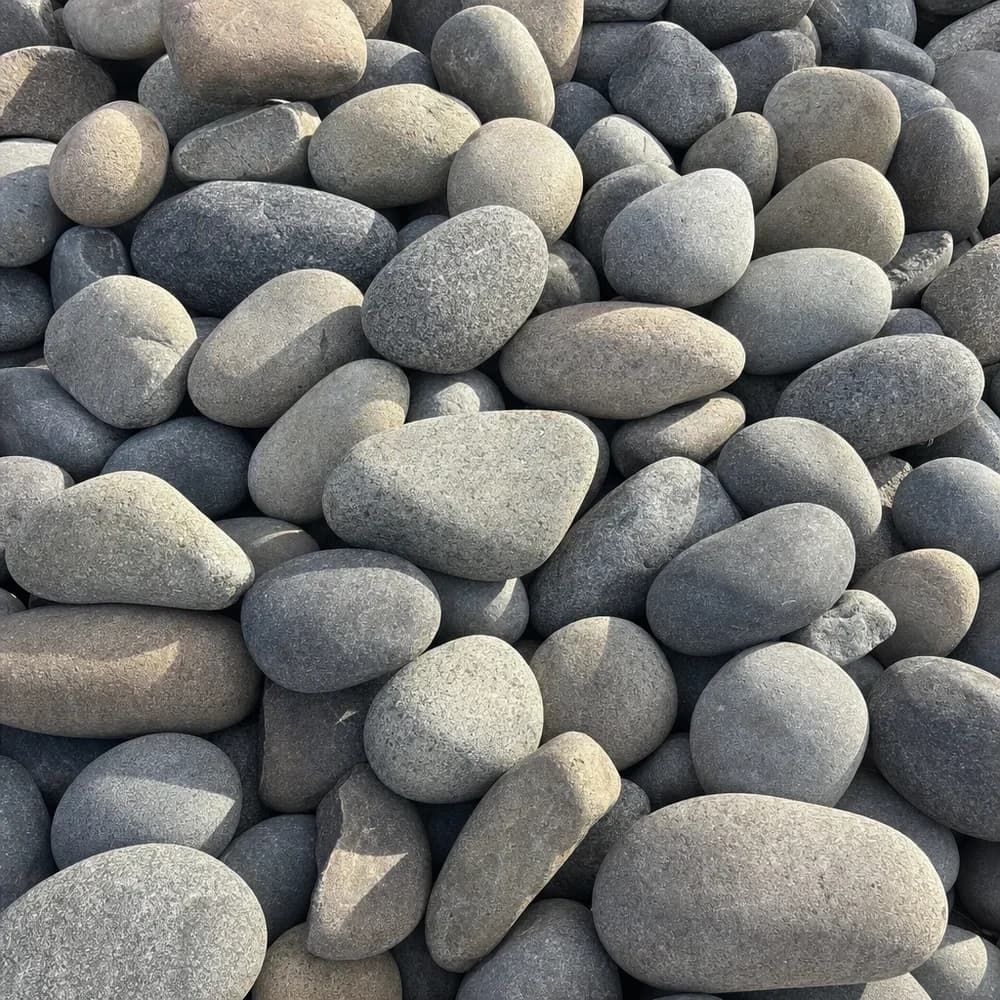
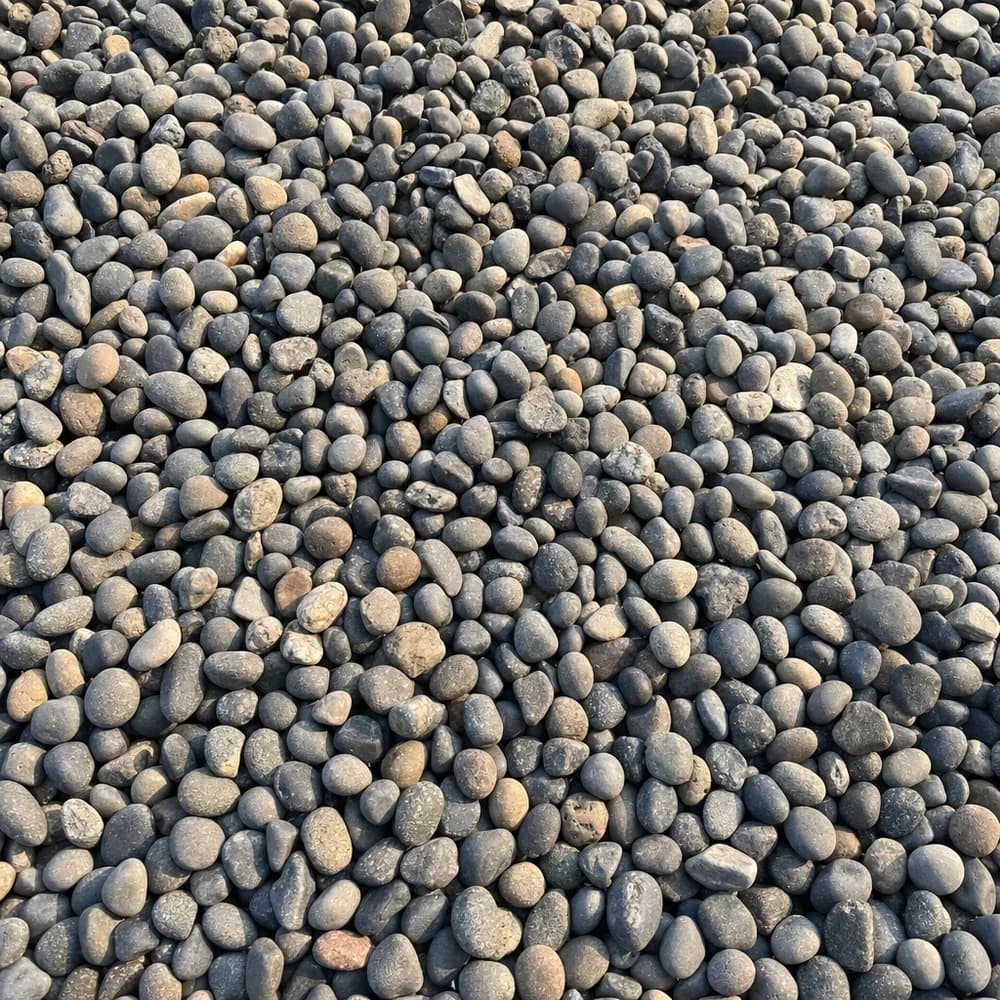
- Size: 1 inch to 3 inches
- Type: Smooth, naturally rounded stones
- Color: Tans, grays, browns and occasional reds
From $792 for 1 ton, delivery included
Larger loads cost less per ton: 500 tons is $60,515 ($121.03 per ton). Pick any quantity below for a delivered price.
Free delivery included
Free delivery anywhere in Connecticut
Pick a delivery date
Weekday delivery, earliest Oct 20
Get a Free Quote
Fill out the form and our sales team will get back to you within the hour.
Size and Grading
- Size
- 1 inch to 3 inches
- Type
- Smooth, naturally rounded stones
- Color
- Tans, grays, browns and occasional reds
Most orders for this material start the same way: shredded bark washed out of the foundation bed and down the driveway again, or a trench worn into the lawn under a downspout that nobody has got round to fixing for three years. Both are water problems that keep being answered with a material water can move. River rock is the answer that stays put, 1 inch to 3 inches of smooth, naturally rounded stone in tans, grays, browns and the occasional red.
Red mulch in the driveway after every downpour
The failure is not really the mulch. It is that the bed sits where surface water crosses the property, and any light organic material placed in that line is going to travel.
Three versions of the same problem turn up over and over. A foundation bed on the uphill side of the house, taking whatever runs off the roof and the lawn above it. A splash area under a downspout, where concentrated water lands on one spot several times a week. And a low line through a yard that becomes a stream for two hours after every heavy rain and is dry the rest of the year.
Stone answers all three because it is heavy enough to stay where it is put and open enough to let the water through rather than damming it.
What forty-two inches of frost does under a stone bed
Frost depth in this state runs to about 42 inches, and the freezing and thawing repeats rather than happening once. Ground under a bed lifts and drops through the winter, and anything rigid at the edge of that bed gets pushed out of line.
Rounded stone handles that better than most materials because it has no fixed shape to lose. The pieces shuffle against each other, settle back and look the same in April as they did in November. What moves is the boundary. Edging blocks heave, timber lifts at the joints, and by spring the stone has found its way into the grass wherever the edge has opened up.
The other Connecticut condition to plan for is the sideways water. With ledge close to the surface and dense till underneath, a bed can be taking flow from uphill even when the ground looks dry, and a stone cover does nothing about water arriving under it. If the bed is wet as well as eroding, the drain comes first and the stone goes on afterwards.
Laying a bed that stays put: what goes down before the stone
Shape the ground first. Stone follows whatever surface it is poured onto, so if the bed is dished, the low point is where silt and leaf litter will collect.
Then fabric. A filter fabric between soil and stone is what keeps the two from mixing, and on a till lot with sideways water it is doing real work rather than being optional. Without it, soil washes up between the stones from below and weeds root in the silt that collects from above.
Then the edge. This is where beds are won or lost through a freeze and thaw winter, so give the stone something to sit against: a set stone border, a deep spade edge into turf, or a restraint bedded below the frost-heaving surface layer rather than sitting on top of it. Connecticut properties often already have a dry stone wall doing exactly that job, and a bed that finishes against one needs nothing else.
A pond edge it suits, and two jobs it will fail at
At a pond or a decorative water edge, this is the right material. It looks like it belongs, it tolerates being wet and dry in turn, and at the size range here it stays put in still or slow water. Where the edge is taking real flow or wave action, step up to Large River Rock or, on a bank that is actively eroding, to heavy armor stone.
A construction entrance is the first job it fails. That surface exists to shed mud off tires, which needs large angular stone that locks together and bites. Rounded stone rolls under a wheel instead, and a truck pushes it into two ruts on the first pass.
A paver patio base is the second. A base has to compact into a rigid layer, and rounded pieces cannot lock the way crushed faces do, so they keep shifting under the pavers. That job wants Crusher Run with a screeded bedding course over it. River rock can finish the planted edge beside the patio, but it has no place underneath it.
An hour a year: leaf litter, a hose and the spring rake
Upkeep is light, but it is not nothing.
Under a deciduous canopy, leaf litter falls into the gaps and breaks down into exactly the silt that weeds want, so a blower or a leaf rake across the bed each autumn is the job that keeps a stone bed looking like stone. A rinse with a hose lifts road dust and pollen off the surface. And once a year, usually after the thaw, the stone that has migrated into the lawn edge wants pushing back in and the edging wants checking where frost has lifted it.
Yardage for a 24-foot splash strip and a 34 by 4 foundation bed
Two hypothetical examples. Length times width times depth in feet, divided by 27.
A splash strip under a run of downspouts, 24 feet by 3 feet at 3 inches: 24 x 3 = 72 square feet. 72 x 3/12 = 18 cubic feet. 18 divided by 27 = 0.7 cubic yards. At this site's own published weight for 1 to 3 inch river rock, about 1.35 tons per cubic yard, 0.7 x 1.35 is roughly 0.9 tons, an approximate figure rather than an exact one.
A foundation bed, 34 feet by 4 feet at 3 inches: 34 x 4 = 136 square feet. 136 x 3/12 = 34 cubic feet. 34 divided by 27 = 1.3 cubic yards. At the same approximate 1.35 tons per cubic yard, 1.3 x 1.35 comes to about 1.8 tons.
Two cubic yards for both, before rounding up. Three inches is a working depth for a cover of this size: enough that you cannot see fabric through the gaps, not so deep that the stones roll away underfoot.
Material is sold by the ton and the conversion from cubic yards depends on the density figure for this stone, so run your own measurements through the river rock calculator and take the tonnage from the tool. Then choose the quantity and a delivery date on this page. Delivery is arranged by ZIP code at checkout, and since stone this size gets wheelbarrowed rather than shoveled, ask the driver for the drop nearest the work. If the beds are spread around the property, say so through the contact page before you book.
Quickly Calculate How Much You Need
Material: River Rock
How to Measure
Measure the length and width of your project area in feet
Decide on depth in inches (2" for landscaping, 4" for driveways)
Enter the values above and we'll calculate the tonnage you need
Need help figuring out the right amount? We can help!
Call or text us at (860) 891-3260 and we'll help you calculate the right quantity for your project.
Not sure how much you need? The River Rock Calculator has depth guides, coverage charts and worked examples for this material.
Frequently Asked Questions About River Rock
River Rock delivery across Connecticut
- Bridgeport
- Stamford
- New Haven
- Hartford
- Waterbury
- Norwalk
- Danbury
- New Britain
- Fairfield
- Greenwich
- West Hartford
- Bristol