#8 Crushed Stone for Connecticut Permeable Beds and Pipe Trenches
#8 Crushed Stone gives Connecticut patio and drainage projects a clean, free-draining aggregate for managing water around hardscape.
- Size: About 3/32 inch to 3/8 inch
- Grading: #8, clean with little to no fines
- Type: Crushed stone
From $449 for 1 ton, delivery included
Larger loads cost less per ton: 500 tons is $27,195 ($54.39 per ton). Pick any quantity below for a delivered price.
Free delivery included
Free delivery anywhere in Connecticut
Pick a delivery date
Weekday delivery, earliest Oct 20
Get a Free Quote
Fill out the form and our sales team will get back to you within the hour.
Size and Grading
- Size
- About 3/32 inch to 3/8 inch
- Grading
- #8, clean with little to no fines
- Type
- Crushed stone
The working season for this kind of job is shorter than most people plan for. The ground has to be thawed enough to open and dry enough to compact under, which in practice leaves the stretch between a late spring thaw and the first hard frost, and frozen ground stops the compaction end of the work entirely. Inside that window, #8 crushed stone is the small clean chip that does the bedding and joint work on a permeable patio, surrounds a pipe in a drain trench, and forms the open layer under a pad that has to let water go rather than hold it. It runs about 3/32 inch to 3/8 inch, graded to #8, clean with little to no fines.
3/8 inch chips with the dust washed out, and how that reads in a joint
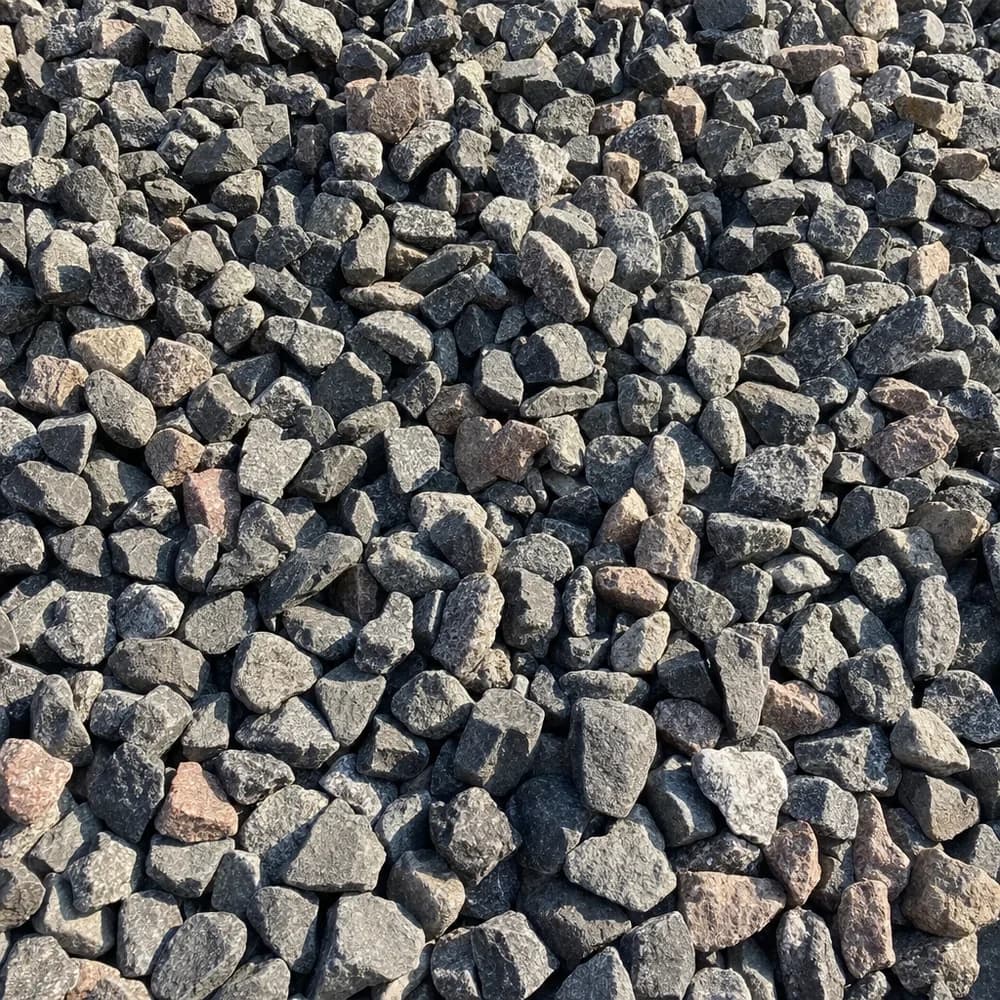
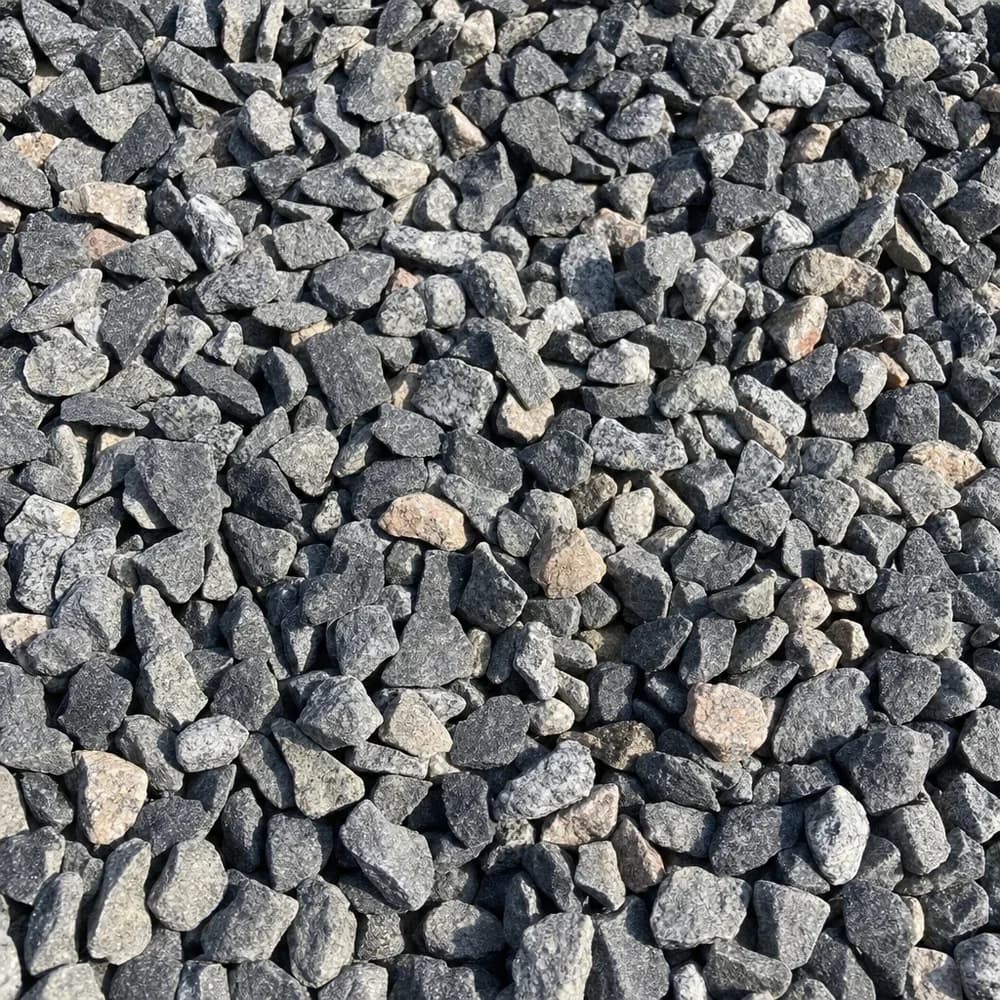
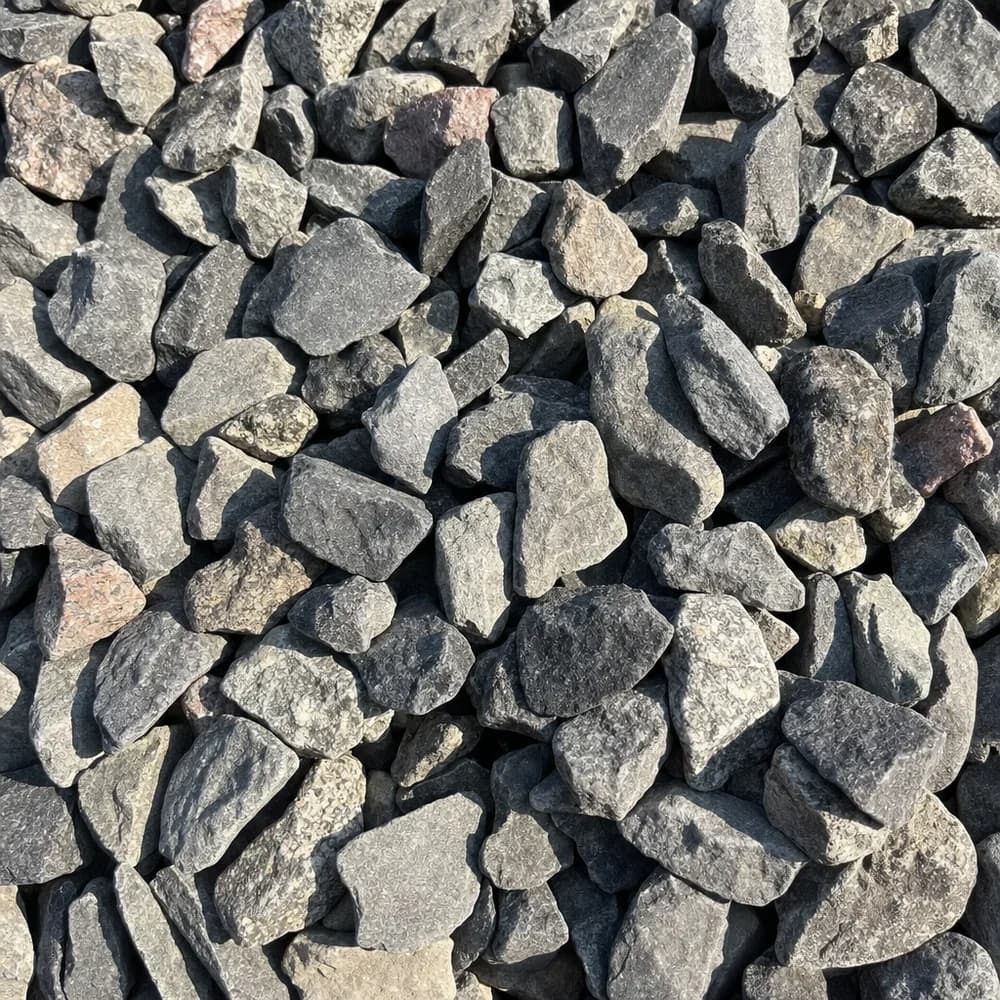
Tipped on a tarp, this stone pours instead of clumping. The pieces are angular, fairly uniform, and gray the way quarried New England stone is gray. Pick a handful up and your glove comes away clean, which is the whole point of a clean grading: there is almost nothing below the smallest chip size left to sit in the voids.
Swept into a permeable paver joint and vibrated home, it settles to a thin dark line and stops looking like loose stone at all. Spread on its own it looks unfinished, because it is: a layer that gets covered or walked on in boots, not a surface anybody is meant to admire.
Where #8 crushed stone earns its place on an older Connecticut lot
Four jobs account for most of it.
Permeable paver systems use it twice, as the thin setting bed the pavers are laid into and as the joint fill swept between them. Both rely on the voids staying open, so water arriving at the surface drops straight through instead of running to the low corner of the patio.
Drainage layers under and around dry-laid hardscape are the second. On glacial till with ledge close to the surface, water travels sideways across a property rather than sinking, and a patio or dry-laid wall sitting in that line needs somewhere for it to go.
Pipe bedding is the third. A perforated pipe wants to sit on stone that supports it evenly and lets water in through the holes, which needs pieces small enough to cradle the pipe and clean enough not to silt the perforations shut.
Concrete aggregate is the fourth, where a mix design calls for a chip at this size.
One habit matters more than any of them: keep site soil out of the layer while you are working. Once fines wash into a clean stone bed it has stopped being a clean stone bed, and nothing you do afterwards gets them out again.
A garden path and a lawn regrade it should not be doing
Two requests come in regularly that this stone will disappoint.
A garden path is the first. With no fines in it, this chip has nothing to bind the pieces to each other, so it stays loose underfoot, rolls at the edges and ends up in the lawn. A walked path wants a graded material that packs, which is Walkway Gravel, or if flagstone is going down, Stone Dust as the setting bed underneath it.
Prepping ground for a new lawn is the second. There is nothing in washed stone for grass roots to work in. If the area is simply low, bring the grade up with Fill Dirt and finish the top few inches with Top Soil; if it is low because it is wet, deal with the water before any soil goes on.
Depth under a hot tub pad, and the lift that has to be compacted first
Take a hypothetical hot tub pad on pavers, 9 feet by 9 feet, on a till subgrade behind an older house.
Nothing in a backyard build is going below the frost line here, which runs to about 42 inches, so the aim is not to beat the frost but to give it nothing to work with. That means a compacted bearing layer, and this stone is not it. The load is carried by a compacted lift of Processed Gravel over a fabric-separated subgrade. This chip is the thin setting bed on top of that, around an inch, plus whatever the joints take.
Depth for a clean stone is effectively loose depth. With no fines to migrate into the voids, a plate takes a little air out on the first pass and then stops. Order for the depth you want in place and round up rather than counting on it to shrink.
Tons for a 9 by 9 pad bed and a 45-foot pipe run
Two hypothetical numbers, worked the way the site calculator does it: length times width times depth in feet, divided by 27.
The setting bed. 9 x 9 = 81 square feet. At 1 inch, 81 x 1/12 = 6.75 cubic feet. 6.75 divided by 27 = 0.25 cubic yards.
The pipe run. A 45-foot trench 16 inches wide, with 10 inches of stone around the pipe: 45 x 1.33 = 60 square feet. 60 x 10/12 = 50 cubic feet. 50 divided by 27 = 1.85 cubic yards. That ignores the space the pipe itself occupies, which is not worth chasing on a run this size and is covered by rounding.
Together, 2.1 cubic yards. This site publishes roughly 2,800 lb per cubic yard for #8, #89 and 3/8 inch chips, or about 1.40 tons per yard, so 2.1 x 1.40 = 2.94 tons. Order three.
Put your own measurements through the stone calculator first, since a joint allowance and an awkward trench width both move that figure. Then set the tonnage and a delivery date on this page. Delivery is arranged by ZIP code at checkout, and the driver needs a clear spot to tip within wheelbarrow reach of the trench.
The two piles either side of it: #89 and 3/8 inch chips
At a glance these three look the same, and they do not behave the same.
#89 Crushed Stone runs about 3/8 inch down to fines. Those fines are the difference: it knits tight under compaction, which suits a joint or a bedding course you want to lock, and rules it out anywhere the voids have to stay open.
3/8" Crushed Stone is a single-size angular chip used as a finished surface course over a compacted base, not as a drainage layer.
Larger than both of them, #57 Stone is the clean stone that usually forms the open base course under a permeable build, with this chip as the thin layer on top of it.
Quickly Calculate How Much You Need
Material: #8 Crushed Stone
How to Measure
Measure the length and width of your project area in feet
Decide on depth in inches (2" for landscaping, 4" for driveways)
Enter the values above and we'll calculate the tonnage you need
Need help figuring out the right amount? We can help!
Call or text us at (860) 891-3260 and we'll help you calculate the right quantity for your project.
Not sure how much you need? The Stone Calculator has depth guides, coverage charts and worked examples for this material.
Frequently Asked Questions About #8 Crushed Stone
#8 Crushed Stone delivery across Connecticut
- Bridgeport
- Stamford
- New Haven
- Hartford
- Waterbury
- Norwalk
- Danbury
- New Britain
- Fairfield
- Greenwich
- West Hartford
- Bristol